
$10 Trillion Southern Economy by 2047: Chandrababu Naidu’s
Andhra Pradesh CM Chandrababu Naidu Pitches $10 Trillion Southern Economy by 2047: Bullet Train, Logistics, Water & Regional Growth Plan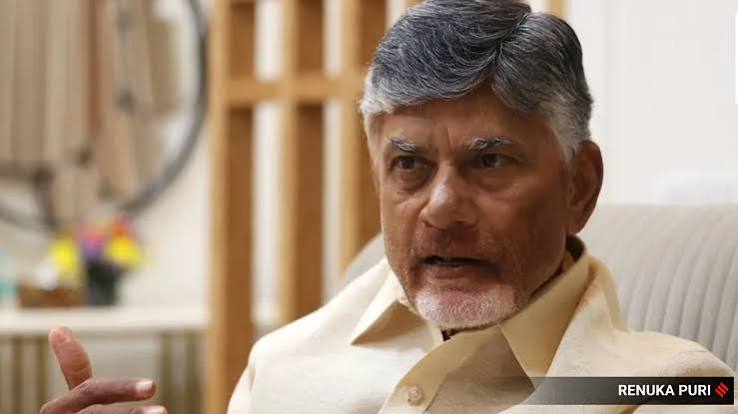
By SkillSiksha Editorial Team | Published: August 21, 2026
Andhra Pradesh Chief Minister N. Chandrababu Naidu has put forward an ambitious long-term economic vision for South India: building a USD 10 trillion-plus regional economy by 2047 through stronger cooperation between the southern states.
Naidu presented the vision at the 31st Southern Zonal Council meeting, chaired by Union Home Minister Amit Shah in Mahabalipuram, Tamil Nadu, on August 20, 2026. The meeting brought together leaders and senior officials from Andhra Pradesh, Karnataka, Kerala, Tamil Nadu and Telangana to discuss issues involving infrastructure, water, economic development, security and inter-state cooperation. (The New Indian Express)
The proposal is not an approved ₹10-trillion government project or a guaranteed economic outcome. Rather, it is Naidu's proposed regional development vision, which would require coordination between states, the Centre and multiple agencies before individual projects could move forward.
South India’s $10 Trillion Economic Vision
According to reporting on Naidu's proposal, the southern region currently contributes around 31% of India's GDP. The Chief Minister argued that stronger cooperation among the southern states could help the region become one of the country's biggest engines of economic growth. (The New Indian Express)
The broader objective is to make South India a major contributor to India's long-term Viksit Bharat 2047 ambition.
Naidu's vision includes closer cooperation in:
-
Transport and connectivity
-
Manufacturing
-
Logistics
-
Ports
-
Energy
-
Water management
-
Higher education
-
Skill development
-
Disaster management
-
Technology and innovation
Instead of each state planning major infrastructure independently, the proposal seeks greater regional-level coordination.
What Is the $10 Trillion Southern Economy Proposal?
The idea is to combine the economic strengths of the southern states and create a more integrated economic ecosystem.
Andhra Pradesh has a strong coastline and ports, Karnataka has a major technology and R&D ecosystem, Tamil Nadu has a large manufacturing base, Telangana has a strong technology and pharmaceutical sector, while Kerala contributes significantly through services, tourism and human capital.
Naidu's argument is that connecting these strengths through shared infrastructure could create a much larger regional economic network.
The New Indian Express reported that Naidu cited long-term GSDP ambitions including $2.4–3.4 trillion for Andhra Pradesh, $2.6 trillion for Tamil Nadu and $1 trillion for Karnataka as part of the wider growth discussion. (The New Indian Express)
A Simple Way to Understand the Vision
Ports + Industries + Technology + Transport + Energy + Skills = Integrated Southern Economy
The proposal therefore goes beyond simply increasing the GDP of one state. It focuses on creating economic links between multiple states.
1. Proposed Amaravati–Bengaluru–Chennai Bullet Train Corridor
One of the most eye-catching proposals is a high-speed rail corridor connecting Amaravati, Bengaluru and Chennai via Kuppam.
The proposed corridor would link important economic centres across Andhra Pradesh, Karnataka and Tamil Nadu. Reports on Naidu's proposal say the objective is to improve regional connectivity and reduce travel time between major urban and industrial centres. (News Minimalist)
Why Would This Matter?
High-speed connectivity can potentially improve:
-
Business travel
-
Labour mobility
-
Tourism
-
Industrial investment
-
Access to major cities
-
Regional supply chains
For example, better connectivity between Amaravati, Bengaluru and Chennai could allow companies to operate across state boundaries more efficiently.
However, it is important to distinguish a proposal from an approved project. The corridor would require detailed feasibility studies, approvals, financing and implementation decisions before construction could begin.
2. Common Logistics Network and Dry Ports
Another major component of Naidu's regional blueprint is the development of a common logistics ecosystem.
The idea is to connect ports, industrial areas, warehouses, inland container depots and dry ports across state boundaries.
South India already has several major ports and industrial clusters. Better integration could help manufacturers move raw materials and finished products more efficiently.
Possible Benefits
A coordinated logistics network could:
-
Reduce transportation bottlenecks
-
Improve freight movement
-
Connect inland industrial areas with ports
-
Support exports
-
Reduce logistics costs
-
Strengthen manufacturing supply chains
For Andhra Pradesh, the proposal is particularly significant because of its extensive coastline and port infrastructure.
3. Stronger Energy Grid Cooperation
Energy availability is another important requirement for industrial expansion.
Naidu has proposed greater coordination in the southern power sector, including better integration of renewable-energy resources and transmission infrastructure.
Southern states have significant potential for:
-
Solar power
-
Wind power
-
Hydropower
-
Industrial electricity generation
-
Renewable-energy storage
A stronger interconnected system could make it easier to move surplus electricity between states depending on demand and supply.
This becomes increasingly important as industries such as semiconductor manufacturing, electric vehicles, data centres and advanced manufacturing require reliable electricity.
4. Godavari–Cauvery Water Link Proposal
Water security is one of the most complicated parts of the southern development discussion.
Naidu has proposed advancing a Godavari–Cauvery river-linking concept, involving the movement of surplus water through interconnected river systems.
The proposal discussed the Godavari–Krishna–Pennar–Cauvery linkage as a way of addressing water stress in parts of southern India.
Importantly, river interlinking is a technically, environmentally and legally complex subject. It involves multiple states, water-sharing questions, environmental assessments and central agencies.
Tamil Nadu has also been pressing for progress on the broader Godavari-Krishna-Pennar-Palar-Cauvery linkage, according to recent reporting. (The Times of India)
Therefore, this should be viewed as a long-term regional water-management proposal, rather than an immediately executable project.
5. A Common Approach to Disaster Management
South India regularly faces natural disasters including:
-
Cyclones
-
Floods
-
Heavy rainfall
-
Landslides
-
Coastal emergencies
-
Drought conditions
Naidu has proposed stronger cooperation between southern states in disaster response, including the idea of a regional mutual-aid mechanism.
Under such an approach, resources and personnel could potentially be mobilised across state boundaries during major emergencies.
Why Regional Cooperation Matters
A major cyclone or flood does not necessarily respect administrative boundaries.
Therefore, coordination between neighbouring states can help with:
Rescue → Medical Support → Transport → Relief Material → Temporary Infrastructure
The proposal aims to make this response faster and more coordinated.
6. Joint Higher Education and Skill Development
Another important element of the vision is human capital.
If South India wants to become a $10 trillion economic region, infrastructure alone will not be sufficient. The region will also require millions of skilled workers, engineers, researchers, technicians and entrepreneurs.
Naidu has proposed greater cooperation in:
-
Higher education
-
Skill development
-
Research
-
Technology
-
Industry-linked education
-
Innovation
A joint university and skill-development ecosystem could potentially allow students and researchers to access opportunities across state boundaries.
This could be particularly important for emerging sectors such as:
-
Artificial Intelligence
-
Semiconductors
-
Aerospace
-
Robotics
-
Electric vehicles
-
Biotechnology
-
Renewable energy
-
Advanced manufacturing
7. Why Andhra Pradesh Is Central to the Proposal
Andhra Pradesh has several geographical and economic advantages that make it an important part of the proposed southern corridor.
The state has:
-
A long coastline
-
Major ports
-
Large land availability
-
Industrial potential
-
Agricultural resources
-
Strategic location between eastern and southern India
-
Connectivity with Telangana, Karnataka and Tamil Nadu
The proposed Amaravati–Bengaluru–Chennai connectivity corridor could further strengthen the state's position in a wider southern economic network.
Naidu has also separately been pushing Andhra Pradesh's industrial and technology development agenda, including efforts related to critical minerals such as lithium and gallium. (The New Indian Express)
8. Andhra Pradesh Reorganisation Act Issues
Naidu's proposals were not limited to future economic projects.
He also raised unresolved issues connected with the Andhra Pradesh Reorganisation Act, 2014.
Among the issues highlighted were:
-
Division of institutions listed under Schedules IX and X
-
Pending infrastructure-related matters
-
Faster clearances for major projects
-
Issues concerning metro rail proposals
-
Refinery and port-related projects
Resolving these long-pending matters is important for Andhra Pradesh's ability to plan large-scale infrastructure and industrial development.
9. How Could This Help Ordinary People?
A $10 trillion economic target may sound like a huge macroeconomic number, but the real question is:
What could it mean for ordinary citizens?
If the proposed regional cooperation is successfully implemented, potential benefits could include:
Better Connectivity
Faster rail and improved roads could reduce travel time between major cities.
More Jobs
New manufacturing and logistics corridors could generate employment.
Better Education
Joint skill and higher-education initiatives could expand opportunities for students.
More Investment
Integrated infrastructure could make the region more attractive to domestic and international companies.
Better Disaster Response
A regional emergency mechanism could improve assistance during cyclones and floods.
Improved Water Security
If technically and legally feasible, better water management could help regions facing water stress.
However, these are potential outcomes, not guaranteed results.
10. The Biggest Challenges
The $10 trillion vision is ambitious, but achieving it will require overcoming several challenges.
Inter-State Coordination
Projects involving several states require agreement on funding, land, implementation and policy.
Environmental Concerns
River-linking and large infrastructure projects can have significant environmental consequences and therefore require detailed assessment.
Financing
High-speed rail, logistics networks, power transmission and water infrastructure require enormous investment.
Land Acquisition
Large infrastructure corridors may require substantial land, making rehabilitation and compensation important issues.
Centre-State Coordination
Several proposals require cooperation and approvals from the Central Government and national agencies.
Long Implementation Period
A 2047 target gives a long time horizon, but projects of this scale can take years or even decades to complete.
11. Why the 2047 Deadline Matters
India will complete 100 years of independence in 2047.
The year has therefore become a major milestone for India's long-term development plans.
Naidu's proposal attempts to connect the southern region's economic ambitions with the larger Viksit Bharat 2047 vision.
According to reporting, he argued that the southern states, which together contribute around 31% of India's GDP, could play a central role in India's economic transformation. (HudHud Times)
Southern Zonal Council: Why Is It Important?
The Southern Zonal Council provides a platform where states and Union Territories in the southern region can discuss issues that cross state boundaries.
The 31st meeting was chaired by Union Home Minister Amit Shah in Mahabalipuram on August 20, 2026. Leaders and senior officials from Andhra Pradesh, Karnataka, Kerala, Tamil Nadu and Telangana participated, along with representatives from the southern Union Territories. (Akashvani News)
The discussions covered shared concerns involving development, infrastructure, water, environment and regional security.
This makes the forum particularly relevant for proposals that cannot be implemented by one state alone.
Key Proposals at a Glance
| Proposal | Main Objective |
|---|---|
| $10 Trillion Southern Economy | Build a stronger integrated regional economy by 2047 |
| Amaravati–Bengaluru–Chennai Corridor | Improve high-speed regional connectivity |
| Common Logistics Network | Connect ports, industries and dry ports |
| Energy Cooperation | Improve regional power integration |
| Godavari–Cauvery Link | Address long-term water-management concerns |
| Joint Skill & Education Network | Build a future-ready workforce |
| Mutual Aid Force | Strengthen disaster response |
| Reorganisation Act Issues | Resolve pending Andhra Pradesh-related matters |
 What Happens Next?
The most important point is that these proposals are not the same as final approvals.
For individual projects to become reality, the relevant governments and agencies would need to undertake:
-
Feasibility studies
-
Detailed Project Reports
-
Environmental assessments where required
-
Inter-state consultations
-
Funding arrangements
-
Land and infrastructure planning
-
Central and state-level approvals
-
Implementation and monitoring
The 2047 target therefore represents a long-term economic vision, while the actual projects would move forward through separate administrative and financial processes.
Conclusion
Chandrababu Naidu's proposal for a $10 trillion-plus Southern Indian economy by 2047 represents an attempt to shift the development conversation from individual state growth to regional economic cooperation.
The proposed combination of high-speed rail, integrated logistics, stronger energy cooperation, water-management initiatives, joint education and disaster-response mechanisms could potentially create a more connected southern economic ecosystem.
But the scale of the ambition also means the challenges are substantial. Funding, environmental concerns, inter-state water disputes, land requirements and coordination between governments will all determine how much of the vision can actually be implemented.
For now, the $10 trillion Southern economy remains a long-term regional vision proposed by Naidu, rather than an already approved economic programme. Its significance lies in the broader idea that cooperation among southern states could become an important part of India's journey toward its 2047 development goals. (The New Indian Express)
Source note: The key event details and proposals above were cross-checked against recent reporting from The New Indian Express, DD India/Akashvani and other reports on the 31st Southern Zonal Council meeting. (The New Indian Express)