CAG Railway Audit: E. Coli Found in Station Drinking Water
CAG Audit: E. Coli Found in Railway Station Drinking Water, 458 Stations Face Amenity Shortfalls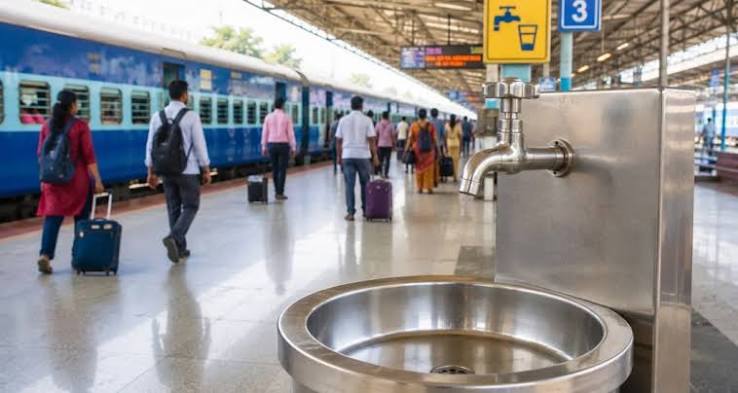
A recent Comptroller and Auditor General of India (CAG) performance audit has raised serious questions about passenger amenities, sanitation and drinking-water management at Indian Railway stations.
The audit examined 512 non-suburban railway stations through joint inspections and also analysed passenger-amenity data covering the wider railway network. It found that only 54 of the 512 inspected stations had no shortfall in the Minimum Essential Amenities (MEA) checked, meaning 458 stations had at least one identified shortfall. (Indian Railways)
More concerning for passengers, water samples from eight railway-station water coolers were reported to have tested positive for E. coli, while the audit also identified widespread gaps in drinking-water taps, toilets, shelters and accessibility facilities. (The Economic Times)
E. Coli in Railway Station Water: Why the Finding Matters
E. coli is commonly used as an indicator of faecal contamination in water. Its detection in drinking-water samples is therefore a serious warning sign because it indicates that the water system may have been exposed to contamination.
The reported stations where E. coli was detected in water coolers include:
-
Chhatrapati Shivaji Maharaj Terminus (CSMT)
-
Kalyan
-
Lonavala
-
Bhiwandi Road
-
Coimbatore Junction
-
Palakkad Junction
-
Hyderabad
-
Madhupur
The findings do not mean that all drinking water at these stations is continuously contaminated. They relate to samples examined during the audit. But they highlight the importance of regular testing, cleaning and monitoring of the entire water-supply chain.
The issue is particularly important because passengers often rely on station water during long journeys, especially when travelling with children, elderly family members or during summer months.
458 Out of 512 Stations Had Minimum-Amenity Shortfalls
One of the biggest findings of the audit concerns the availability of basic passenger amenities.
The CAG examined 512 selected non-suburban stations. Only 54 stations had no shortfall in the Minimum Essential Amenities checked. The remaining 458 stations had deficiencies in one or more amenities. (Indian Railways)
These MEA standards include basic facilities such as:
-
Drinking-water taps
-
Waiting halls
-
Seating
-
Platform shelters
-
Urinals and toilets
-
Water coolers
-
Foot overbridges
-
Public-address systems
-
Parking and circulation areas
-
Electronic train information systems
The Railway Board's 2018 guidelines had prescribed these minimum facilities for different categories of stations. (Indian Railways)
Drinking-Water Infrastructure Has Major Gaps
The problem is not limited to water quality.
According to the Passenger Amenities Management System (PAMS) data analysed by the audit, 2,035 stations had a shortfall in water taps compared with the prescribed MEA norms, covering 2,801 platforms.
The same data showed:
-
201 stations had fewer latrines than prescribed.
-
403 stations had fewer urinals than prescribed.
-
1,291 stations had inadequate platform-shelter coverage.
-
1,178 stations had a shortage of seats on one or more platforms.
-
1,983 stations did not have a Public Address System according to the analysed data. (Indian Railways)
These numbers demonstrate that passenger convenience is not simply about modern station buildings. Basic infrastructure such as water, toilets, seating and shelter remains an important issue.
Even Major Railway Stations Were Not Completely Free of Gaps
The audit also examined major high-earning stations.
According to the CAG's analysis of PAMS data, only 5 of 22 NSG-1 stations had all the specified Minimum Essential Amenities available as per the norms analysed.
The report specifically identified gaps involving major stations including CSMT, Dadar, Kalyan, Lokmanya Tilak Terminus, Panvel, Thane, Nagpur, Patna, Howrah, Sealdah, Delhi, Chennai Egmore, Bengaluru City, Ahmedabad and Mumbai Central Main, among others. (Indian Railways)
This is significant because these stations handle enormous passenger volumes and generate substantial railway earnings.
The audit therefore raises a basic question: if even some of the country's busiest stations have gaps in essential facilities, what happens at smaller stations?
Water Taps Missing Where General-Class Passengers Need Them
The audit also looked specifically at drinking-water access for passengers travelling in general and second-class coaches.
It found that at 190 of the 512 selected stations, water taps had not been provided at the ends of platforms as required for serving general and second-class passengers.
At 167 non-Amrit Bharat stations, the audit found that drinking-water taps for general/second-class passengers were not provided across 313 platforms. (Indian Railways)
For a passenger travelling in a crowded general compartment, this can be more than an inconvenience. If the water point is far away from the coach position, passengers may have very little time to refill bottles during a short halt.
Platform Shelters Also Remain a Problem
The audit found that platform shelters were inadequate at many stations.
At 380 stations, shelters were not provided on every platform at the locations where general second-class coaches board.
The practical impact is obvious: passengers may be left standing in the open during heavy rain, extreme heat or other adverse weather conditions. (Indian Railways)
The audit also found that 242 stations lacked adequate covered connections between foot overbridges and platform shelters. At 208 non-Amrit Bharat stations, 441 platforms with foot overbridges lacked such cover. (Indian Railways)
Divyang Passenger Facilities Also Show Serious Deficiencies
Accessibility was another major concern.
The audit examined facilities meant to allow persons with disabilities and passengers with reduced mobility to use stations more easily.
Among the 512 selected stations:
-
Standard ramps with railings were deficient at 243 stations during the second inspection.
-
Dedicated parking spaces for Divyang passengers were deficient at 133 of 240 applicable stations.
-
Non-slippery walkways were deficient at 76 of 240 applicable stations.
-
Dedicated drinking-water taps for Divyang passengers were deficient at 297 of 297 applicable stations in the inspection sample.
-
Wheelchairs were unavailable at 124 of the 512 stations examined. (Indian Railways)
The wider PAMS data also showed substantial shortages in ramps, Divyang-friendly water taps and toilets. (Indian Railways)
The Problem Is Also About Data Accuracy
Another interesting finding concerns the Railway's Passenger Amenities Management System (PAMS).
The system is intended to maintain information about passenger facilities at stations. However, CAG compared database information with actual physical conditions during inspections and found discrepancies.
For example, at 140 stations, the actual number of water taps was lower than what was shown in PAMS. Similar differences were found for fans, urinals and latrines. (Indian Railways)
This matters because accurate data is essential for planning maintenance and deciding where money and infrastructure should be allocated.
If the database says a facility exists but the passenger cannot actually find or use it, the digital record does not solve the problem.
Railway Water System Under Fresh Review
The CAG findings have also triggered attention to the railway drinking-water system.
Following a review by Railway Minister Ashwini Vaishnaw, Indian Railways announced plans for a "Tank-to-Tap" water filtration and monitoring system at around 20,000 locations, including water coolers. The initiative is intended to strengthen filtration and monitoring from water storage to the final point where passengers receive drinking water. (The Economic Times)
This is particularly important because simply treating water at the source may not be sufficient if contamination occurs later through storage tanks, pipes, coolers or outlets.
What Does This Mean for Railway Passengers?
The audit should not be interpreted as saying that railway-station drinking water across India is unsafe.
Rather, it identifies specific failures and gaps that require correction.
For passengers, the findings highlight why basic precautions can still be useful:
-
Check the condition and cleanliness of a water cooler before using it.
-
Carry sufficient drinking water during long journeys where practical.
-
Prefer sealed drinking water from authorised sources when the condition of a station water point appears doubtful.
-
Report visibly dirty or non-functional facilities through official railway complaint channels.
-
Passengers with disabilities should check the availability of accessibility assistance when planning journeys.
The larger responsibility, however, lies with the railway administration to ensure that passengers do not have to choose between convenience and basic hygiene.
Why the CAG Report Matters
Indian Railways carried around 2.924 billion non-suburban passengers in 2023–24, according to the audit document. With such a huge passenger base, even apparently small infrastructure deficiencies can affect millions of people. (Indian Railways)
The audit also shows that station modernisation cannot be measured only through new buildings, redesigned façades or large redevelopment projects.
For an ordinary passenger, the real test of a railway station can be much simpler:
Is there clean drinking water?
Is there a usable toilet?
Is there enough seating?
Is the platform covered?
Can an elderly or disabled passenger move safely?
These are the everyday services that determine the actual passenger experience.
Conclusion
The latest CAG audit provides an important reality check on passenger amenities and sanitation across Indian Railway stations.
The reported E. coli findings in eight water coolers are particularly concerning and underline the importance of continuous water-quality monitoring. At the same time, the finding that 458 of 512 inspected stations had at least one MEA shortfall demonstrates that basic infrastructure remains an unfinished task. (The Economic Times)
The proposed Tank-to-Tap system covering around 20,000 locations could help strengthen water safety, but its effectiveness will ultimately depend on regular testing, maintenance, accurate records and accountability. (The Economic Times)
For millions of Indians, a railway station is not just a place to catch a train. It is where their journey begins—and basic safety, hygiene and dignity should begin there too.
Note: The railway document available for these findings is a Provisional Paragraph/Performance Audit document covering the audit period and inspections described above; figures should be read in that context rather than as a claim that every railway station or every water outlet is contaminated. (Indian Railways)
Related Articles

Rahul Gandhi Biography 2026: Early Life, Education, Political Journey, Bharat Jodo Yatra & Achievements
READ MORE →
Pralhad Joshi Education Minister 2026 After Dharmendra
READ MORE →
Punjab Paper Leak Controversy: BJP Demands Harjot Bains
READ MORE →
Quit India Movement 84th Anniversary, PM Modi Quit India
READ MORE →