Nepal Floods: Shisir Khanal on Climate Compensation
Nepal Floods: Shisir Khanal Raises Climate Justice and Compensation Debate
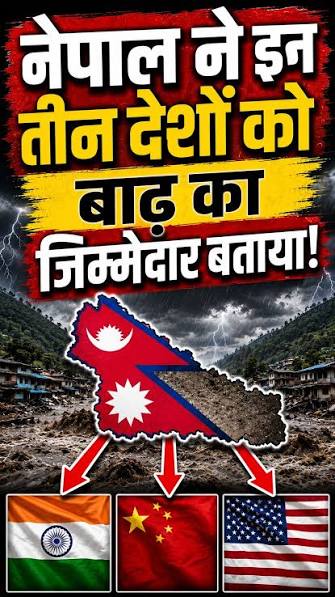
The devastating Bhote Koshi flash floods in Nepal have triggered a major debate over climate change, disaster responsibility and the meaning of international assistance. Nepal Foreign Minister Shisir Khanal initially spoke of shifting the country's approach from conventional aid towards “justice and compensation”, arguing that vulnerable countries such as Nepal bear a disproportionate burden from the global climate crisis. (The Indian Express)
However, there is an important latest clarification that should not be missed. On September 4, Khanal said that Nepal had not formally asked India, China, the United States, or any other specific country for compensation. He explained that his remarks were intended to highlight the global climate-change dimension of the disaster rather than make a country-specific financial claim. (India Gazette)
That clarification significantly changes how the earlier statements should be understood.


What Happened in Nepal?
On the morning of August 26, 2026, a catastrophic flash flood struck the Bhote Koshi River at Rasuwagadhi, close to the Nepal-China border.
Nepal's Foreign Ministry described the event as something more severe than a conventional flood, with Khanal referring to it as a “Himalayan Tsunami.” The disaster caused extensive destruction along the Bhote Koshi and Trishuli river corridors. (Ministry of Foreign Affairs)
Roads, bridges, settlements and infrastructure were severely damaged, while search-and-rescue operations faced enormous challenges because of the mountainous terrain and damaged transportation links.
By September 4, Reuters reported that the disaster had caused more than 1,250 deaths, with over 4,200 people still missing. Nepal's authorities estimated losses at approximately 387.5 billion Nepalese rupees, or about $2.56 billion. (Reuters)
The scale of the destruction has turned the disaster into one of Nepal's most serious recent humanitarian and reconstruction challenges.
Why Did Shisir Khanal Talk About Climate Compensation?
In interviews with Kantipur TV, excerpts of which were reported by The Kathmandu Post and Indian media, Foreign Minister Shisir Khanal argued that Nepal is particularly vulnerable to climate-related disasters despite having a very small contribution to global greenhouse-gas emissions.
He said Nepal was moving its diplomatic framework from “aid” toward “justice and compensation.” He described assistance after disasters as a question of legal and moral responsibility rather than simply charity. (The Indian Express)
Khanal specifically referred to China, the United States and India as major greenhouse-gas emitters and argued that large industrial emitters have a historical responsibility towards vulnerable countries. (The Indian Express)
This led to headlines suggesting that Nepal was seeking compensation directly from those three countries.
But There Is an Important Correction
On September 4, Khanal clarified that neither he nor Nepal's Foreign Ministry or government had formally demanded compensation from India, China or the United States.
He said the discussion was about asking the international community to view the catastrophe through the lens of climate change and its unequal impact on vulnerable countries. (India Gazette)
So, it is more accurate to describe the episode as a climate-justice and international-responsibility debate, rather than saying Nepal has formally issued a compensation bill to India, China and the US.
Nepal's Climate Vulnerability
Nepal is a mountainous country whose economy, communities and infrastructure are highly exposed to environmental hazards.
The Himalayas are particularly sensitive to changes in temperature, precipitation, snow and ice conditions.
Climate-related risks can include:
-
Glacier and ice instability
-
Landslides
-
Flash floods
-
Glacial lake outburst floods
-
Erratic rainfall
-
River flooding
-
Damage to roads and bridges
-
Risks to hydropower infrastructure
-
Disruption of mountain communities
The recent Bhote Koshi disaster has therefore renewed discussions about how climate change could amplify risks in fragile Himalayan environments.
However, climate change should not automatically be treated as the sole proven cause of this particular disaster.
Nepal's own Foreign Ministry initially said the cause of the August 26 flood had not yet been fully determined. (Ministry of Foreign Affairs)
This distinction is important: climate change can increase the vulnerability of mountain systems, but establishing the precise physical trigger of an individual flood requires scientific investigation.
What Triggered the Bhote Koshi Disaster?
The precise mechanism has evolved as assessments have progressed.
Nepal's August 29 briefing stated that the cause had not yet been fully determined. (Ministry of Foreign Affairs)
Subsequent reporting and scientific assessments pointed toward a catastrophic glacial/ice-rock collapse or related high-altitude event as the likely trigger.
Reuters reported that the floods were triggered by a glacier collapse, while later reporting described a combination of ice, rock and mud moving into the river system. (Reuters)
The important point is that the disaster involved an extremely rapid release of water and debris into the Bhote Koshi system, leaving communities and infrastructure with little time to respond.
The Human Cost
The humanitarian impact has been enormous.
The flood affected:
-
Local residents
-
Foreign nationals
-
Hydropower workers
-
Transport workers
-
Tourists
-
Pilgrims
-
Businesses operating along the river corridors
Search-and-rescue operations have been complicated by destroyed roads, bridges, tunnels and communication infrastructure.
Nepal's Foreign Ministry has repeatedly said that its immediate priority is to save lives, locate missing people, rescue trapped persons and provide relief. (Ministry of Foreign Affairs)

Why Rescue Operations Are So Difficult
The geography of the affected region has made the emergency particularly challenging.
Mountain valleys can be extremely difficult to access even under normal circumstances. After the flood:
-
Roads were damaged or destroyed.
-
Bridges were washed away.
-
River corridors were filled with debris.
-
Communication systems were disrupted.
-
Some people were trapped inside tunnels.
-
Helicopter access became important.
-
Search teams had to work through unstable terrain.
Nepal has therefore sought international technical assistance, particularly for specialised rescue operations.
The Foreign Ministry said Khanal had been in contact with representatives from India, China, the United Kingdom, South Korea, Australia, Bangladesh, South Africa, Venezuela, the United States and other countries regarding international support. (Ministry of Foreign Affairs)
India's Role in the Nepal Flood Response
The climate-compensation debate should not be confused with India's immediate disaster-response assistance.
India has provided support to Nepal following the disaster.
According to reporting by The Indian Express, India had sent multiple shipments of assistance, including essential medicines, expert assistance and equipment for a temporary modular steel bridge. (The Indian Express)
This is significant because the two countries share close geographical and people-to-people connections.
The disaster also affected Indian nationals who were in Nepal for work, tourism and pilgrimage.
Therefore, India-Nepal cooperation has continued on the humanitarian and rescue front even as questions over climate responsibility have entered the diplomatic discussion.
China's Importance in the Disaster
The Bhote Koshi disaster occurred near the Nepal-China border, making China an important part of the geographical and disaster-response picture.
The upper Himalayan environment does not follow political boundaries. Rivers, glaciers, mountains and weather systems can affect multiple countries.
This makes cross-border cooperation important for:
-
Flood monitoring
-
Glacier observation
-
Early-warning systems
-
Hydrological data sharing
-
Disaster preparedness
-
Search and rescue
-
Infrastructure protection
Nepal's Foreign Ministry has also been coordinating with China and seeking technical support following the disaster. (Ministry of Foreign Affairs)
What About the United States?
The United States was also mentioned in Khanal's comments because of its position as a major historical and current greenhouse-gas emitter.
But again, the September 4 clarification is crucial.
Khanal said Nepal had not formally asked the United States—or India or China—for country-specific compensation. His argument was instead that the international community should recognise the disproportionate climate risks faced by vulnerable countries. (India Gazette)
This distinction matters because a political statement about climate responsibility is not the same thing as a legally established compensation claim against a particular government.
Climate Justice vs Climate Compensation
The Nepal debate highlights a much bigger international issue.
Climate Justice
Climate justice generally focuses on the argument that countries and communities contributing relatively little to global emissions can nevertheless suffer severe consequences from climate change.
Climate Compensation
Climate compensation goes a step further by raising questions about whether countries or institutions responsible for larger historical emissions should provide financial resources to vulnerable countries suffering climate-related losses.
The international climate system has increasingly discussed loss and damage, but determining who should pay, how much should be paid and under what legal framework remains complicated.
That is why Khanal's comments attracted international attention.
Why Nepal's Position Is Significant
Nepal's argument reflects a broader concern among vulnerable developing countries.
A country can have:
Low emissions → High vulnerability → High disaster losses
This creates a difficult international policy question:
If countries contributing relatively little to climate change experience increasingly severe climate-related losses, who should help finance their recovery and adaptation?
There is no simple answer.
Factors such as historical emissions, current emissions, economic capacity, adaptation needs, disaster attribution and international climate agreements all enter the discussion.
Nepal's Government Seeks International Support
Even apart from the compensation debate, Nepal is seeking international assistance for reconstruction and recovery.
The country's Foreign Ministry has held discussions with multiple governments and international organisations.
At its September 3 diplomatic briefing, Nepal's government outlined the scale of the disaster and its continuing need for international cooperation. (Ministry of Foreign Affairs)
The country's immediate requirements include:
-
Search and rescue
-
Medical assistance
-
Infrastructure restoration
-
Roads and bridges
-
Communication systems
-
Electricity
-
Water supply
-
Housing reconstruction
-
Support for displaced families
-
Technical expertise
Nepal's Reconstruction Challenge
The financial cost of the disaster is likely to be substantial.
Reuters reported on September 4 that Nepal's preliminary damage estimate stood at approximately NPR 387.5 billion ($2.56 billion). At least 7,500 homes were destroyed, while around 20,000 homes may need rebuilding. (Reuters)
The initial recovery estimate includes urgent spending for:
-
Road construction
-
Temporary shelters
-
Drinking-water systems
-
Power restoration
The full damage and needs assessment is still developing, meaning the final reconstruction requirement could change.
The Bigger Himalayan Climate Risk
The Bhote Koshi disaster has also renewed attention on the vulnerability of the Himalayan region.
Nepal, India, Bhutan, China and other countries in the wider Himalayan region share interconnected mountain ecosystems.
Changes in:
-
Glacier conditions
-
Snow cover
-
Rainfall patterns
-
Permafrost
-
River flows
-
Landslide activity
can have consequences far beyond national borders.
This means that disaster preparedness cannot depend only on individual countries.
Regional cooperation could become increasingly important.
What Could Be Done?
The disaster has highlighted several areas where Himalayan countries could cooperate more closely.
1. Better Early-Warning Systems
Communities downstream need warnings as quickly as possible when dangerous changes occur upstream.
2. Cross-Border Data Sharing
Real-time information about glaciers, rivers, rainfall and high-altitude lakes could improve preparedness.
3. Glacier Monitoring
Satellite imagery and ground-based monitoring can help identify potentially dangerous changes.
4. Stronger Infrastructure
Roads, bridges and hydropower facilities in high-risk valleys need to be designed for extreme events.
5. Faster Rescue Cooperation
Specialised tunnel, mountain and engineering teams can be mobilised across borders when disasters exceed national capacity.
6. Climate Adaptation Finance
Vulnerable countries require financial resources not only after disasters but also before disasters occur.
Is Nepal Really “Blaming” India, China and the US?
This is where the story requires careful interpretation.
The initial interview remarks were widely reported as Nepal blaming major emitters and seeking climate compensation. (The Indian Express)
But the latest clarification from Shisir Khanal on September 4 says Nepal has not asked any specific country, including India, China or the United States, for compensation. (India Gazette)
Therefore, a balanced description would be:
Nepal has raised the issue of climate justice and the responsibility of major emitters after the devastating Bhote Koshi floods, but its Foreign Minister has clarified that the government has not made a specific compensation demand against India, China or the United States.
That is more accurate than simply saying that Nepal has formally demanded money from the three countries.
Key Facts at a Glance
| Issue | Details |
|---|---|
| Disaster | Bhote Koshi flash flood |
| Date | August 26, 2026 |
| Main affected area | Rasuwa and Bhote Koshi–Trishuli corridors |
| Location | Nepal-China border region |
| Nepal Foreign Minister | Shisir Khanal |
| Main diplomatic issue | Climate justice and international responsibility |
| Initial position | Shift from “aid” toward “justice and compensation” |
| Latest clarification | No country-specific compensation request |
| Countries mentioned | India, China and United States |
| Latest reported deaths | More than 1,250 |
| Missing | More than 4,200 |
| Estimated losses | About NPR 387.5 billion / $2.56 billion |
| Homes destroyed | At least 7,500 |
| Homes needing reconstruction | Around 20,000 |
The casualty and damage figures are based on the latest Reuters reporting available on September 4, while the diplomatic clarification comes from Khanal's September 4 remarks. (Reuters)
Final Takeaway
The Nepal flood crisis is no longer only a story about a devastating natural disaster. It has also become a debate about climate vulnerability, international responsibility, disaster finance and Himalayan cooperation.
Foreign Minister Shisir Khanal initially argued that Nepal should move from a traditional aid-based approach toward climate justice and compensation, pointing to the much larger greenhouse-gas contributions of major economies. (The Indian Express)
But his September 4 clarification is essential: Nepal has not formally demanded compensation from India, China, the United States or any other specific country. Instead, Khanal says Nepal wants the international community to recognise the disproportionate climate risks faced by countries like Nepal. (India Gazette)
Meanwhile, the immediate challenge remains much more urgent—finding missing people, helping survivors and rebuilding roads, bridges, homes, power infrastructure and communities after one of the most destructive disasters Nepal has faced in recent years. Reuters' latest estimate puts the physical and economic losses at roughly $2.56 billion. (Reuters)
The tragedy also carries a lesson for the entire Himalayan region: climate risks do not stop at national borders, making early-warning systems, scientific cooperation and regional disaster preparedness increasingly important.