Thamirabarani River Declared Juristic Person by Madras HC
Madras High Court Declares Thamirabarani River a Juristic Person: What the Landmark 2026 Ruling Means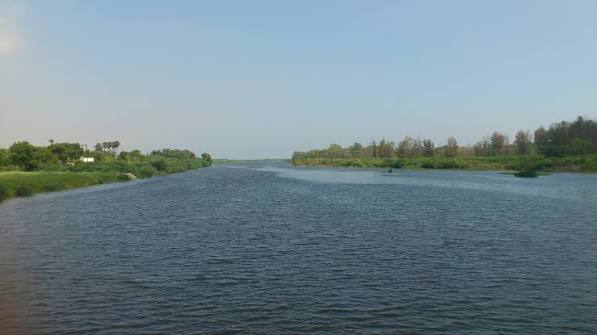
The Madras High Court has recognised the Thamirabarani River, also known as the Porunai, as a “juristic person” for the limited purpose of protecting the river from pollution. The significant ruling was delivered by the Madurai Bench comprising Justice G.R. Swaminathan and Justice B. Pugalendhi in July 2026.
The decision came against the backdrop of serious concerns over the dumping of clothes, plastic, footwear and other waste into the river during religious and funeral rituals. The court observed that the Thamirabarani is worshipped as a deity and said its legal personhood flows from that status, rather than simply from the fact that it is a river. (Bar and Bench - Indian Legal news)
The judgment has attracted attention because it brings together religious tradition, environmental protection and the concept of legal personhood for natural entities.
What Did the Madras High Court Actually Rule?
The court's ruling does not mean that the Thamirabarani has become a human-like legal person with all the rights and responsibilities of an individual.
Instead, the High Court recognised the river as a juristic person specifically to strengthen legal protection against pollution.
The court noted that the river is traditionally worshipped as a deity. On that basis, it held that the Thamirabarani could possess legal personhood. The judgment specifically distinguished this recognition from a general declaration that every river automatically becomes a legal person. (Bar and Bench - Indian Legal news)
This distinction is important because the judgment's primary objective is environmental protection.
The Key Message
The court made it clear that religious practices cannot be used as a justification for polluting a public water body.
It also referred to the constitutional protection surrounding religious freedom and environmental concerns, observing that Article 25's guarantee of religious freedom is subject to considerations including public health. (The Times of India)
Why Was the Thamirabarani River Case Heard by the Court?
The case initially arose from proceedings involving a riverside mandapam in the Tirunelveli region. During the hearing, however, the court was informed about the large quantity of waste being dumped into the river during rituals performed along the Thamirabarani's bathing ghats.
Officials told the court that thousands of devotees visit areas around Papanasam to perform funeral and ancestral rites. These activities sometimes involved leaving clothes, towels, footwear and other materials in the river.
An environmental volunteer, Moorthy, also informed the court about the scale of the problem and the ongoing clean-up efforts. (The New Indian Express)
The issue therefore expanded from the original dispute into a broader question:
How can religious and cultural practices be protected without allowing serious environmental damage to a river that supplies water to communities?
86–90 Tonnes of Clothes Removed From the River
One of the most striking details considered by the court was the quantity of waste recovered during cleaning operations.
According to information placed before the court, between May 7 and May 28, 2026, volunteers and others involved in the clean-up removed approximately:
-
86–90 tonnes of discarded clothes
-
Around 2.2 tonnes of holy ash
-
1,385 kg of plastic waste
-
220 kg of glass bottles
-
115 kg of footwear
-
Around 374 kg of sanitary napkins and diapers
-
Other waste including burnt bricks, oil bottles and shampoo sachets
The court described the figures as alarming. (The Times of India)
The scale of the clean-up shows that the issue was not simply about a few isolated incidents of littering. It had developed into a significant river-management and environmental challenge.
Why Are Clothes and Plastic Dangerous for the River?
Discarded clothing can become trapped among rocks, vegetation and other parts of the riverbed. Synthetic materials such as polyester do not readily decompose and can remain in the environment for long periods.
The court was also informed about concerns involving aquatic life. Reports placed before the bench highlighted the risk of discarded garments becoming entangled around turtles found in the Thamirabarani, potentially causing injury or suffocation. (India Legal Live)
This makes river pollution more than an issue of appearance.
It can affect:
Water quality → aquatic life → biodiversity → public health → communities dependent on the river.
The Thamirabarani is particularly important because it is a perennial river and serves the water needs of communities and agriculture in southern Tamil Nadu. (The Times of India)
What Religious Activities Has the Court Restricted?
The court issued strong directions against dumping non-biodegradable materials into the river during rituals.
The restrictions cover materials such as:
-
Old and new clothes
-
Towels
-
Footwear
-
Plastic materials
-
Glass bottles
-
Garlands and other waste
-
Other non-biodegradable articles associated with rituals
The court also addressed the immersion of ashes.
According to reports on the judgment, ashes may be immersed only in unfired earthen pots, intended to avoid leaving non-biodegradable material in the river. (Bar and Bench - Indian Legal news)
The approach attempts to preserve the religious practice while reducing the environmental damage associated with the disposal of other materials.
Can Religion Be Used as a Reason to Pollute a River?
The court's answer was effectively no.
The bench emphasised that religious freedom cannot override public health and environmental protection. The court referred to Article 25 of the Constitution while considering the environmental consequences of ritual practices. (The Times of India)
This does not mean religious practices themselves are prohibited.
Rather, the judgment seeks to draw a line between performing a religious ritual and disposing of harmful waste into a natural water body.
That distinction could become important in future environmental cases involving rivers, lakes and other ecologically sensitive locations.
What Happens to People Who Violate the Directions?
The court directed the authorities to take measures to prevent pollution and enforce the restrictions.
The Tirunelveli district administration and local authorities have been asked to take steps to prevent the dumping of clothes and other waste around the river.
The court has also stressed the importance of public awareness and enforcement rather than relying only on punitive measures. (The Times of India)
This is particularly important because the court recognised that simply issuing an order will not solve the problem unless visitors, devotees, local communities and authorities work together.
What Does “Juristic Person” Mean?
The term juristic person may sound complicated, but the basic idea is simple.
In law, a juristic person is an entity that can be recognised as having certain legal rights and interests even though it is not a human being.
For example, Indian law has long recognised certain non-human entities, including Hindu deities, as legal persons for specific purposes.
The Madras High Court used this legal concept in the Thamirabarani case because the river is revered as a deity.
The court therefore recognised the river's legal personhood for protecting it against pollution, rather than granting it unlimited legal rights. (Bar and Bench - Indian Legal news)
Thamirabarani Is Not the First Natural Entity to Receive Legal Protection
The idea of granting legal status to natural entities is not entirely new in India.
Ganga and Yamuna — 2017
In 2017, the Uttarakhand High Court recognised the Ganga and Yamuna rivers as living legal entities. However, the Supreme Court subsequently stayed that order, with concerns including questions surrounding the legal and administrative consequences of such recognition.
The Thamirabarani ruling therefore represents another significant development in India's evolving environmental jurisprudence.
Sukhna Lake — 2020
The Punjab and Haryana High Court also recognised Chandigarh's Sukhna Lake as a legal entity in 2020 in the context of protecting its ecological character.
These cases demonstrate the judiciary's increasing willingness to explore legal mechanisms that give ecosystems stronger protection.
Why the Thamirabarani Ruling Is Important
The significance of the judgment goes beyond Tamil Nadu.
India's rivers face several types of pressure:
-
Industrial pollution
-
Untreated sewage
-
Plastic waste
-
Encroachment
-
Sand mining
-
Agricultural runoff
-
Religious and tourism-related waste
-
Urbanisation
The Thamirabarani judgment highlights one specific aspect: cultural and religious activities must coexist with environmental responsibility.
The case also reinforces an increasingly important idea in environmental law — nature should not be viewed only as a resource for human use.
A River That Supports Millions
The Thamirabarani originates in the Western Ghats and flows through southern Tamil Nadu. It is particularly important to the districts of Tirunelveli, Thoothukudi and Tenkasi, supporting drinking-water requirements and agriculture. (Organiser)
That makes protection of the river a matter of public interest.
A polluted river does not only affect fish and turtles. It can eventually affect everyone who depends on the river system.
What This Means for the Future
The biggest challenge now is implementation.
A court order can establish legal protection, but maintaining a clean river requires continuous action.
Authorities will need to focus on:
-
Strict monitoring of riverbanks and bathing ghats.
-
Waste collection facilities near important ritual sites.
-
Public awareness campaigns explaining what can and cannot be placed in the river.
-
Regular cleaning operations where waste accumulation is already significant.
-
Enforcement and penalties against deliberate dumping.
-
Eco-friendly alternatives for religious and funeral practices.
The Tamil Nadu administration had already begun reviewing measures to prevent the dumping of clothes and waste around Papanasam earlier in 2026. (Tirunelveli District)
Conclusion: A New Legal Shield for the Thamirabarani
The Madras High Court's recognition of the Thamirabarani River as a juristic person is a significant development in India's environmental jurisprudence.
But the most important part of the judgment is not the legal terminology.
It is the principle behind it:
A sacred river cannot be protected by reverence alone; it also needs responsible human behaviour.
By connecting the river's religious significance with legal protection against pollution, the court has attempted to create a stronger framework for preserving the Thamirabarani.
The challenge now lies with authorities, communities, devotees and citizens to ensure that the river's new legal status translates into cleaner water, healthier ecosystems and a sustainable future for the people who depend on it. (Bar and Bench - Indian Legal news)
Sources
-
Madras High Court reporting by Bar & Bench on the July 2026 judgment. (Bar and Bench - Indian Legal news)
-
The Times of India report on the court's observations and waste-removal figures. (The Times of India)
-
The New Indian Express report on the proposed restrictions and river-cleaning issue. (The New Indian Express)
-
Tirunelveli District Administration's May 2026 update on measures to prevent river dumping. (Tirunelveli District)
Related Articles

Kerala Vishu Bumper Result 2026 – ₹12 Crore Winning Number List
READ MORE →
Rahul Gandhi Biography 2026: Early Life, Education, Political Journey, Bharat Jodo Yatra & Achievements
READ MORE →
Punjab Paper Leak Controversy: BJP Demands Harjot Bains
READ MORE →
Kotak Kanya Scholarship 2026 Apply Online
READ MORE →