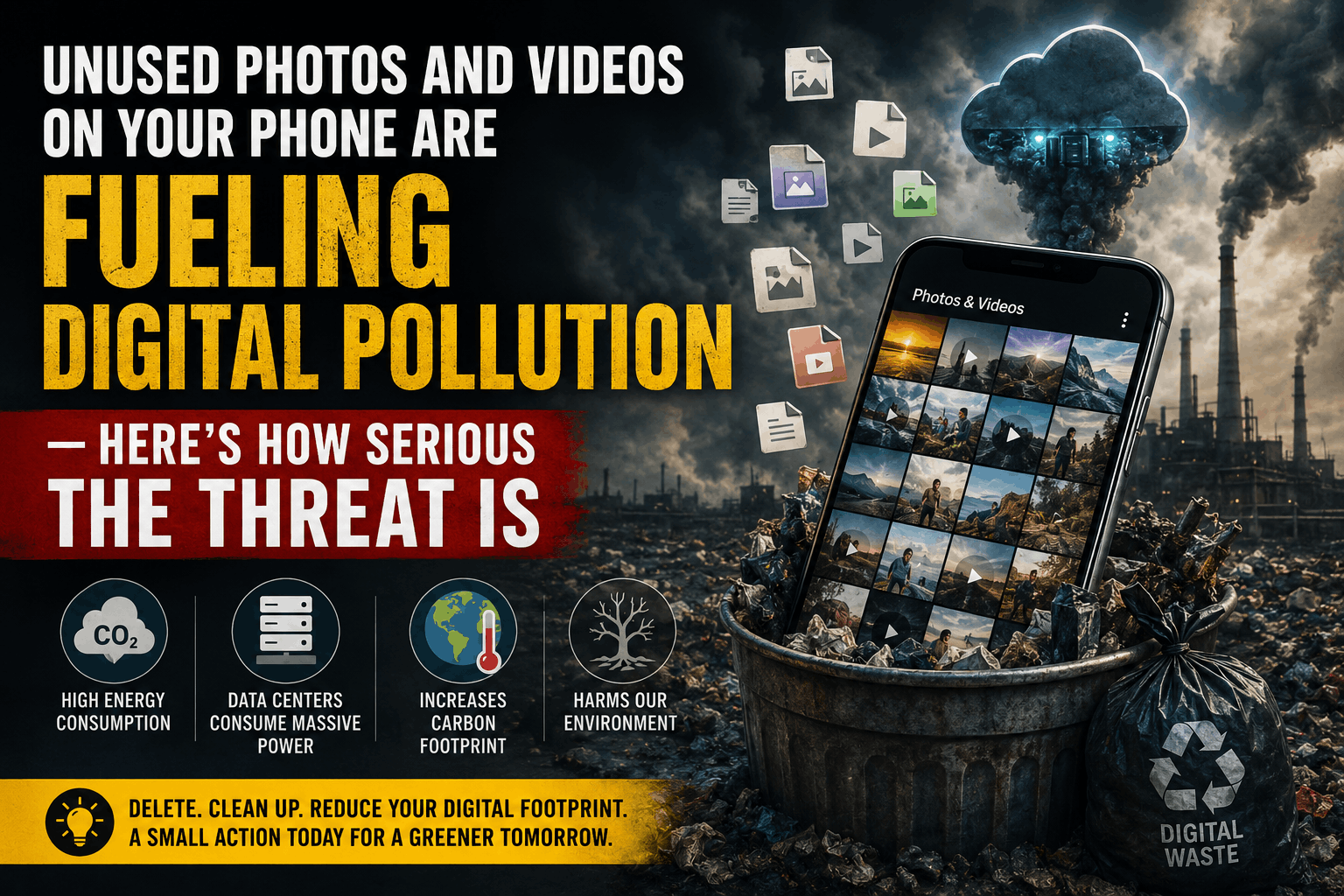
Unused Photos and Videos on Your Phone Are Fueling Digital Pollution – Here’s How Serious the Threat Is
Unused Photos and Videos on Your Phone Are Fueling ‘Digital Pollution’ – Here’s How Big the Threat Really Is
In our smartphone-obsessed world, we capture thousands of photos and videos every year — selfies, food pictures, vacation memories, random screenshots, and old reels we never watch again. While these files seem harmlessly stored in our galleries, they are silently contributing to a growing global crisis known as Digital Pollution.
This invisible environmental and technological burden is expanding rapidly. Experts now warn that unused photos and videos stored on phones, cloud servers, and data centers are one of the fastest-growing sources of digital waste in 2026.
What is Digital Pollution?
Digital pollution, also called digital waste or data pollution, refers to the environmental, energy, and resource impact caused by storing, processing, and transmitting unnecessary digital data. Every photo, video, email, and app cache requires physical infrastructure — servers, hard drives, cooling systems, and massive amounts of electricity.
According to recent studies, the world’s data centers already consume more electricity than some entire countries. Unused media files are a major contributor to this surge.
The Scale of the Problem: Mind-Boggling Numbers
- The average smartphone user stores between 5,000 to 20,000 photos and videos.
- Globally, people take over 1.4 trillion photos every year.
- A single 4K video can consume hundreds of megabytes, while high-resolution photos often range from 5MB to 50MB each.
- Unused or “dark data” (data that is stored but never accessed) accounts for nearly 60-70% of all stored data in many systems.
If every person deleted just 100 unnecessary photos and videos from their phone, it would free up enormous server space and significantly reduce carbon emissions worldwide.
How Unused Media Creates Digital Pollution
- Energy Consumption Every time you open Google Photos, iCloud, or your gallery app, servers are working in the background. Storing and backing up millions of unused files requires constant power for servers and cooling systems. Data centers are responsible for around 2-3% of global electricity consumption — a figure expected to rise to 8% by 2030.
- Carbon Footprint The carbon emissions from digital storage are comparable to the aviation industry. Keeping one unused high-resolution video in the cloud for years generates more CO₂ than driving a car for several kilometers.
- Resource Waste Manufacturing servers, hard drives, and smartphones requires rare earth minerals, water, and energy. When we hoard unnecessary data, we indirectly demand more infrastructure, accelerating resource depletion.
- E-Waste Connection Faster phone storage filling up leads people to buy new devices more frequently, adding to the global e-waste crisis.
Hidden Dangers Beyond the Environment
Security & Privacy Risks Old photos and videos often contain sensitive information — location data, faces of family members, bank details in screenshots, and personal moments. These files become easy targets for hackers if your phone or cloud account is compromised.
Mental Clutter Digital hoarding affects mental health. A cluttered gallery creates anxiety, decision fatigue, and a constant feeling of being overwhelmed — a phenomenon psychologists now call “Digital Clutter Syndrome.”
Performance Issues Unused media slows down your phone, drains battery faster, and reduces available storage for important apps and files.
The Global Picture in 2026
Tech giants like Google, Apple, Meta, and Microsoft are among the largest consumers of electricity due to cloud storage. Google Photos alone stores hundreds of billions of images and videos. With AI features like automatic backups and “Memories,” users are encouraged to store even more content without realizing the cumulative impact.
Developing countries like India are seeing explosive growth in smartphone usage and digital content creation, making digital pollution a serious concern for nations already struggling with energy demands.
Practical Solutions: How to Reduce Your Digital Pollution
Here’s how you can start cleaning up today:
- Monthly Digital Detox Set aside time every month to review and delete unwanted photos and videos.
- Use Smart Tools Apps like Google Photos have “Free Up Space” features that identify blurry, duplicate, or low-quality files.
- Adopt the 3-Month Rule If you haven’t looked at a photo or video in 3 months, delete or archive it properly.
- Cloud Storage Optimization Use compressed formats and turn off automatic high-quality backups for casual shots.
- Regular Backups + Selective Storage Keep only meaningful memories and move important files to external drives or well-organized cloud folders.
- Awareness Campaigns Schools and organizations should start educating people about digital pollution, just like plastic pollution.
The Bigger Picture: Collective Responsibility
While individual actions matter, tech companies also need to take responsibility by:
- Making data deletion easier and more transparent
- Offering better storage optimization tools
- Investing in greener data centers
- Educating users about the environmental cost of digital hoarding
Governments can play a role by including digital carbon footprint in environmental policies and promoting “Digital Minimalism.”
Conclusion: Small Actions, Big Impact
The photos and videos lying unused in your phone are not just taking up space — they are contributing to a massive, growing problem of digital pollution that affects our environment, energy resources, privacy, and mental well-being.
The good news? Unlike plastic waste, digital waste is much easier to reduce. A few hours spent cleaning your gallery can make a real difference.
Start today. Review your camera roll. Delete what no longer serves you. Your phone will run faster, your mind will feel lighter, and the planet will thank you.
The era of digital minimalism has begun. Are you ready to do your part?