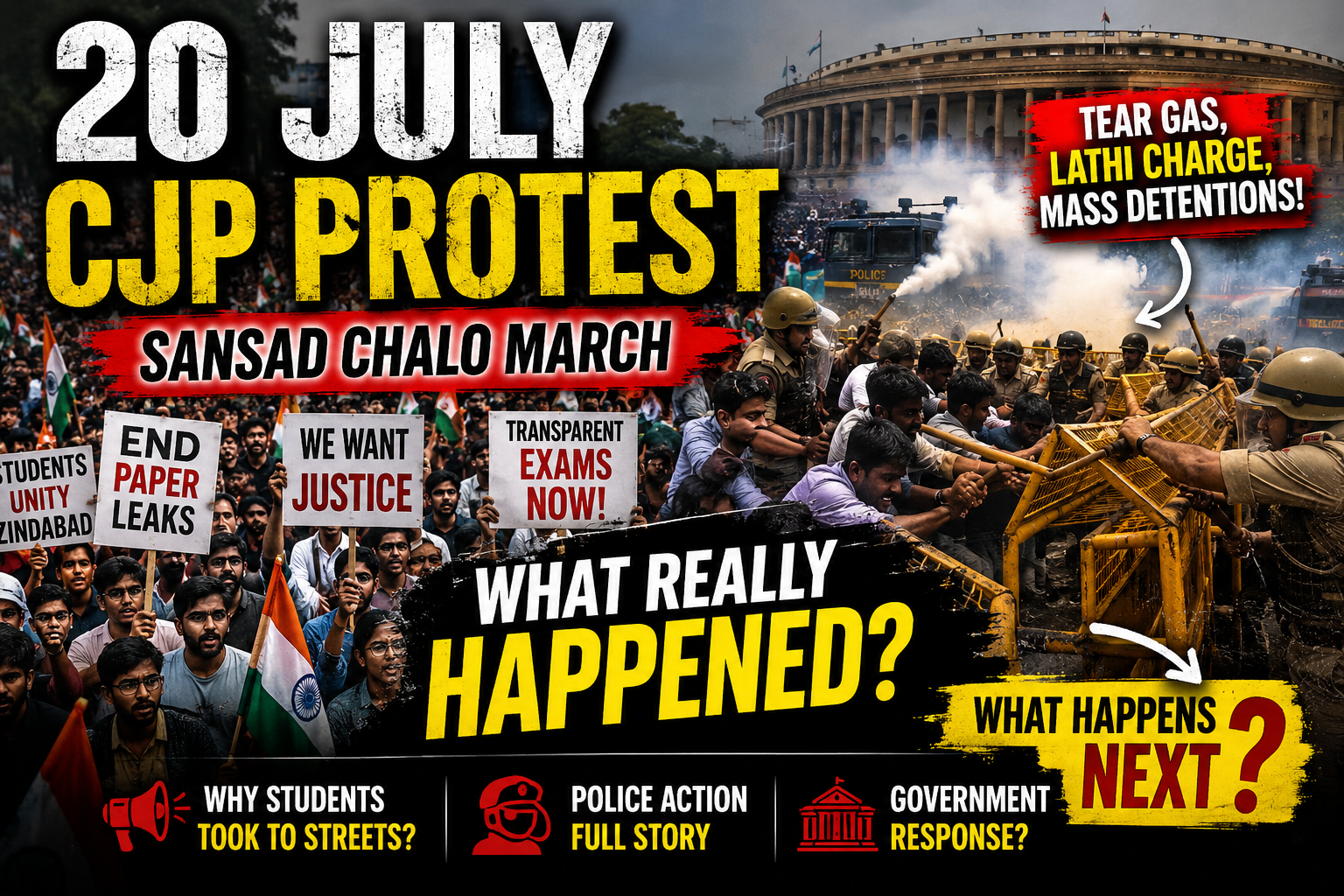
CJP Protest 20 July 2026 Explained: Full Timeline and Latest Updates
CJP Protest on 20 July 2026: Everything That Happened During the "Sansad Chalo" March
Published: 22 July 2026
The Cockroach Janata Party (CJP) protest on 20 July 2026 became one of the most discussed public demonstrations in India. What began as an online youth-led movement against examination irregularities and recruitment issues transformed into a massive march towards Parliament, drawing thousands of students, job aspirants, and supporters from across the country.
The protest, held on the opening day of the Parliament's Monsoon Session, brought attention to long-standing concerns over examination transparency, alleged paper leaks, recruitment delays, and accountability in the education system. It also led to clashes between protesters and police, political reactions, and nationwide debate.
In this article, we explain everything that happened during the 20 July CJP protest, why the movement began, what the protesters demanded, how the government responded, and what could happen next.
What is the CJP Movement?
The Cockroach Janata Party (CJP) is a youth-led protest movement that emerged on social media before expanding into large-scale demonstrations across India.
Initially started as a satirical online campaign, the movement quickly gained popularity among students preparing for competitive examinations. Over time, it became a platform for raising concerns about examination integrity, recruitment delays, transparency in public institutions, and accountability from government agencies.
Unlike a traditional political party, CJP describes itself as a public movement driven primarily by students and young citizens demanding reforms.
Why Was the 20 July Protest Organized?
The protest was announced several weeks before Parliament's Monsoon Session.
Organizers called for a nationwide "Sansad Chalo" (March to Parliament) campaign, arguing that repeated protests had failed to bring meaningful reforms. They believed that marching toward Parliament during the session would force policymakers to address the concerns of students.
Participants travelled from multiple states, including Uttar Pradesh, Rajasthan, Haryana, Punjab, Bihar, Madhya Pradesh, Maharashtra, and Delhi, making it one of the largest demonstrations associated with the movement.
Build-Up Before the Protest
In the days leading up to 20 July:
-
Social media campaigns encouraged students to join the march.
-
Volunteers arranged transportation and accommodation for participants arriving from outside Delhi.
-
Multiple student organizations expressed support.
-
Security agencies increased surveillance around central Delhi.
-
Delhi Police imposed restrictions in sensitive areas near Parliament to prevent unauthorized gatherings.
The atmosphere remained tense as both organizers and authorities prepared for the event.
What Happened on 20 July?
Early in the morning, thousands of protesters assembled at Jantar Mantar, carrying banners, placards, and the symbolic imagery associated with the CJP movement.
The gathering began peacefully with speeches from student leaders and supporters. Organizers repeated that the march would remain non-violent and urged participants to follow instructions while moving toward Parliament.
As the crowd started marching, police had already established multiple layers of barricades along the planned route.
Initially, protesters remained behind the barricades while raising slogans demanding reforms. However, as the crowd grew larger, tensions increased when some participants attempted to move beyond the restricted zone.
Police asked demonstrators to stop and warned that the area ahead had been declared a restricted security zone.
Police Action and Clashes
The situation escalated after sections of the crowd attempted to move closer to Parliament.
According to official statements, police used crowd-control measures after protesters allegedly tried to cross barricades and enter prohibited areas.
Reports from the ground indicated that authorities used:
-
Water cannons
-
Tear gas shells
-
Physical barricades
-
Detentions of several protesters
Some videos circulated on social media appeared to show confrontations between police personnel and demonstrators. Protest organizers claimed excessive force had been used against peaceful participants, while police maintained that their actions were necessary to maintain security around Parliament.
The incident quickly became one of the most discussed topics on social media.
Main Demands of the Protesters
Although different groups participated in the protest, several demands remained common throughout the movement.
These included:
-
Greater transparency in competitive examinations.
-
Strict action against examination paper leaks.
-
Independent investigations into recruitment-related controversies.
-
Faster recruitment processes for government jobs.
-
Accountability of officials responsible for examination failures.
-
Better protection of students' interests.
-
Comprehensive reforms in India's examination system.
-
Increased transparency in public recruitment agencies.
Many participants argued that repeated delays and alleged irregularities had negatively affected the careers of millions of students.
Public Participation
One of the most notable aspects of the 20 July protest was the diversity of participants.
The gathering included:
-
UPSC aspirants
-
SSC candidates
-
Railway recruitment aspirants
-
Banking examination candidates
-
Engineering students
-
Medical entrance aspirants
-
University students
-
Teachers
-
Social activists
-
Independent volunteers
Many participants carried handwritten placards describing the years they had spent preparing for examinations while waiting for recruitment processes to be completed.
Role of Social Media
Social media played a major role in the success of the movement.
Hashtags related to the protest remained among the most discussed topics throughout the day.
Live videos, photographs, eyewitness accounts, and interviews were widely shared across platforms including YouTube, X, Instagram, and Facebook.
Supporters argued that social media helped spread awareness, while critics expressed concerns about misinformation and unverified claims circulating online.
Political Reactions
The protest generated reactions from leaders across the political spectrum.
Several opposition leaders criticized the police response and demanded greater dialogue with students.
Government representatives stated that security measures were necessary because Parliament was in session and public safety had to be ensured.
Political debates surrounding the protest continued inside and outside Parliament during the following days.
Did the Government Respond?
Following the protest, reports suggested that representatives associated with the movement were invited for discussions with senior government leaders.
While some protesters described this as a positive first step, others argued that meaningful reforms would only be achieved through concrete policy changes rather than meetings alone.
No immediate nationwide reforms were announced on the day of the protest, but discussions continued in the days that followed.
Public Opinion
The protest divided public opinion.
Supporters believed the demonstration highlighted genuine concerns regarding examination fairness and employment opportunities.
Others argued that while the demands deserved attention, attempts to approach high-security zones near Parliament created avoidable tensions with law enforcement.
Regardless of differing opinions, the protest sparked a nationwide conversation about education, employment, recruitment systems, and government accountability.
What Happened After 20 July?
The events of 20 July did not mark the end of the movement.
In the following days:
-
Demonstrations continued in several cities.
-
Student groups announced additional campaigns.
-
Legal discussions emerged regarding police action.
-
Political parties continued raising the issue publicly.
-
Social media campaigns remained active.
-
National media continued covering developments related to the movement.
The future direction of the protest depended largely on discussions between organizers and government representatives.
Why the Protest Became National News
Several factors contributed to the protest receiving nationwide attention:
-
Large participation from students across India.
-
Parliament's Monsoon Session had just begun.
-
Visuals of clashes spread rapidly online.
-
Examination reforms affect millions of young people.
-
Political reactions intensified media coverage.
-
Continuous updates on social media kept the issue in public discussion.
Impact on Students
For many students, the protest represented more than a single day's demonstration.
Participants described it as an expression of frustration after years of preparing for competitive examinations while facing delays, cancellations, or allegations of irregularities.
Many believed the movement had succeeded in bringing national attention to concerns that had previously received limited public discussion.
Whether the protest ultimately leads to major policy reforms remains uncertain, but it has undoubtedly become one of the most significant student-led movements of 2026.
Conclusion
The 20 July 2026 CJP "Sansad Chalo" Protest marked a significant moment in India's ongoing debate over education, competitive examinations, recruitment transparency, and youth employment.
Thousands of students gathered in Delhi to voice their concerns, leading to confrontations with police, widespread media coverage, and political discussions across the country.
Although opinions remain divided regarding the methods used during the protest, there is little doubt that the movement succeeded in bringing examination reforms and student concerns into the national spotlight.
As discussions between stakeholders continue, the coming months will determine whether the events of 20 July lead to meaningful reforms or remain another chapter in India's history of student-led public movements.
Frequently Asked Questions (FAQs)
What is the CJP Protest?
The CJP Protest is a youth-led movement focused on examination transparency, recruitment reforms, and accountability within India's education and recruitment systems.
Why was the protest held on 20 July 2026?
The protest coincided with the beginning of Parliament's Monsoon Session to draw national attention to the demands of students and job aspirants.
Where did the protest begin?
The march started from Jantar Mantar in New Delhi before participants attempted to move toward Parliament.
What were the protesters demanding?
Participants demanded examination reforms, action against alleged paper leaks, transparency in recruitment, and greater accountability from public authorities.
Did clashes occur during the protest?
Yes. Tensions developed after protesters approached restricted areas near Parliament, leading to police crowd-control measures and detentions.
Is the CJP movement over?
No. The movement continued after 20 July through discussions, demonstrations, and public campaigns, although its future direction depends on ongoing developments.
Related Articles
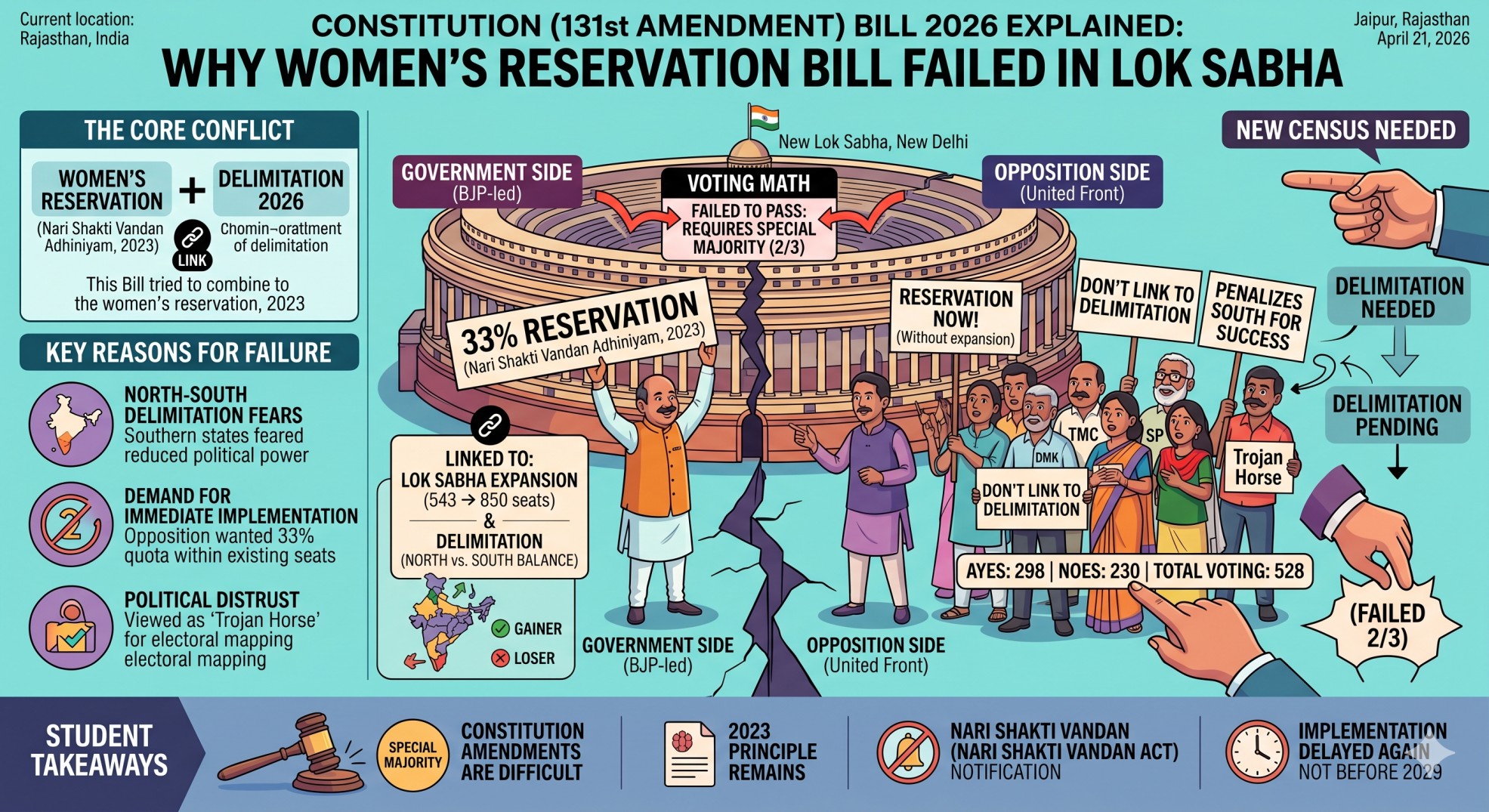
Constitution (131st Amendment) Bill 2026 Explained: Why Women’s Reservation Bill Failed in Lok Sabha
READ MORE →
Cockroach Janta Party Meme Trend 2026:
READ MORE →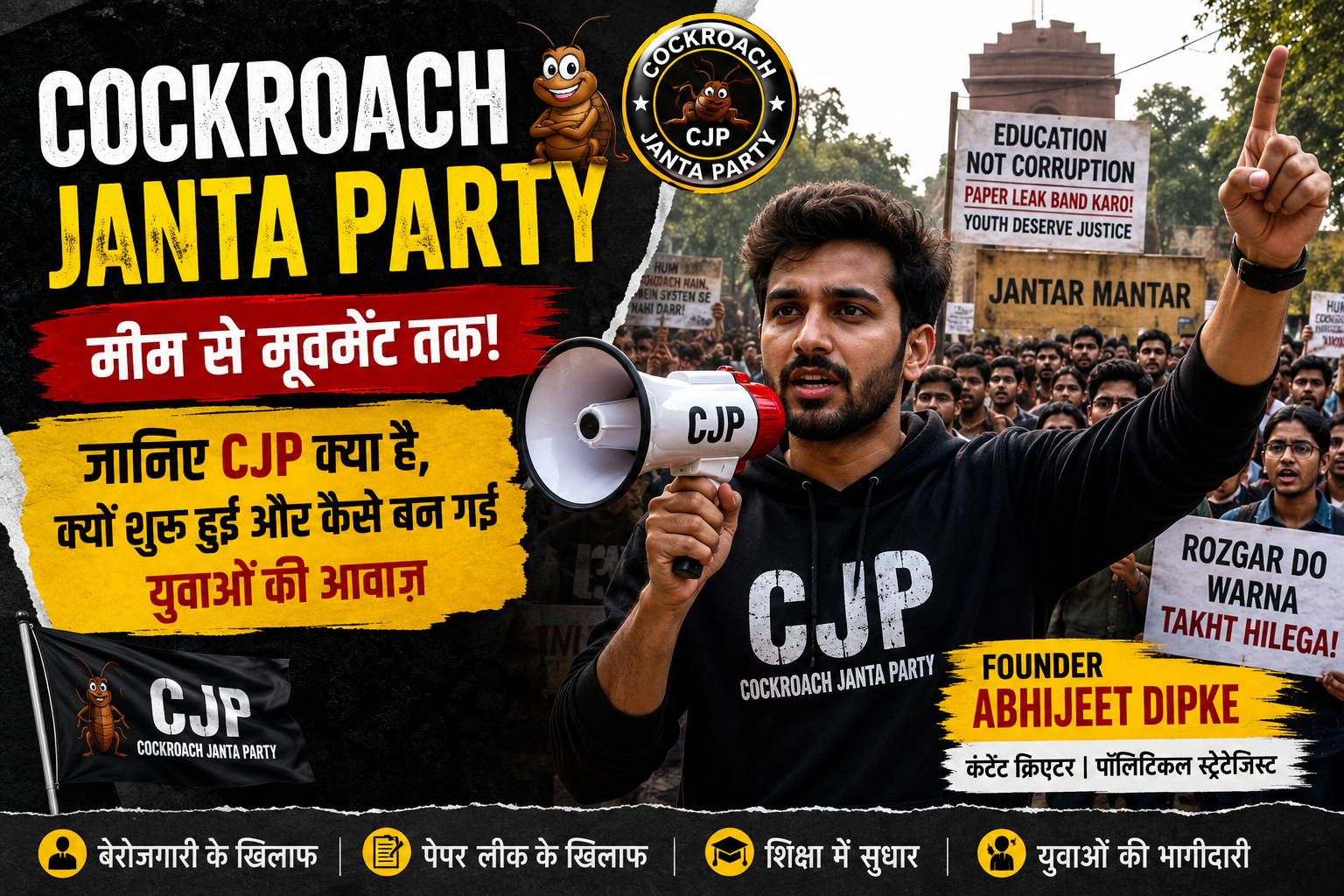
Cockroach Janta Party (CJP) क्या है? जानिए Abhijeet Dipke की वायरल युवा क्रांति की पूरी कहानी
READ MORE →