Government Is Not Paying Enough Attention to Manipur
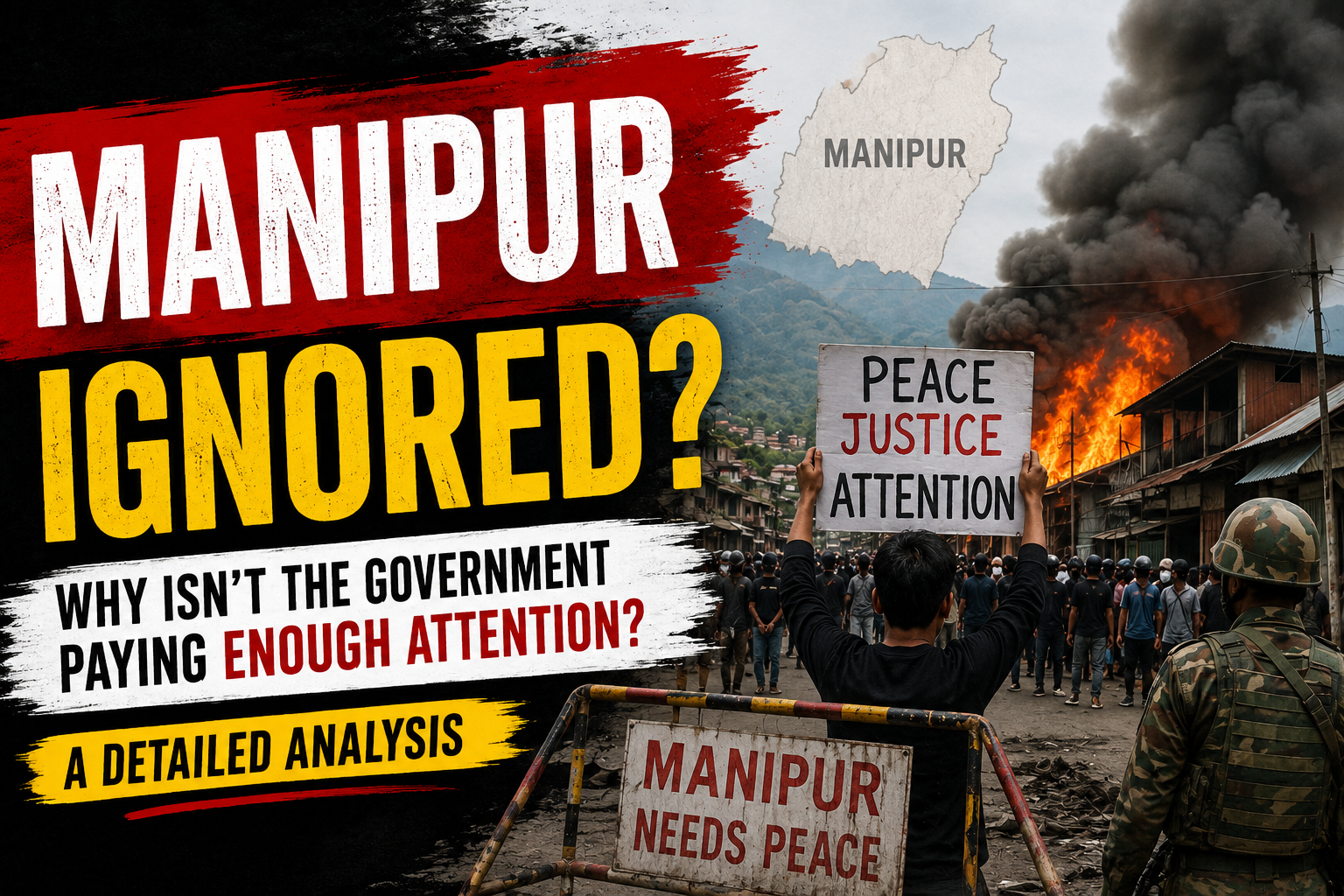
Why Do Many People Feel the Government Is Not Paying Enough Attention to Manipur? A Detailed Analysis
Introduction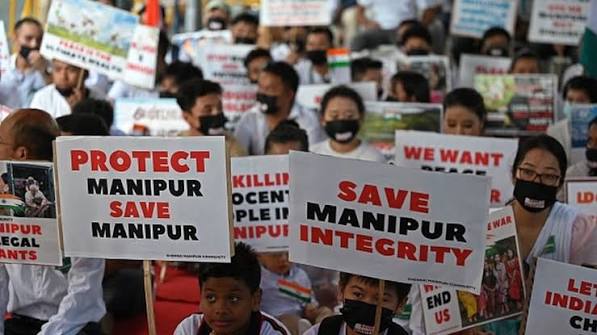
Manipur has remained one of the most sensitive and discussed issues in India since the ethnic violence that began in May 2023. Even in 2026, questions about peace, rehabilitation, political leadership, security, and justice continue to appear in public debates, social media discussions, and news coverage.
Many citizens ask a direct question: “Why does it seem that the government is not paying enough attention to Manipur?” This perception has become widespread, but the answer is more complex than a simple yes or no.
This article explores the reasons behind that perception, the steps taken by the government, the criticisms raised by opposition parties and civil society groups, and the challenges that make the Manipur crisis difficult to resolve.
What Happened in Manipur?
The violence in Manipur began in May 2023 after tensions between the Meitei community and the Kuki-Zo tribal communities escalated. Clashes spread across several districts, leading to:
-
Loss of hundreds of lives
-
Large-scale displacement
-
Destruction of homes, churches, and other properties
-
Deepening mistrust between communities
The conflict was not just a law-and-order issue; it involved ethnic identity, land rights, political representation, security concerns, and historical grievances.
Why Do People Feel the Government’s Response Was Inadequate?
1. Delay in Restoring Normalcy
One of the biggest reasons for public dissatisfaction is that violence and tensions continued for a long period.
People expected:
-
Faster control of violence
-
Quicker deployment of effective security measures
-
Earlier restoration of normal life
When instability persists for months or years, citizens often conclude that the response has not been strong enough.
2. Perception of Limited High-Level Political Engagement
Critics argued that the crisis required more visible and sustained involvement from the highest political leadership.
In democratic politics, symbolism matters. People often look for:
-
Frequent visits by senior leaders
-
Regular public briefings
-
Direct communication with affected communities
When such engagement appears limited, it can create a perception of distance, even if administrative actions are being taken behind the scenes.
3. Communication Gap
Many residents and observers felt that the government did not communicate clearly enough about:
-
What actions were being taken
-
What the peace roadmap was
-
How rehabilitation would proceed
-
What timeline was expected
In crises, lack of information can be interpreted as lack of action.
4. Internet Restrictions and Information Control
Internet shutdowns and restrictions became another major issue.
Supporters of restrictions argued that they were necessary to prevent rumours and mobilisation of violence.
Critics argued that they:
-
Affected journalists and citizens
-
Reduced transparency
-
Made people feel isolated
-
Increased suspicion about the situation
This contributed significantly to the perception that the crisis was not being handled openly.
What Has the Government Done?
To understand the full picture, it is important to note that the government did take several measures.
Security Measures
-
Deployment of central security forces
-
Army assistance in sensitive areas
-
Curfews and movement restrictions
-
Recovery operations for weapons
Relief and Rehabilitation
-
Relief camps for displaced persons
-
Financial assistance announcements
-
Efforts to rebuild damaged infrastructure
Political and Administrative Steps
-
Meetings with community representatives
-
Court-related and constitutional processes
-
Coordination between state and central authorities
Therefore, the debate is not whether nothing was done, but whether the actions were sufficient, timely, and effective.
Why Is Manipur So Difficult to Resolve?
1. Deep Ethnic Divide
The conflict is rooted in identity and territory. Such disputes cannot be solved only through policing.
2. Geography
Manipur has difficult terrain, scattered settlements, and sensitive border regions, which complicate security operations.
3. Historical Distrust
Communities carry memories of past grievances, making reconciliation harder.
4. Armed Groups
The presence of various armed organisations and security concerns adds another layer of complexity.
The Opposition’s Criticism
Opposition parties have repeatedly argued that:
-
The response was too slow
-
Political leadership should have been more active
-
Constitutional mechanisms should have been used more effectively
-
Greater accountability was needed
These criticisms have kept the issue alive in national politics.
Why Does the Issue Receive Less National Attention at Times?
Many people compare Manipur with other major national events and feel it receives less coverage.
Possible reasons include:
-
News cycle shifting to new events
-
Complexity of the conflict
-
Geographic distance from much of mainland India
-
Decline in continuous media attention over time
Reduced media visibility can create the impression that the issue has been forgotten, even when it remains unresolved.
The Humanitarian Dimension
Beyond politics, the most important aspect is the humanitarian crisis.
Thousands of people have experienced:
-
Displacement
-
Loss of livelihood
-
Interrupted education
-
Trauma and insecurity
For affected families, the key questions are not about political narratives but about safety, justice, and return to normal life.
What Do Experts Say Is Needed?
Many conflict-resolution experts suggest that lasting peace requires:
-
Strong and impartial security measures
-
Dialogue between communities
-
Rehabilitation and compensation
-
Accountability for violence
-
Restoration of trust in institutions
-
Long-term political and social reconciliation
Conclusion
So, is the government ignoring Manipur? The answer depends on how the question is framed.
-
Factually, the government has taken security, relief, and administrative measures.
-
Politically and socially, many citizens believe those measures have not been adequate or sufficiently visible.
-
The core issue is not only attention, but effectiveness, trust, and speed of resolution.
Manipur remains a reminder that internal conflicts cannot be solved by force alone. Lasting peace will require not only security operations but also dialogue, justice, rehabilitation, and sustained political engagement.
Until people feel secure, heard, and fairly treated, the perception that “not enough is being done” is likely to continue.