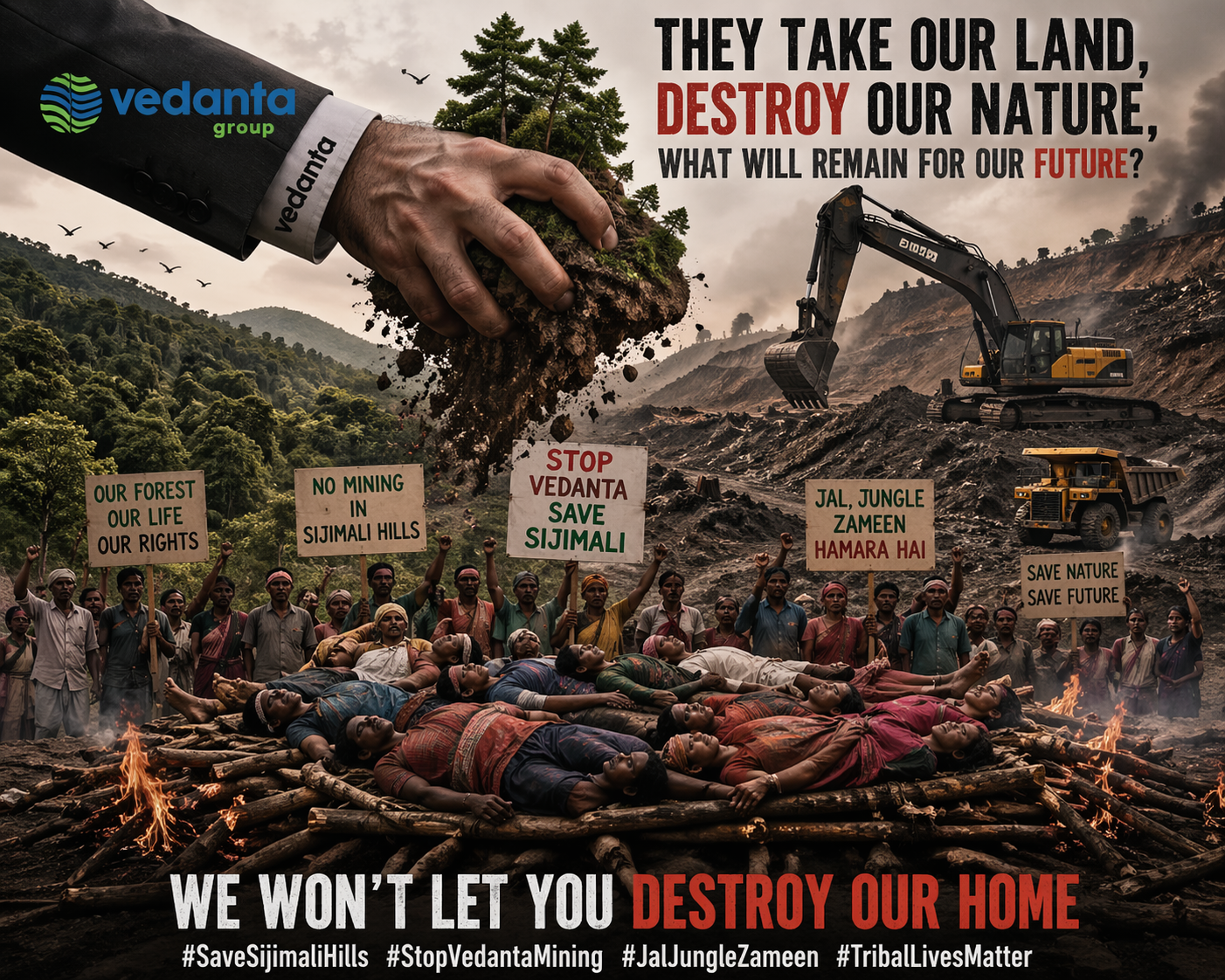
Sijimali Hills Protest Explained: Why Tribals Oppose Vedanta Mining Project
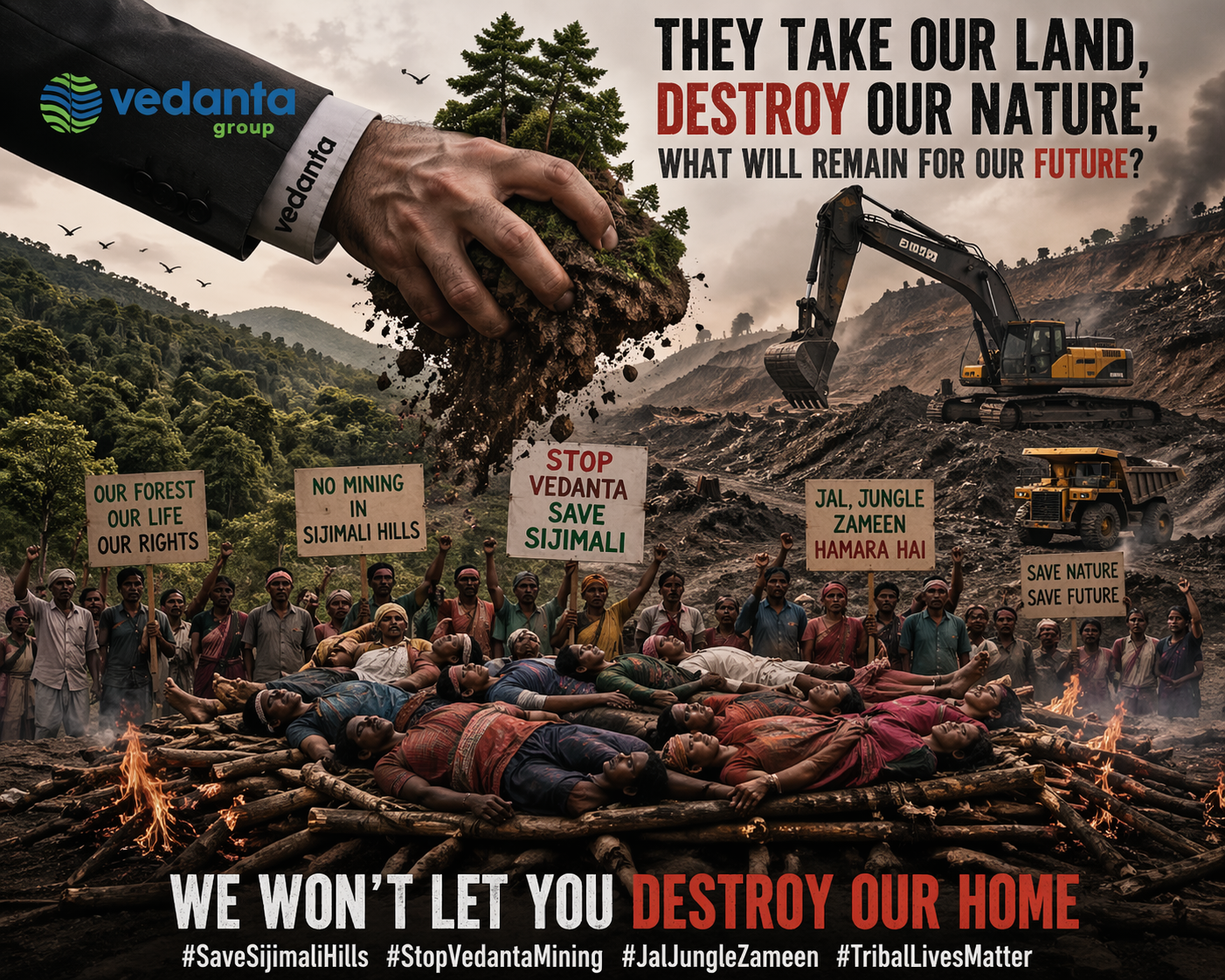
The Sijimali Conflict: Tribal Resistance, Mining Politics, and the Future of Indigenous Rights in Odisha
Introduction
In the forested hills of southern Odisha, a familiar conflict has once again resurfaced — one that lies at the intersection of development, environmental sustainability, and indigenous rights. In early April 2026, tribal communities in Rayagada and Kalahandi districts intensified protests against a proposed bauxite mining project in the Sijimali hills, operated by the Vedanta Group. What began as localized opposition has now evolved into a significant socio-political movement involving activists, civil society, political actors, and human rights organizations.
At its core, the conflict is not just about mining. It is about identity, survival, and the right of indigenous communities to control their land and resources. The Sijimali hills, rich in bauxite reserves, are also home to tribal populations whose livelihoods, culture, and spirituality are deeply tied to the land.
This blog explores the issue in depth — examining the project, the protests, the legal framework, environmental concerns, and the broader implications for India’s development model.
Understanding the Sijimali Bauxite Project
The Sijimali hills, located across Rayagada and Kalahandi districts, are believed to contain approximately 311 million tonnes of high-grade bauxite, making them a highly valuable resource for India’s aluminium industry.
The mining block was allocated to Vedanta Limited in 2023 through an auction process, with plans to extract millions of tonnes of bauxite annually.
The project involves:
- Large-scale forest land diversion (over 700 hectares)
- Infrastructure development such as roads and transport networks
- Potential displacement of local communities
Bauxite is a critical raw material used in aluminium production — an industry vital for sectors such as construction, transportation, defense, and renewable energy.
However, beneath this industrial logic lies a complex human and ecological reality.
The Spark: April 2026 Protests and Clashes
The situation escalated dramatically in early April 2026 when clashes broke out between tribal villagers and police forces. These confrontations were triggered primarily by the construction of an approach road to the mining site, which locals viewed as the first step toward full-scale mining operations.
Reports indicate:
- Around 70 people were injured, including both villagers and police personnel
- Tensions intensified after alleged police raids on villages
- Protesters accused authorities of intimidation and forced suppression
These clashes were not isolated incidents but rather the culmination of long-standing grievances.
Why Tribal Communities Are Protesting
1. Threat to Ancestral Land and Identity
For tribal communities, land is not merely an economic resource — it is central to their identity, culture, and spiritual life.
The Sijimali hills are:
- A source of livelihood (farming, forest produce)
- A sacred landscape tied to tribal beliefs
- A social and cultural foundation
Displacement would mean not just physical relocation but cultural disintegration.
2. Environmental Concerns
Mining in forested regions can lead to:
- Deforestation
- Loss of biodiversity
- Soil erosion
- Water contamination
Tribals fear that mining will destroy natural water sources and forests that sustain their daily lives.
3. Allegations of Violations of Legal Rights
One of the most serious allegations is that the project violates key legal protections for tribal communities.
Villagers claim:
- Gram Sabha consent was forged or manipulated
- Proper consultation did not take place
- Their rights under laws like the Forest Rights Act were ignored
Legal Framework: What the Law Says
Forest Rights Act (2006)
Recognizes the rights of forest-dwelling communities over land and resources.
PESA Act (1996)
Empowers Gram Sabhas to decide on development projects in tribal areas.
Fifth Schedule of the Constitution
Provides special protections for tribal regions.
In theory, these laws require free, prior, and informed consent of tribal communities before any project can proceed.
The Role of the State and Police
The involvement of police forces in the protests has added another layer of complexity.
Activists allege:
- Use of force to suppress dissent
- Arrests and intimidation of villagers
- Filing of cases against protest leaders
The state, on the other hand, argues that maintaining law and order is necessary for development projects.
Political Dimensions of the Conflict
The Sijimali issue has also become politically charged.
- Appeals to national bodies like NCST
- Accusations between political parties
- Debate over mining allocation responsibility
This political layer often complicates the core issue — the rights of local communities.
Vedanta’s Position and the Development Argument
From the perspective of the company and the government, the project represents:
- Economic growth
- Job creation
- Industrial development
- Increased state revenue
Supporters argue that mining is essential for national development, but critics question whether these benefits truly reach affected communities.
Environmental and Ecological Stakes
The Sijimali hills are part of a biodiversity-rich region.
Mining could result in:
- Loss of forest cover
- Disruption of wildlife habitats
- Damage to fragile ecosystems
Water sources are particularly vulnerable and crucial for tribal survival.
Development vs. Rights: The Central Debate
Can economic development justify the displacement of indigenous communities?
Development Model
- Industrial growth
- Resource extraction
- Economic gains
Rights-Based Model
- Protection of indigenous communities
- Environmental sustainability
- Local decision-making
The Way Forward
- Genuine consultation
- Legal accountability
- Environmental safeguards
- Inclusive development
- Dialogue between stakeholders
Conclusion
The protests in Sijimali are not just about a mining project. They represent a deeper struggle over land, identity, and justice.
For the tribal communities of Rayagada and Kalahandi, the hills are more than a resource — they are home, heritage, and life itself.
The future of Sijimali will depend on how India balances development with human rights.
One thing is clear: the voices from the hills are growing louder, and they are demanding to be heard.
Related Articles

भारत का 'स्पीड' युग: 2027 में दौड़ेगी पहली बुलेट ट्रेन और बदल जाएगी भारतीय रेलवे की तस्वीर
READ MORE →
Constitution (131st Amendment) Bill 2026 Explained: Why Women’s Reservation Bill Failed in Lok Sabha
READ MORE →
शिवकर बापूजी तलपड़े: राइट ब्रदर्स से 8 साल पहले भारत का पहला विमान | मरुत्सखा की प्रेरणादायक कहानी
READ MORE →