West Asia Crisis & Its Economic Impact on India
1. Introduction
In today’s interconnected world, no country operates in isolation. A conflict happening thousands of kilometers away can directly affect the daily life of ordinary people. This reality is clearly visible in the ongoing tensions in the West Asia (Middle East), a region that plays a crucial role in global energy supply and trade.
Over the past few years, rising geopolitical instability—ranging from armed conflicts to political tensions—has created uncertainty in global markets. For a country like India, which relies heavily on imports for its energy needs, these disruptions are not just international issues; they translate into real economic challenges at home.
When instability increases in oil-producing regions, global crude oil prices tend to rise. This, in turn, impacts fuel prices, transportation costs, and ultimately the prices of everyday goods. In simple terms, a crisis in West Asia can make everything—from vegetables to electricity—more expensive in India.
The recent decision by the Indian government to reduce customs duty on key petrochemical products is a direct response to these pressures. It highlights how global geopolitics and domestic economic policies are deeply interconnected.
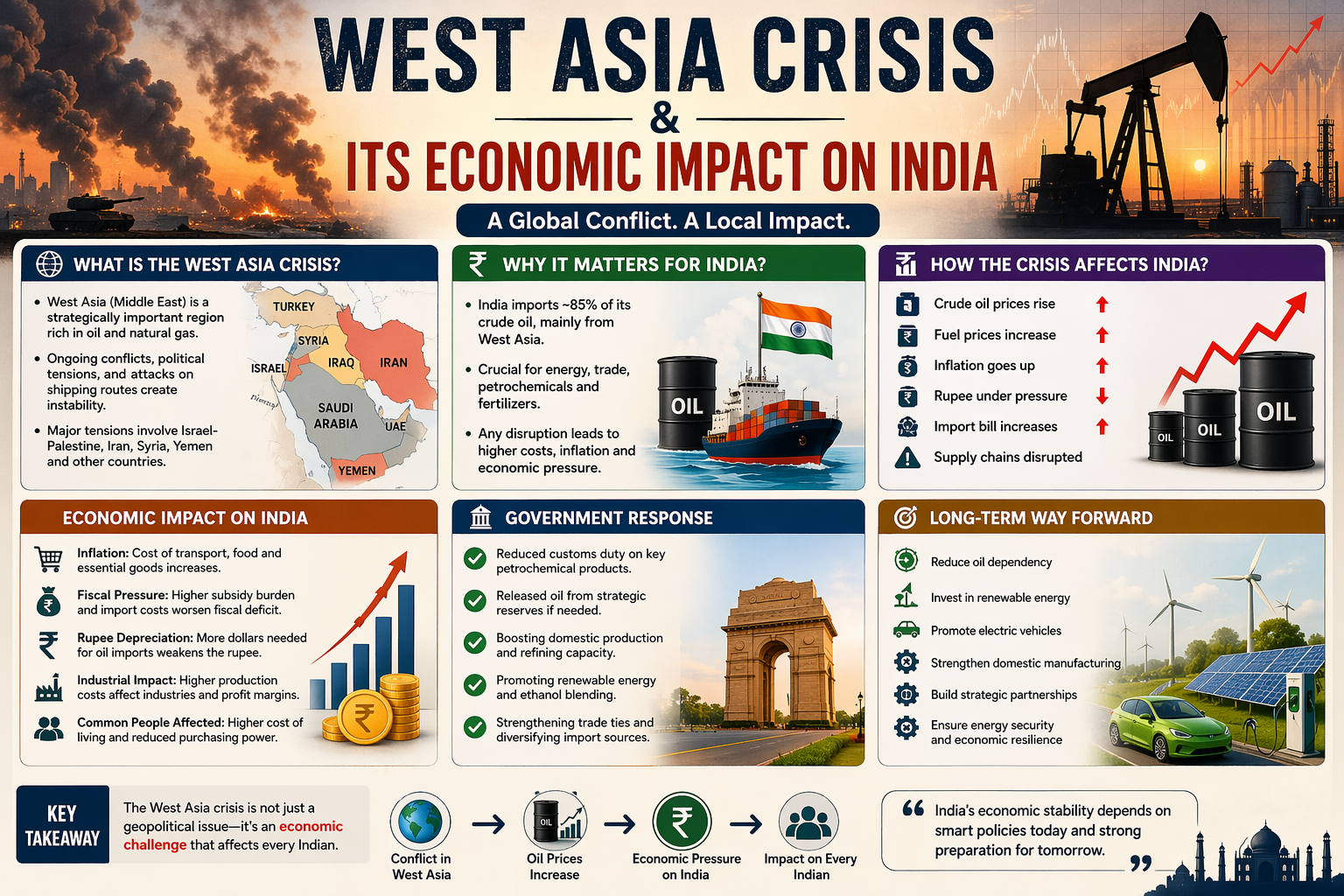
Global conflict → Oil price rise → Inflation in India
2. Understanding the West Asia Crisis
The West Asia (Middle East) is one of the most strategically important regions in the world, primarily because it holds a large share of the planet’s oil and gas reserves. However, it is also a region marked by long-standing conflicts and political instability.
Major Sources of Tension
- The Israel–Palestine conflict
- Rising tensions involving Iran
- Security threats in maritime trade routes
- Internal conflicts in various countries
These conflicts often disrupt not only regional peace but also global trade and energy supply chains.
Strategic Trade Routes
- Persian Gulf – Major hub for oil exports
- Red Sea – Key passage connecting Asia and Europe
Any disruption in these routes—due to conflict, attacks on ships, or political restrictions—can delay shipments and increase transportation costs worldwide.
Impact on Global Supply Chains
- Oil production or transport may slow down
- Shipping insurance costs increase
- Trade routes become risky
This leads to higher costs for importing countries like India.
West Asia is not just a conflict zone—it is the backbone of global energy supply.
3. Oil Dependency of India
India is one of the fastest-growing economies in the world, but it faces a major challenge: high dependence on imported energy.
The Reality
- India imports around 85% of its crude oil needs
- A large portion of this oil comes from West Asian countries
This makes India highly sensitive to any changes in that region.
Why Oil Matters So Much
- Transportation (petrol, diesel, aviation fuel)
- Industry (manufacturing processes)
- Agriculture (fertilizers, machinery)
- Daily goods (plastics, packaging, chemicals)
Chain Reaction Effect
- Fuel becomes expensive
- Transportation cost increases
- Cost of goods rises
- Inflation increases
Example:
If petrol prices go up:
- Transport cost increases
- Vegetable prices increase
- Delivery charges increase
Impact on Economy
- Higher import bills
- Pressure on Indian currency (rupee)
- Increase in fiscal deficit
Strategic Vulnerability
- Less control over energy prices
- Higher exposure to global shocks
- Economic instability during crises
India’s oil dependency makes it directly vulnerable to West Asia tensions.
4. Immediate Economic Impact on India
When tensions rise in the West Asia (Middle East), the first and most immediate impact is seen on the economy—especially in a country like India that is heavily dependent on imports.
Rising Fuel Prices
- Supply uncertainty
- Transport risks
- Export disruptions
As India imports most of its oil, even a small increase in global prices directly affects domestic fuel rates.
Result: Petrol, diesel, LPG, and aviation fuel prices increase
Inflation Pressure
- Transportation cost increases
- Production cost increases
- Goods become expensive
This leads to cost-push inflation.
Pressure on Indian Rupee
- Higher demand for dollars
- Rupee depreciation
- Imports become expensive
Supply Chain Disruptions
- Shipping delays
- Higher freight charges
- Insurance costs increase
West Asia crisis → Inflation + Rupee pressure + Supply disruption
5. Government Response: Customs Duty Relief
What is Customs Duty?
Customs Duty is a tax imposed on imported goods.
Reducing it makes imports cheaper and increases supply
Why Government Reduced Duty
- Oil prices rising
- Raw material cost increasing
- Industries under pressure
Main Objectives
- Control inflation
- Maintain supply
- Support industries
- Reduce burden on consumers
Impact of Decision
- Cheaper imports
- Lower production cost
- Stable prices
This acts as an economic shock absorber
Limitations
- Loss of government revenue
- Short-term solution
- Cannot control global prices fully
6. Impact on Petrochemical Sector
What are Petrochemical Products?
- Plastics
- Fertilizers
- Synthetic fibers
- Packaging materials
- Chemicals
Industries Affected
- Agriculture
- Textile
- FMCG
- Automobile
How Crisis Affects Sector
- Raw material cost increases
- Production cost increases
- Profit margin decreases
- Final product prices rise
Chain Reaction
Crude Oil ↑ → Petrochemical Cost ↑ → Manufacturing Cost ↑ → Prices ↑ → Inflation ↑
Real-Life Impact
- Plastic items become expensive
- Fertilizer cost increases
- Packaging cost rises
Government Role
- Reduce import duty
- Provide industry relief
- Control price rise
Long-Term Concern
- High dependency on oil
- Need for alternatives
- Shift toward green solutions
Petrochemical sector directly connects crude oil with daily life
7. Long-Term Strategy: Reducing Oil Dependency
India must move beyond short-term solutions like duty cuts and focus on long-term energy independence.
Why It Matters
- India imports around 85% of crude oil
- High exposure to global crises
- Limited control over energy prices
Key Solutions
Renewable Energy Expansion
- Solar energy projects
- Wind energy development
- Government renewable missions
Electric Vehicles (EV Push)
- Subsidies and incentives
- Charging infrastructure
- Reduced fuel consumption
Ethanol Blending Program
- E20 fuel target
- Reduced oil imports
- Support for farmers
Strategic Petroleum Reserves
- Emergency oil storage
- Helps during supply shocks
Future = Energy diversification + Self-reliance
8. Impact on Global Trade & India’s Position
Trade Route Disruptions
- Suez Canal disruptions
- Red Sea security risks
These routes are critical for global trade, especially between Asia and Europe.
Impact on India
- Export delays
- Higher import costs
- Supply chain instability
Rising Shipping Costs
- Insurance premiums increase
- Freight charges rise
- Delivery time delays
India’s Strategic Opportunity
- Develop alternative trade routes
- Boost domestic manufacturing
- Become a global supply chain hub
Crisis = Risk + Opportunity
9. Future Outlook: What Lies Ahead?
Short-Term Outlook
- Oil prices remain volatile
- Inflation pressure continues
- Government intervention ongoing
Medium-Term Risks
- Global recession possibility
- Trade slowdown
- Currency instability
Long-Term Transformation
Energy Shift
- Fossil fuels to renewable energy
- Green hydrogen adoption
Policy Changes
- Stronger energy policies
- Economic reforms
Technological Innovation
- Alternative fuels
- AI-based logistics
- Smart supply chains
India’s Future Role
- Energy transition leader
- Manufacturing hub
- Global trade player
Crisis is temporary, transformation is permanent
10. Role of Government Policy & Economic Stability
During global crises such as tensions in West Asia (Middle East), government intervention becomes essential to maintain economic stability.
Why Government Intervention is Necessary
- Markets fail to stabilize automatically
- Prices may rise rapidly
- Supply chains may break down
Key Policy Tools
Fiscal Policy
- Tax reduction (customs duty cuts)
- Subsidies
- Increased public spending
Monetary Policy
- Interest rate control
- Liquidity management
Trade Policy
- Import duty reduction
- Export restrictions (if needed)
Strategic Reserves
- Emergency oil release
- Supply stabilization
Strong policy response ensures economic stability
11. Impact on Common People & Daily Life
Fuel Price Impact
- Petrol and diesel become expensive
- Transportation cost increases
- Public transport fares rise
Cost of Living Increase
- Food prices increase
- Grocery becomes expensive
- Delivery charges rise
Household Financial Pressure
- Reduced savings
- Increased monthly expenses
- Middle class most affected
Impact on Farmers
- Fertilizer costs increase
- Diesel expenses rise
- Farming becomes expensive
Impact on Small Businesses
- Transport cost increases
- Raw materials become costly
- Profit margins decrease
Psychological Impact
- Financial stress
- Job insecurity
- Economic uncertainty
Global crisis directly affects daily life
12. Conclusion: Crisis as a Turning Point
Key Lessons
- Overdependence on oil is risky
- Need for energy diversification
- Importance of self-reliance
Opportunities for India
- Become a renewable energy leader
- Develop manufacturing sector
- Strengthen global trade position
Future Vision
- Green energy economy
- Stable inflation system
- Strong economic resilience
13. Strategic Recommendations for India
Energy Security
- Diversify oil import sources
- Long-term supply agreements
- Expand strategic reserves
Renewable Energy
- Increase solar and wind capacity
- Promote green hydrogen
Domestic Manufacturing
- Boost Make in India
- Localize petrochemical industry
Trade Diversification
- Develop alternate trade routes
- Strengthen global partnerships
Strong strategy ensures long-term stability
14. Risk vs Opportunity Analysis
Risks
- Oil price volatility
- Inflation rise
- Currency pressure
- Trade disruptions
Opportunities
- Renewable energy leadership
- Global supply chain shift
- Manufacturing growth
- Strategic partnerships
Crisis can be converted into opportunity
15. Frequently Asked Questions (FAQ)
Because India depends on oil imports from that region.
Fuel becomes expensive → inflation increases.
Reduces taxes, gives subsidies, adjusts policies.
Cost of living increases.
Renewable energy and self-reliance.
Understanding the issue is the first step toward solving it