International Day of Families 2026: Theme, History, Significance & Celebrations
International Day of Families 2026: Celebrating the Foundation of Society Amid Rising Inequalities –
Part 1: History, Origins, and Evolution of International Day of Families
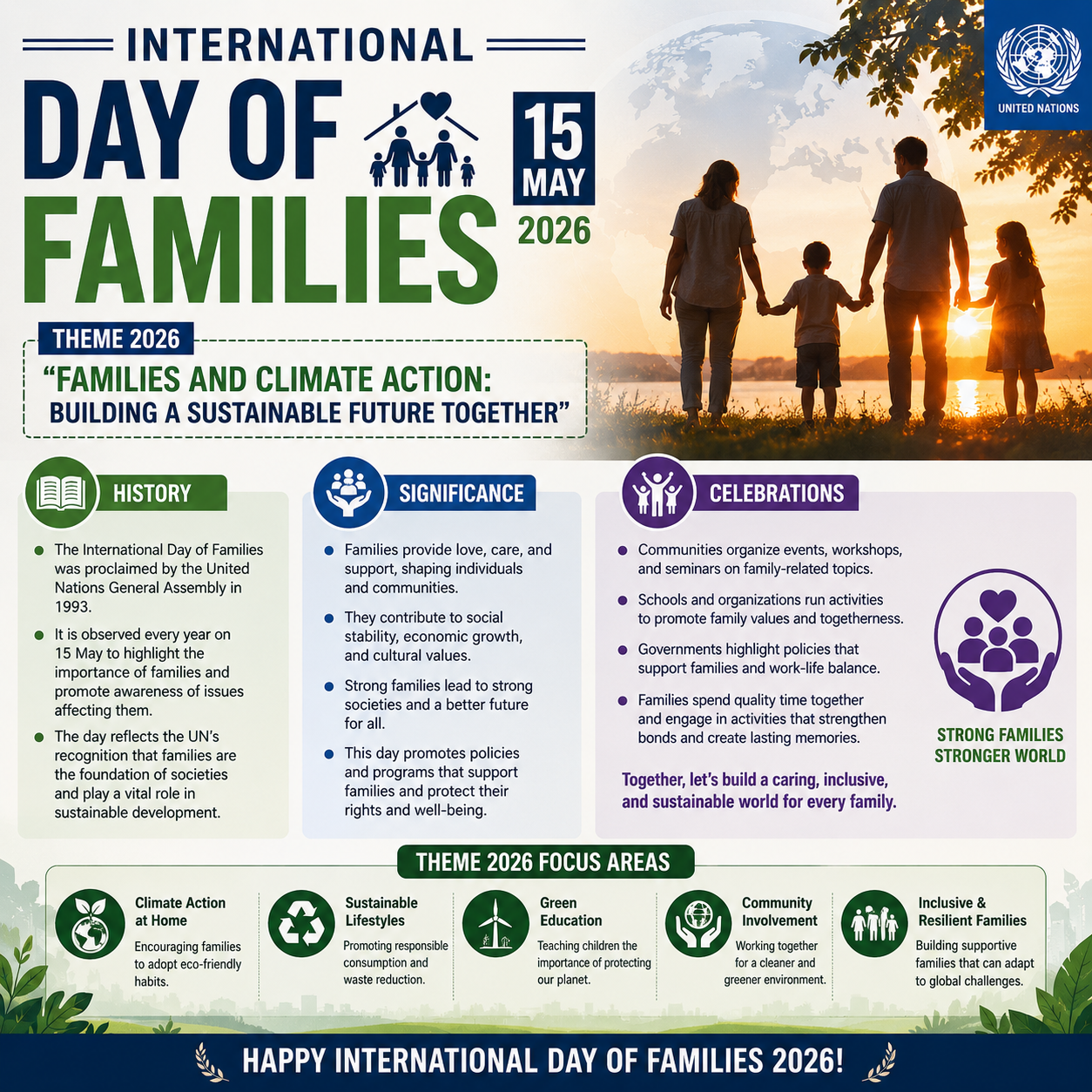
The Birth of a Global Observance Every year on 15 May, the world observes the International Day of Families, established by the United Nations to highlight the crucial role families play in society. The day provides an opportunity to promote awareness of family-related issues and deepen understanding of the social, economic, and demographic processes affecting families worldwide.
The roots trace back to the 1980s when the United Nations began focusing attention on family issues. In 1983, the Commission for Social Development urged greater awareness among decision-makers and the public about family problems and needs. This momentum led to the proclamation of 1994 as the International Year of the Family by UN General Assembly Resolution 44/82 in 1989.
In 1993, through Resolution A/RES/47/237, the General Assembly officially declared 15 May as the International Day of Families. The first observance took place in 1994. The date was chosen to continue the work started during the International Year of the Family and to create an annual platform for reflection and action.
Why May 15? The day symbolizes continuity and commitment. It reminds governments, organizations, and individuals that families are the basic unit of society, as recognized in the Universal Declaration of Human Rights. The observance encourages policies that support family well-being, equality, and development.
Evolution Over the Decades From its inception, the day has addressed evolving challenges. Early years focused on basic recognition of family structures. Subsequent themes tackled urbanization, migration, climate change, technology’s impact, and demographic shifts like aging populations and declining fertility rates. Each year features a specific theme chosen by the UN to address contemporary global priorities.
2026 Theme: “Families, Inequalities and Child Wellbeing” The 2026 observance highlights how widening inequalities in income, education, healthcare, digital access, and social protection systems shape family life and children’s futures. The official event at UN Headquarters in New York on 15 May 2026 focuses on family-oriented policies such as universal child benefits, parental leave, affordable early childhood education, and community support services.
This theme is particularly relevant in 2026 amid post-pandemic recovery, economic uncertainties, geopolitical tensions, and climate challenges that disproportionately affect vulnerable families.
Global Significance The day is not a public holiday but a powerful awareness tool. It mobilizes governments, NGOs, civil society, and communities to discuss family policies, share best practices, and commit to actions supporting families as agents of sustainable development aligned with the 2030 Agenda for Sustainable Development Goals (SDGs).
(Expanded section would include detailed timelines, key UN resolutions with explanations, evolution of family structures globally, comparative data from different regions, quotes from UN Secretaries-General over the years, and case studies of how the day influenced national policies.)
Core Reasons for Celebrating International Day of Families
Families as the Foundation of Society Families are the primary unit for nurturing, socialization, emotional support, and transmission of values. They play a central role in child development, elderly care, economic stability, and social cohesion. Strong families contribute to healthier communities and stronger nations.
Raising Awareness of Challenges Modern families face numerous pressures: economic inequality, work-life imbalance, migration, urbanization, digital divides, climate impacts, and changing social norms. The day highlights these issues and advocates for supportive policies.
Promoting Diversity of Family Forms Families today include nuclear, extended, single-parent, blended, same-sex, and chosen families. The observance celebrates this diversity while emphasizing universal needs for love, care, and stability.
Link to Sustainable Development Families are on the frontlines of achieving SDGs — from poverty reduction (SDG 1) and zero hunger (SDG 2) to quality education (SDG 4), gender equality (SDG 5), and reduced inequalities (SDG 10). Healthy families drive progress across these goals.
Statistical Importance of Family Global surveys show that a large majority of people (often above 80-90% in most countries) consider family very important in their lives. Family satisfaction correlates strongly with overall happiness and well-being.
Addressing Inequalities and Child Wellbeing (2026 Focus) Widening gaps in access to resources create cycles of disadvantage. Children in unequal environments face poorer health, education, and life outcomes. The day calls for integrated family policies to break these cycles.
Cultural and Emotional Reasons Families provide identity, belonging, and resilience. In fast-changing societies, the day reminds us to prioritize relationships, traditions, and intergenerational bonds.
(Deep dive includes global statistics on family satisfaction, impacts of family structure on child outcomes, economic value of unpaid family care, psychological benefits, regional variations in family importance, and expert analyses on why family remains central despite modernization.)
Global Challenges Facing Families Today
Economic Inequalities Rising income disparities, inflation, housing costs, and job insecurity strain family resources and stability.
Demographic Shifts Declining fertility rates, aging populations, and smaller family sizes create new care challenges, especially for the elderly.
Urbanization and Migration Rapid urban growth and labor migration disrupt traditional family structures and support systems.
Impact of Technology and Digital Divide While technology connects families, unequal access and excessive screen time affect relationships and child development.
Climate Change and Environmental Pressures Disasters and environmental degradation hit families in vulnerable regions hardest, leading to displacement and resource scarcity.
Health, Education, and Social Issues Access to healthcare, quality education, and protection from violence remain uneven, directly impacting child wellbeing.
Changing Gender Roles and Work-Life Balance Increased women’s workforce participation brings opportunities but also challenges in sharing domestic responsibilities.
Post-Pandemic Realities COVID-19 exposed and exacerbated many vulnerabilities, from mental health issues to economic shocks within families.
(Section expands with data tables, regional case studies from Asia, Africa, Europe, Americas, real-life stories, policy gaps, and interconnections between challenges.)
Celebrations, Initiatives, and Best Practices Worldwide
UN Observance and Global Events The flagship event at UN Headquarters features expert panels, policy discussions, and calls to action. Virtual participation allows global engagement.
National and Local Celebrations Countries organize workshops, seminars, cultural programs, school activities, family picnics, awareness campaigns, and policy forums. Examples include community service, essay competitions, and exhibitions.
Role of NGOs and Civil Society Organizations run campaigns on family strengthening, parenting workshops, and support for vulnerable groups.
Corporate and Educational Initiatives Companies promote work-life balance, while schools educate children on family values and diversity.
2026 Theme-Driven Activities Focus on advocating for child benefits, parental leave, early education, and reducing inequalities through targeted programs.
Ideas for Individual and Family Celebrations Spending quality time, expressing gratitude, resolving conflicts, creating new traditions, volunteering together, and digital detox sessions.
(Expanded with examples from different countries, success stories, innovative programs, measurable impacts, and how individuals can contribute.)
The Road Ahead – Policy Recommendations, Future Outlook, and Call to Action
Policy Recommendations Invest in family-oriented social protection, promote work-family balance, ensure inclusive education and healthcare, support diverse family forms, and integrate family perspectives in all development planning.
Role of Technology and Innovation Leveraging digital tools for family support while addressing divides.
Building Resilient Families Focus on emotional intelligence, financial literacy, conflict resolution, and intergenerational dialogue.
Global Cooperation Sharing best practices, international partnerships, and alignment with SDGs for the Second World Summit for Social Development.
Vision for 2030 and Beyond Stronger, more equitable families leading to sustainable, peaceful, and prosperous societies.
Personal and Collective Call to Action On this International Day of Families, reflect on your own family bonds, advocate for supportive policies, and commit to nurturing the fundamental unit of society.
Conclusion: Families – The Heartbeat of Humanity The International Day of Families reminds us that despite all changes, families remain the cornerstone of human experience. By addressing inequalities and prioritizing child wellbeing in 2026 and beyond, we invest in a better future for all.
Related Articles
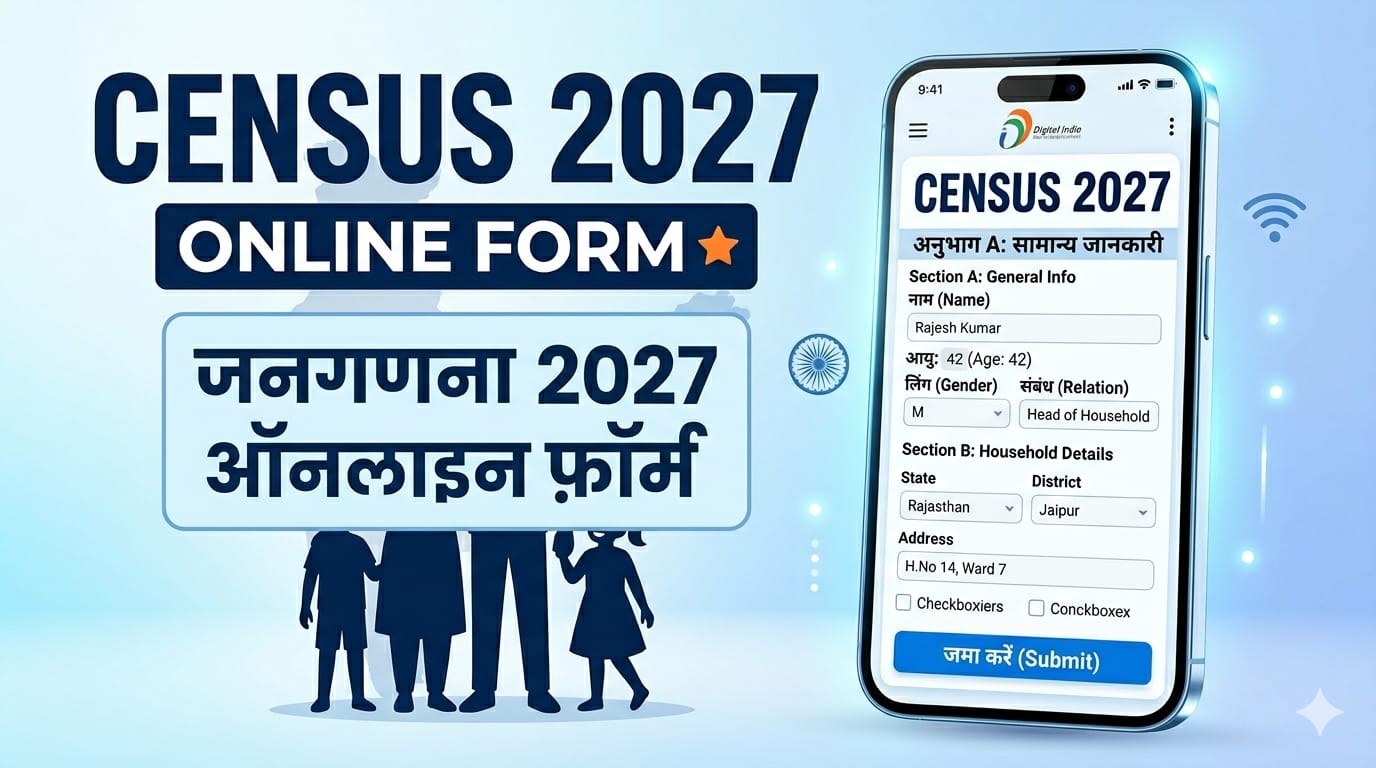
Census 2027 Self Enumeration: घर बैठे ऑनलाइन जनगणना फॉर्म कैसे भरें | पूरी प्रक्रिया हिंदी में
READ MORE →
8th Pay Commission Update: Deadline बढ़ी, Basic Pay और Pension Demand की पूरी जानकारी
READ MORE →
PM Modi Urged to Stop Buying Gold: Why Modi Asked Indians to Pause Gold Purchases in 2026
READ MORE →