Sonam Wangchuk Detained: What Happens to the CJP Protest Now?
CJP Protest 2026 Explained: The Student Movement That Has Captured India's Attention
India has witnessed several student-led movements over the decades, but the CJP Protest 2026 has emerged as one of the most talked-about education protests in recent years. What began as a peaceful demonstration by students demanding accountability over examination controversies has evolved into a nationwide movement drawing support from educators, activists, politicians, and millions of citizens across the country.
The protest gained unprecedented attention when renowned education reformer and climate activist Sonam Wangchuk joined the movement and announced an indefinite hunger strike. His participation transformed the issue from an examination controversy into a larger national debate about transparency, accountability, and the future of India's education system.
Today, the movement continues to dominate social media platforms, television debates, and Google Trends as thousands of people closely follow every development.
This article explains everything about the CJP Protest, its origins, the demands of the protesters, Sonam Wangchuk's role, the latest developments, and what could happen next.
What Is the CJP Protest?
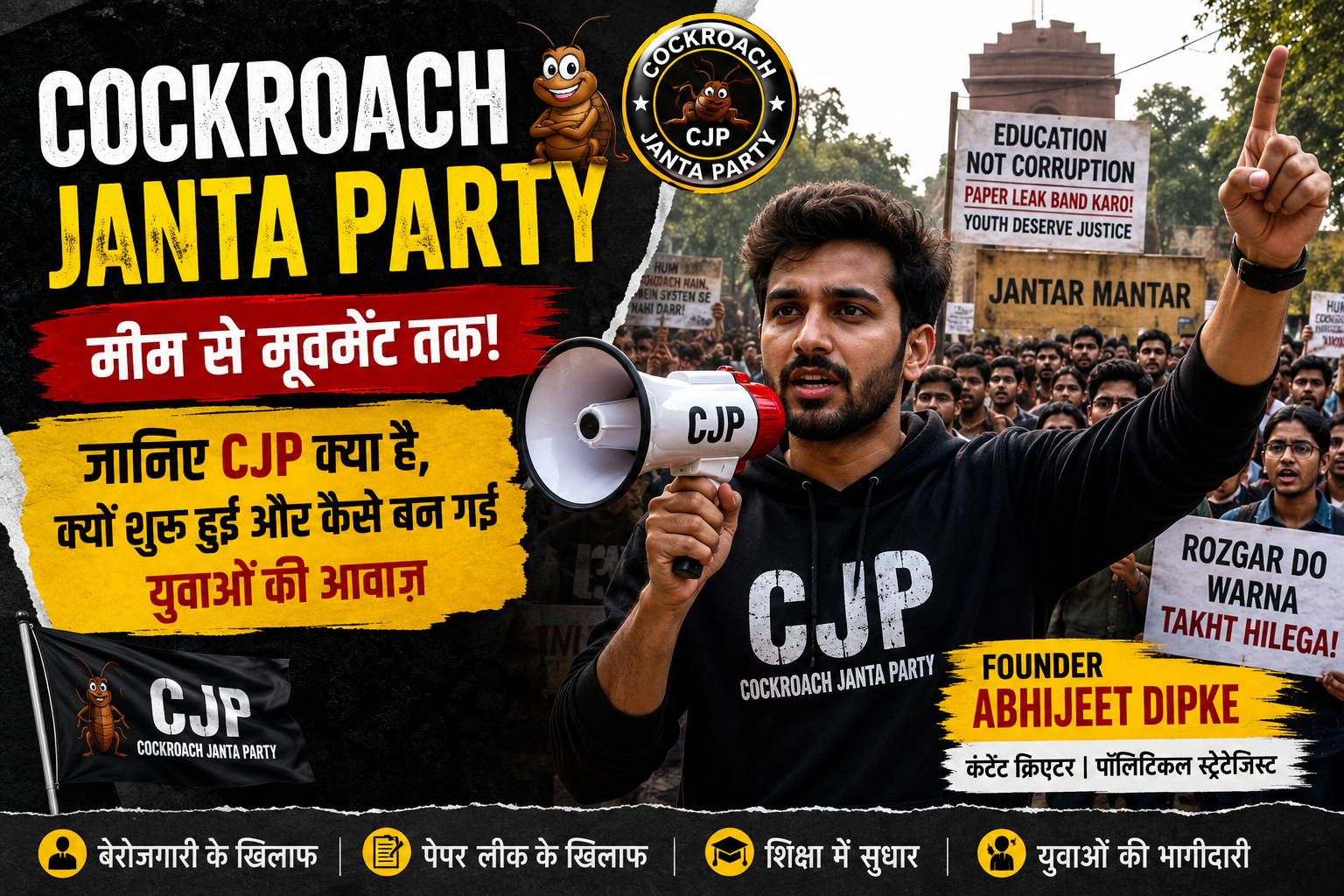
The Cockroach Janta Party (CJP) is not a conventional political party. Instead, it was established as a satirical youth movement that aims to highlight the frustrations of students and unemployed young people.
The organization was founded on 16 May 2026 by Abhijeet Dipke, a 30-year-old digital communications strategist. According to reports, the unusual name "Cockroach Janta Party" was chosen after a prominent public figure allegedly referred to unemployed youth and social media activists using terms such as "cockroaches" and "parasites." Rather than rejecting the label, the founders adopted it symbolically to express solidarity with young people who felt ignored by the system.
Initially, the movement received limited attention. However, as examination controversies intensified across the country, more students began joining the campaign.
Why Did the Protest Begin?
The primary trigger behind the protest was widespread anger over alleged irregularities in India's examination system.
The biggest issue was the cancellation of a large-scale medical entrance examination following allegations of a question paper leak. Thousands of students who had spent months preparing for the examination suddenly found themselves facing uncertainty regarding their future.
Alongside this controversy, students also raised concerns about alleged inconsistencies in CBSE's on-screen evaluation process, claiming that several deserving candidates had received unexpected marks.
For many students, these incidents represented deeper structural problems rather than isolated mistakes.
The protesters argued that examination authorities must ensure:
- Transparent examination processes
- Stronger security against paper leaks
- Fair evaluation systems
- Accountability for officials responsible for irregularities
- Timely investigation into examination controversies
What started as dissatisfaction over one examination gradually transformed into a nationwide demand for comprehensive education reforms.
The Main Demands of the Protesters
Although different student groups have raised multiple concerns, the movement has broadly focused on the following demands:
- Resignation of Union Education Minister Dharmendra Pradhan.
- Independent investigation into examination irregularities.
- Strong legal action against paper leak networks.
- Greater transparency in examination evaluation.
- Education reforms aimed at preventing future examination failures.
- Protection of students' careers and mental well-being.
The protesters argue that millions of students invest years of hard work preparing for competitive examinations, and repeated administrative failures severely affect their futures.
Why Sonam Wangchuk Joined the Movement
The protest entered a completely new phase when Sonam Wangchuk decided to support the students.
Known internationally for his work in education, sustainable development, and innovation, Wangchuk has long advocated reforms that prioritize students over bureaucracy.
On 28 June 2026, he began an indefinite hunger strike at Jantar Mantar in New Delhi to express solidarity with protesting students.
His participation immediately attracted national and international media attention.
Many observers believed that his involvement gave the movement additional credibility because of his long-standing work in educational innovation.
Twenty Days of Hunger Strike
For nearly three weeks, Sonam Wangchuk reportedly survived only on salt water while continuing his fast under extremely challenging weather conditions.
Medical experts repeatedly warned that prolonged fasting could result in serious health complications, including severe dehydration, muscle loss, electrolyte imbalance, and organ damage.
Reports suggested that Wangchuk lost around nine kilograms during the hunger strike.
Despite repeated appeals from supporters, public figures, and political leaders urging him to end the fast, he maintained that the protest should continue until meaningful action was taken regarding students' demands.
His determination inspired many students who viewed the hunger strike as a powerful symbol of peaceful democratic protest.
Massive Public Support
As news of the hunger strike spread, support for the movement expanded rapidly.
Students from different states organized solidarity demonstrations.
Teachers, education activists, and civil society organizations expressed concern over examination transparency.
The protest also generated widespread discussions across social media platforms.
Hashtags supporting education reforms began trending, while videos from Jantar Mantar accumulated millions of views online.
The movement gradually became one of the most discussed public issues in India during June and July 2026.
What Happened on 18 July 2026?
The biggest turning point occurred on 18 July 2026, the twenty-first day of Sonam Wangchuk's hunger strike.
Early in the morning, heavy police deployment reached the protest site at Jantar Mantar.
According to reports, authorities acted following medical recommendations and legal directions concerning Wangchuk's deteriorating health.
Police shifted him from the protest site to Safdarjung Hospital for emergency medical treatment.
Supporters attempted to prevent the removal, resulting in emotional scenes as students tried to continue the protest.
The police maintained that the action was taken solely because doctors considered his medical condition critical.
Health Concerns After Hospitalization
Following his hospitalization, reports indicated that Sonam Wangchuk remained in a physically weak condition after weeks of fasting.
According to statements shared by his family, he reportedly declined intravenous fluids and oral rehydration despite signs of severe dehydration.
Doctors continued monitoring his condition closely while supporters gathered outside the hospital demanding that the government address the students' concerns rather than focusing only on ending the hunger strike.
Did the Protest End?
No.
Contrary to speculation, the movement did not conclude after Sonam Wangchuk was hospitalized.
Instead, it entered a new phase.
Soon after Wangchuk's removal from Jantar Mantar, Abhijeet Dipke, founder of the Cockroach Janta Party, announced that he would begin his own indefinite hunger strike.
Addressing the protesters, Dipke reportedly declared that the movement would continue peacefully until its demands were heard.
This announcement reinvigorated the protest and reassured supporters that the campaign would not end with Wangchuk's hospitalization.
Timeline of the CJP Protest
16 May 2026
Abhijeet Dipke launches the Cockroach Janta Party as a symbolic youth platform.
6 June 2026
Students begin their sit-in protest at Jantar Mantar demanding accountability over examination controversies.
28 June 2026
Sonam Wangchuk joins the movement and begins an indefinite hunger strike.
18 July 2026
Police shift Wangchuk to Safdarjung Hospital following medical concerns. Abhijeet Dipke announces his own indefinite hunger strike.
20 July 2026
The organization announces plans to intensify the movement with further demonstrations, including a proposed march toward Parliament.
Political Reactions
The movement has attracted attention from leaders across different political backgrounds.
Several opposition leaders have expressed support for the students' demand for greater transparency in examinations.
Education experts have also emphasized that examination systems require continuous reforms to maintain public confidence.
Meanwhile, government representatives have maintained that necessary measures are being taken to strengthen examination security and prevent future irregularities.
The issue continues to generate active political debate.
Why This Protest Matters
The CJP Protest is not solely about one examination.
It reflects broader concerns regarding:
- Trust in public examinations.
- Transparency in recruitment and admissions.
- Student mental health.
- Accountability of educational institutions.
- Fair opportunities for millions of aspirants.
For countless students preparing for competitive examinations, confidence in the examination system is essential.
Any controversy involving paper leaks or evaluation errors affects not only individual careers but also public trust in educational institutions.
What Could Happen Next?
The future of the movement will likely depend on several factors:
- Government response to students' demands.
- Health condition of Sonam Wangchuk.
- Continuation of Abhijeet Dipke's hunger strike.
- Planned demonstrations by supporters.
- Possible dialogue between authorities and protest organizers.
- Judicial developments related to examination controversies.
If meaningful negotiations begin, the movement could shift toward discussions on long-term education reforms.
If disagreements continue, further demonstrations and nationwide student mobilization may follow.
Final Thoughts
The CJP Protest 2026 has evolved into one of India's most significant student-led movements in recent years. Beginning with concerns over examination irregularities, it has expanded into a larger conversation about fairness, accountability, and the future of education.
The participation of Sonam Wangchuk brought unprecedented national attention, while Abhijeet Dipke's decision to continue the hunger strike has ensured that the movement remains active despite recent developments.
Regardless of differing political opinions, the protest has highlighted an issue that affects millions of students across the country—the need for transparent, reliable, and trustworthy examination systems.
As events continue to unfold, the CJP Protest is likely to remain one of the most closely watched public movements in India.