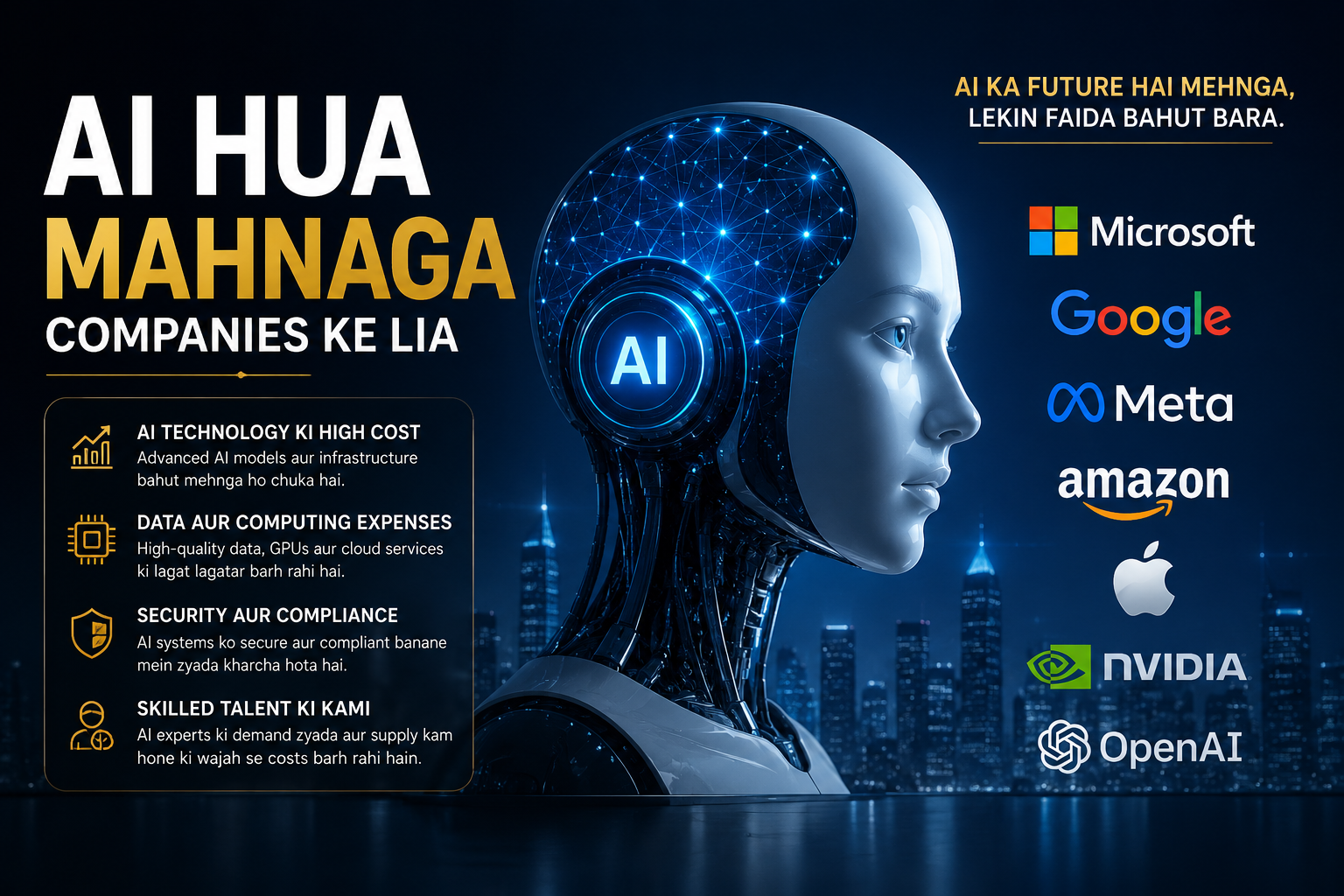
The True Cost of AI: Why Enterprises Face AI Bill Shock & Pivot Strategies
The Cost of Intelligence: Why Companies Are Experiencing "AI Bill Shock" and Shifting Strategies
The artificial intelligence gold rush is facing a massive reality check. Over the past few years, enterprises rushed to integrate generative AI, large language models (LLMs), and automated systems into their workflows, fearing they would be left behind.
However, as we move through 2026, a new corporate epidemic has emerged: AI Bill Shock.
Companies across the globe are realizing that building, running, and maintaining cutting-edge AI is astronomically expensive. The massive computational power required by modern AI models is draining corporate budgets, forcing executive boards to rethink their "AI-first" strategies.
Here is a detailed, data-backed analysis of why AI is costing companies a fortune, the real-world effects of these runaway budgets, and how enterprises are shifting back to safer, more cost-effective infrastructures.
1. Why is AI So Expensive? The Hidden Data Behind the Cost
When companies first experimented with AI, the initial API costs seemed manageable. The true financial pain began when trying to scale these models to enterprise levels.
Extreme Cloud and Compute Costs
Running complex AI models requires specialized hardware—specifically, high-end Graphics Processing Units (GPUs) like NVIDIA’s H100 and B200 chips.
-
Renting these chips through cloud providers (AWS, Microsoft Azure, Google Cloud) costs between $2 to $4 per hour per GPU.
-
For an enterprise running clusters of thousands of GPUs to train or fine-tune proprietary models, the infrastructure bills scale to millions of dollars per month.
The "Inferencing" Trap
Many executives assumed the highest cost would be training the AI. In reality, inference—the cost incurred every time a user asks the AI a question or generates an asset—accounts for up to 80% to 90% of total AI operational costs. If a company deploys an AI chatbot to handle millions of customer service queries, every single prompt incurs a fractional cloud compute cost. When multiplied by millions of users daily, the bill becomes unsustainable.
Skyrocketing AI Data Center Demands
The massive backend infrastructure needed to run advanced AI architectures requires incredible capital expenditure. Building and powering next-generation AI data centers requires water-cooling systems and immense electricity grids. Globally, tech giants are projecting annual capital expenditures between $125 billion to $145 billion just to sustain and scale these AI infrastructures. These massive backend costs are directly passed down to corporate enterprise clients.
2. The Ripple Effects on Corporate Enterprises
The unexpected financial burden of AI is causing significant structural shifts within organizations. Here are the primary effects companies are facing:
                  ┌──────────────────────────────┐
                  │ RUNAWAY AI OPERATIONAL COSTS │
                  └──────────────┬───────────────┘
                                 │
         ┌───────────────────────┼───────────────────────┐
         ▼                       ▼                       ▼
┌─────────────────┐     ┌─────────────────┐     ┌─────────────────┐
│ Profit Margin   │     │ "AI Fatigue" &  │     │ Severe Tech     │
│ Compression     │     │ Project Halts   │     │ Budget Cuts     │
└─────────────────┘     └─────────────────┘     └─────────────────┘
Profit Margin Compression
Instead of driving efficiency and increasing profitability, poorly optimized AI integrations are actively eating into corporate profit margins. Companies that integrated generative AI features into their software without raising subscription prices are finding that the cost to serve a customer has skyrocketed, resulting in lower net returns.
Severe Tech Budget Cannibalization
To pay for soaring AI cloud bills, Chief Information Officers (CIOs) are being forced to cut budgets elsewhere. Essential IT areas—such as cybersecurity upgrades, routine software maintenance, employee hardware refreshes, and standard cloud storage—are being defunded to keep the AI projects alive.
"AI Fatigue" and Project Halts
A wave of disillusionment is hitting the C-suite. According to industry surveys, a staggering number of enterprise AI pilots fail to make it to production. Companies are halting active AI developments because the return on investment (ROI) simply does not justify the immense monthly maintenance costs.
3. The Great Pivot: How Companies are Shifting Back to Safer Ground
To survive "AI Bill Shock," enterprises are abandoning the chaotic "hype-driven" approach and shifting toward highly strategic, restricted, and cost-effective safe zones.
Moving from Massive LLMs to SLMs (Small Language Models)
Companies are realizing they do not need a massive, multi-billion parameter model to do basic corporate tasks. Instead of using expensive, heavy-compute models for simple customer routing or document filing, they are pivoting to Small Language Models (SLMs). These smaller models can be run locally on smaller servers or cheaper cloud tiers, slashing operational costs by up to 70%.
Hybrid Infrastructure and "Cloud Repatriation"
Relying 100% on public cloud providers for AI processing has proven to be a financial trap for heavy users. Many enterprises are adopting a hybrid model or pulling their data back to private servers—a process known as cloud repatriation. By running specialized AI workloads on their own premises, they cap their monthly spending and protect sensitive corporate data from third-party leakage.
Strict ROI Gatekeeping
The era of blank-check AI budgets is officially over. Boards of directors are now applying strict traditional metrics to AI projects. If an AI tool cannot definitively prove that it saves measurable human hours, decreases customer churn, or directly drives revenue within a strict quarterly window, it is being systematically phased out.
Conclusion: The Era of "Smarter" AI Spending
Artificial Intelligence is undoubtedly a transformative piece of technology, but the wild, unoptimized spending of the early adoption phase has proven unsustainable. The current corporate shift isn't a rejection of AI; it is a healthy stabilization.
The companies that succeed in the long run will not be those with the largest, most expensive AI models, but those that deploy practical, tightly budgeted, and highly specific automation frameworks that protect their bottom line.