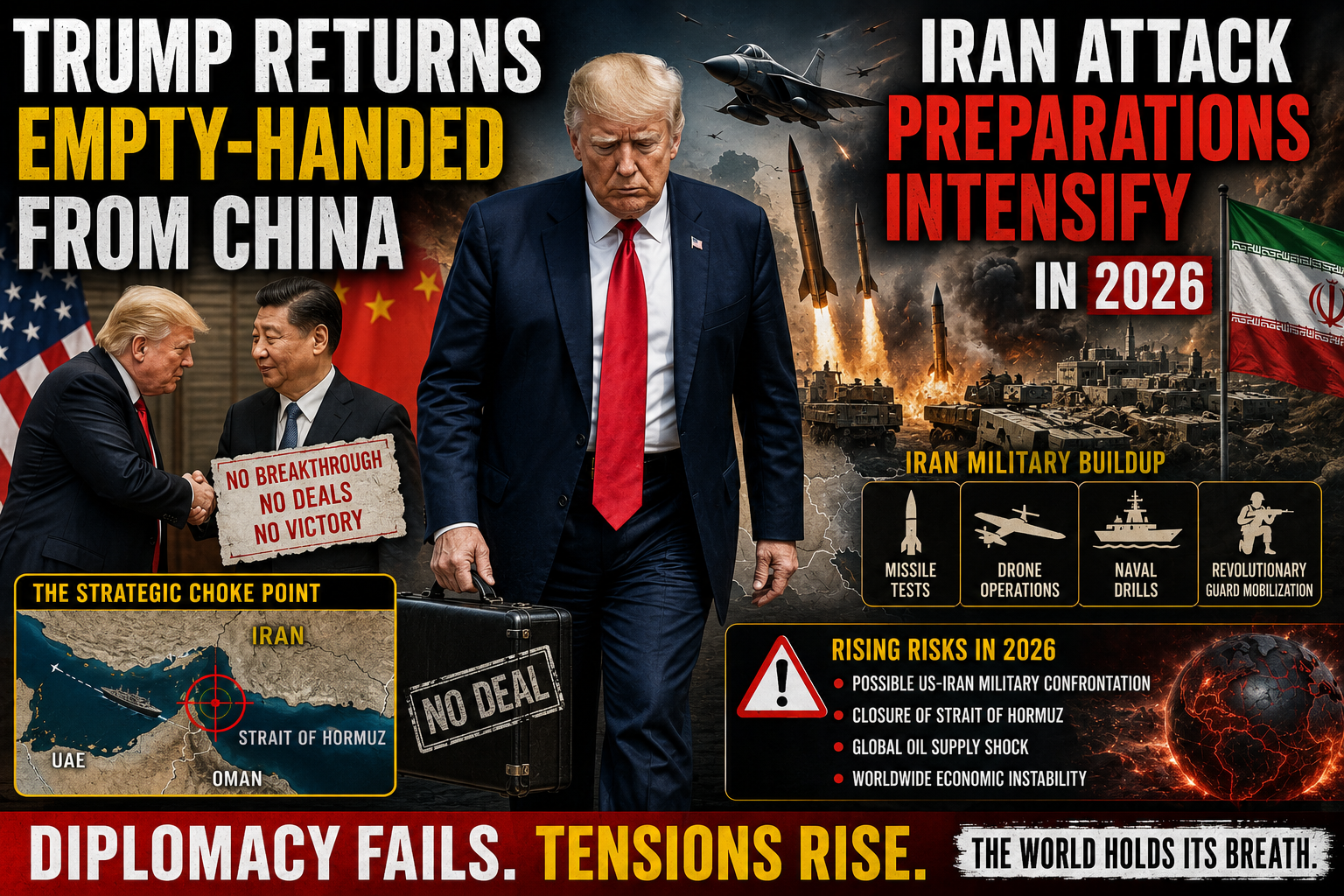
Trump Returns Empty-Handed from China as Iran Attack Preparations Intensify in 2026
Trump Returns Empty-Handed from China: Iran Attack Preparations Intensify Amid High-Stakes Geopolitics
In mid-May 2026, U.S. President Donald Trump concluded a much-anticipated two-day summit with Chinese President Xi Jinping in Beijing. Expectations were high for breakthroughs on trade, technology, Taiwan, and crucially, China’s potential role in mediating the ongoing Iran conflict. However, as Air Force One departed Beijing, the consensus from analysts, media outlets, and even some administration insiders was clear: Trump returned largely empty-handed. No major trade deals materialized, no significant concessions emerged on Taiwan, and Beijing offered no tangible assistance to resolve the Iran situation.
Fresh off this diplomatic trip, Trump has shifted focus back to Iran with renewed urgency. He issued strong warnings that “the clock is ticking,” delayed a planned major military strike at the request of Gulf allies, and emphasized that U.S. forces remain ready for a “full, large-scale assault” if negotiations fail. This sequence of events highlights the complex interplay of U.S.-China rivalry, Middle East tensions, and America’s strategic calculations in 2026.
The Beijing Summit: High Hopes Meet Limited Outcomes
Trump’s visit to China, the first by a U.S. president in nearly a decade, was framed as an opportunity to reset bilateral relations strained by tariffs, technology restrictions, and global conflicts. The agenda included:
- Trade imbalances and agricultural exports
- Technology transfers and chip restrictions
- The Taiwan issue
- China’s influence on Iran and the Strait of Hormuz
Trump praised Xi’s hospitality and described the meetings as productive. Yet, post-summit analysis painted a different picture. No concrete agreements on trade volumes or rare earth minerals were announced. On Taiwan, Xi reportedly delivered a firm warning that mishandling the issue could lead to a dangerous clash. China remained non-committal on pressuring Iran to end its blockade or return to nuclear talks.
Critics at home accused the administration of achieving little beyond photo-ops. Some pointed out that Beijing viewed the visit as evidence of American challenges rather than strength. Trump’s delegation reportedly discarded gifts before departure, adding to the narrative of frustration. Despite this, both sides agreed to continue dialogue, with Xi potentially visiting the U.S. later in the year.
Why the Summit Fell Short: Structural Challenges
Several factors contributed to the limited results:
- Divergent Interests — China prioritizes stability and its own strategic autonomy. It benefits from a weakened U.S. position in the Middle East while avoiding direct confrontation.
- Iran Leverage — Beijing maintains ties with Tehran and has little incentive to help Washington decisively end the conflict on U.S. terms.
- Domestic Pressures — Trump faces criticism over the costs of the Iran campaign, rising oil prices, and questions about achieved objectives.
- Global Realignment — China’s growing influence, alongside Russia, complicates U.S. efforts to isolate adversaries.
The summit underscored a harsh reality: In an era of great power competition, summits often yield symbolic rather than substantive wins.
The Iran Context: From Conflict to Fragile Ceasefire
The U.S.-Iran confrontation escalated dramatically in early 2026. Following Israeli lobbying and intelligence inputs, the Trump administration launched “Operation Epic Fury” — a series of airstrikes targeting Iranian military sites, nuclear facilities, missile production, and naval assets. The campaign aimed to degrade Iran’s offensive capabilities, sever proxy networks, and prevent nuclear breakout.
A ceasefire took hold in April, but underlying issues persist: Iran’s nuclear program, regional proxies, and control over the Strait of Hormuz. The blockade has disrupted global oil flows, driving prices higher and straining economies worldwide.
Post-China: Trump’s Renewed Iran Pressure
Immediately after returning from Beijing, Trump ramped up rhetoric:
- He declared the “clock is ticking” for Iran to reach a deal.
- He revealed that a major strike planned for mid-May was postponed following appeals from leaders of Qatar, Saudi Arabia, and the UAE.
- He affirmed that U.S. forces are on standby for rapid escalation if talks collapse.
This dual-track approach — diplomacy backed by credible military threat — reflects Trump’s signature negotiating style. Serious negotiations are reportedly underway, potentially involving a 14-point Iranian proposal or Gulf-mediated efforts. However, skepticism remains high on both sides.
Military Preparations: What’s on the Table?
U.S. and Israeli forces have maintained significant readiness in the region:
- Carrier strike groups and advanced aircraft remain positioned for strikes.
- Plans include targeting remaining missile sites, nuclear infrastructure, energy facilities (with dual-use considerations), and command centers.
- Ground options, though high-risk, have been discussed in some scenarios.
Pentagon officials continue refining target lists while emphasizing precision to minimize broader escalation. Allies in the Gulf seek de-escalation to protect economic interests, creating internal pressure on Trump to balance strength with restraint.
Geopolitical Implications
For the United States: The empty-handed return from China and prolonged Iran engagement raise questions about strategic overstretch. Success in Iran could bolster Trump’s image as a decisive leader, but prolonged conflict risks higher costs and domestic backlash.
For China: Beijing emerges in a relatively stronger position — hosting a U.S. president while advancing its narrative of multipolarity. Its ties with Iran and Russia provide leverage without direct involvement.
For Iran: Tehran faces immense pressure but has demonstrated resilience. Any deal would likely require guarantees on sanctions relief and security, while hardliners resist concessions.
For the Region and World: Oil prices, shipping security, and nuclear proliferation risks remain flashpoints. A successful diplomatic resolution could stabilize energy markets; renewed strikes might trigger wider disruption.
Broader Strategic Lessons
This episode illustrates several realities of 2026 geopolitics:
- Personal diplomacy has limits against structural rivalries.
- Military power provides leverage but carries high costs and uncertain outcomes.
- Alliances and economic interdependencies shape outcomes more than summit handshakes.
- The Middle East remains a theater where great powers compete indirectly.
Trump’s ability to convert military posture into a favorable deal will define this chapter of his presidency.
Looking Ahead: Risks and Opportunities
As negotiations continue, several scenarios are possible:
- A pragmatic interim agreement that pauses hostilities and reopens the Strait.
- Renewed limited strikes if Iran refuses core demands.
- Prolonged stalemate with periodic escalations.
The coming weeks will be critical. Trump has signaled impatience but also openness to a “good deal.” The world watches closely — oil markets fluctuate, diplomats shuttle, and militaries stay alert.
Trump’s China trip may not have yielded the desired breakthroughs, but it has clarified the battlefield. With Iran, the stakes are existential for regional stability and global energy security. Whether diplomacy or force prevails, the decisions made now will resonate for years.
The coming days could determine if Trump’s post-China momentum leads to a historic deal or another round of conflict. In either case, the era of great power maneuvering is far from over.
Related Articles

BTS Concert 2026 World Tour Tickets: Dates, Price, Booking & India Update
READ MORE →
NEET 2026 Paper Leak: How One Exam Can Destroy India’s Future
READ MORE →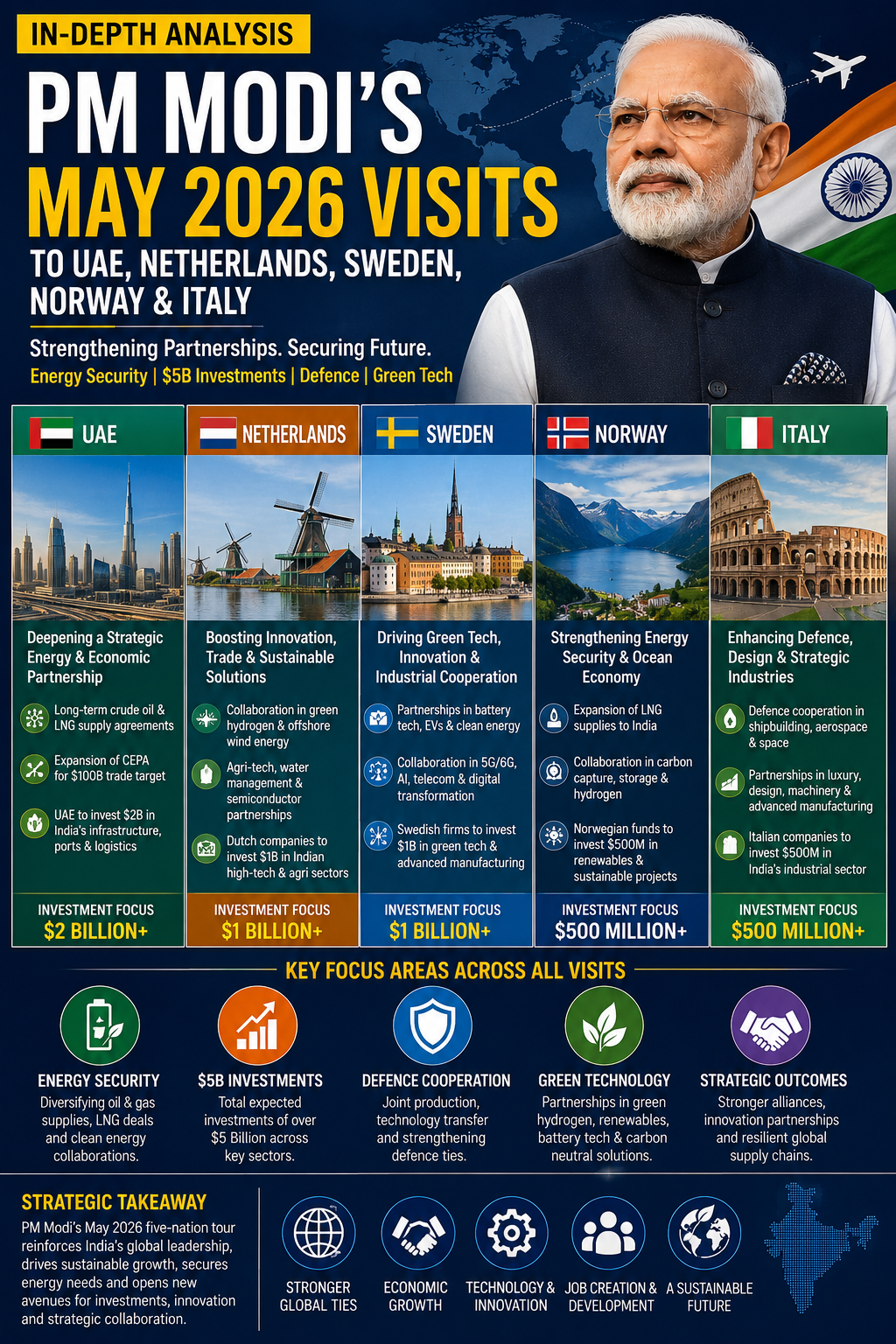
PM Modi Five-Nation Tour 2026: Key Deals, Energy Pacts & Strategic Outcomes
READ MORE →
Modi UAE Visit 2026: Historic Defence, Energy & $5 Billion Deals Signed on 15 May
READ MORE →
Canada में मिला पहला Hantavirus केस, स्वास्थ्य विभाग अलर्ट पर
READ MORE →