Chandigarh Uber Rapido Ban 2026: Why Licences Suspended
Chandigarh Uber Rapido Ban 2026: Why Were Their Licences Suspended?


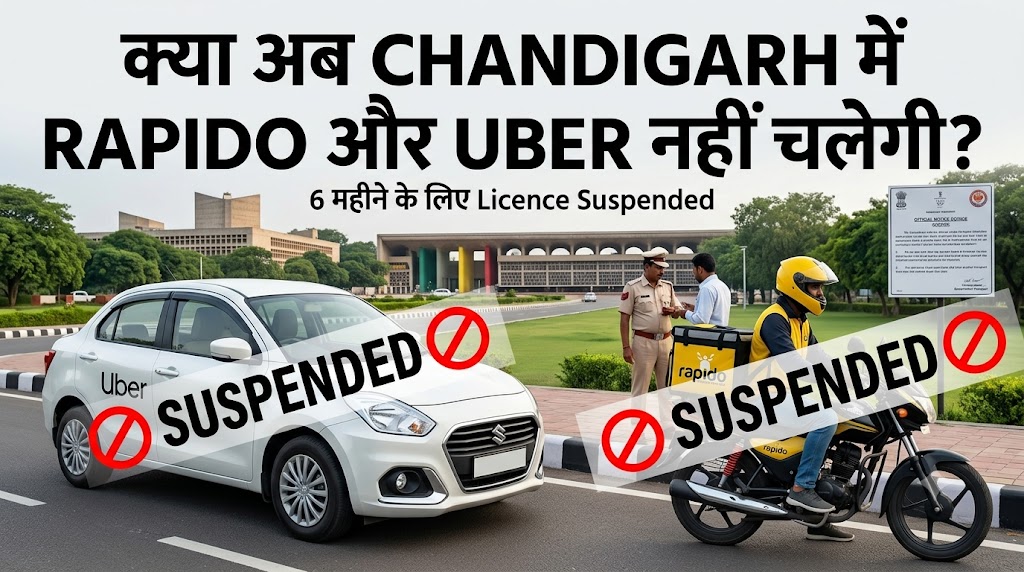
The Chandigarh Uber Rapido Ban 2026 has created a major disruption in app-based transportation across the city. On September 8, 2026, the Chandigarh Administration suspended the aggregator licences of Uber India Systems Pvt Ltd and Rapido (Roppen Transportation Services Pvt Ltd) for six months.
The action was taken by the State Transport Authority (STA) under Rule 17 of the Chandigarh Administration Motor Vehicles Aggregators Rules, 2025, following allegations of continued non-compliance with the UT's regulatory requirements. (The Tribune)
The development is particularly significant because Ola and inDrive had already faced similar six-month suspensions earlier this year. As a result, all four major app-based cab aggregators — Ola, inDrive, Uber and Rapido — are now suspended in Chandigarh. (The Tribune)
What Happened to Uber and Rapido in Chandigarh?
The Chandigarh State Transport Authority suspended the licences of Uber and Rapido with immediate effect on September 8, 2026.
Both licences have been suspended for six months, meaning the current suspension period runs until March 2027. (The Tribune)
The Administration said the companies had been given repeated opportunities to demonstrate compliance with the Chandigarh Administration Motor Vehicles Aggregators Rules, 2025, but their responses and compliance were considered inadequate. (The Tribune)
Uber
According to the reported STA order, Uber had been asked to submit compliance information as early as July 2025. A show-cause notice followed in October 2025, and further reviews and compliance requests continued into 2026. (The Tribune)
The authority ultimately suspended the licence after finding what it described as continuing violations and inadequate compliance.
Rapido
Rapido faced similar regulatory concerns, particularly involving driver insurance, fare implementation, office availability and the use of vehicles on its platform. (The Tribune)
Why Did Chandigarh Ban Uber and Rapido?
Several issues were cited in the STA's action.
1. Driver Health and Term Insurance
One of the major concerns involved mandatory insurance provisions for drivers.
The Chandigarh rules require aggregators to provide prescribed health and term insurance coverage for drivers.
According to the reported orders, the authorities found the required arrangements inadequate. In Rapido's case, the reported order said the insurance coverage for bike-taxi riders was limited to accidental death and injury and did not meet the broader coverage required under the Chandigarh rules. (The Tribune)
Driver welfare has therefore become one of the central issues in the dispute.
2. Fare Rules and Alleged Overcharging
Another major issue is the fare structure.
Chandigarh had notified a fare structure for aggregators, and the STA alleged that Uber and Rapido had not properly implemented the notified fares.
The Tribune reported that both platforms were accused of charging fares above the rates notified by the Chandigarh Administration, which the authority treated as a violation of the applicable rules. (The Tribune)
This is important for commuters because app-based taxi fares can fluctuate significantly depending on demand, time and availability.
The Chandigarh rules are intended to create a regulated framework around fares rather than leaving the entire pricing mechanism outside administrative oversight.
3. Driver Subscription and Recharge Model
The administration also raised concerns about subscription or prepaid recharge models for drivers.
Driver unions had repeatedly complained about such arrangements, arguing that they affected drivers' earnings and working conditions.
The latest reported orders against Uber and Rapido cited complaints regarding these models as part of the broader compliance dispute. (The Tribune)
4. Non-Commercial Vehicles
Another important issue involved the alleged attachment of non-commercial/private vehicles to aggregator platforms.
The Chandigarh regulatory framework does not permit aggregators to operate in violation of the vehicle requirements applicable to their services.
The STA reportedly found non-commercial vehicles associated with the platforms, which was cited as another compliance concern. (The Tribune)
5. Local Office and Inspection Issues
The administration also raised questions about the physical presence of the companies in Chandigarh.
According to The Tribune's report, Uber's Sector 47-C office was found closed or locked during three inspection visits in May 2026.
Rapido's Sector 32-D office was similarly reported to have been found locked during inspections. (The Tribune)
The Chandigarh rules require aggregators to maintain an appropriate local presence and comply with administrative requirements.
6. Repeated Notices and Unsatisfactory Replies
The suspension did not come after a single notice.
The authorities reportedly issued multiple notices, conducted meetings and sought compliance reports from the companies.
According to the STA's position reported by The Tribune, Uber and Rapido were given sufficient opportunity to comply with requirements related to:
-
Driver health insurance
-
Term insurance
-
Training
-
Fare structure
-
Operational compliance
The administration ultimately concluded that compliance remained inadequate. (The Tribune)
What Happened to Ola and inDrive?
The Uber-Rapido suspension is actually the latest stage of a wider Chandigarh crackdown on app-based aggregators.
The sequence reported by The Tribune is:
| Company | Suspension Date | Suspension Period |
|---|---|---|
| Ola | June 17, 2026 | 6 months |
| inDrive | August 10, 2026 | 6 months |
| Uber | September 8, 2026 | 6 months |
| Rapido | September 8, 2026 | 6 months |
Ola's suspension runs into December 2026, while inDrive's suspension runs into February 2027. Uber and Rapido are suspended until March 2027. (The Tribune)
This means Chandigarh has effectively taken action against all four major app-based aggregators operating in the city.
Why Are the Chandigarh Aggregator Rules Important?
The Chandigarh Administration Motor Vehicles Aggregators Rules, 2025 provide a regulatory framework for app-based transport companies.
The framework covers areas such as:
-
Driver welfare
-
Insurance
-
Training
-
Passenger safety
-
Fares
-
Vehicle requirements
-
Aggregator responsibilities
-
Local operational requirements
The administration has increasingly enforced these provisions during 2026. (Moneycontrol)
The action against Ola in June was described by The Tribune as the first major enforcement of Chandigarh's new aggregator regime. (The Tribune)
What Does the Uber and Rapido Ban Mean for Passengers?
The biggest immediate impact will be on commuters.
Chandigarh has a large number of people who depend on app-based taxis and bike taxis for:
-
Office travel
-
College travel
-
Railway station trips
-
Airport travel
-
Inter-city movement
-
Daily commuting
-
Late-night transportation
With four major platforms suspended, passengers have fewer app-based choices.
The Tribune reported that ride availability could become tighter, particularly during peak hours and for airport or inter-city journeys. (The Tribune)
What About Chandigarh–Mohali–Panchkula Travel?
The impact could extend beyond Chandigarh itself because the Tricity functions as a connected urban region.
People regularly travel between:
Chandigarh → Mohali
Chandigarh → Panchkula
Panchkula → Chandigarh
Mohali → Chandigarh
When major ride-hailing platforms become unavailable, commuters who depend on these services may have to rely more heavily on local taxis, autos, public transport and other authorised services.
Is Any Cab Aggregator Still Operating in Chandigarh?
According to the latest reports, Bharat Taxi, operated by Sahkari Taxi Cooperative Limited, remains the major app-based platform operating in Chandigarh after the suspensions of Ola, inDrive, Uber and Rapido. (The Tribune)
Bharat Taxi is a cooperative, driver-owned ride-hailing platform and has therefore become particularly important for commuters following the latest regulatory action.
What Does the Ban Mean for Drivers?
The suspension also creates uncertainty for thousands of drivers who depend on these platforms.
Drivers connected with the suspended platforms may need to:
-
Shift to authorised platforms
-
Explore conventional taxi operations
-
Look for alternative ride-hailing platforms
-
Wait for the companies to regain compliance
-
Consider other income sources
At the same time, the driver unions have been demanding stronger implementation of welfare provisions.
The administration's action has therefore become part of a larger dispute involving driver earnings, commissions, fares, insurance and working conditions. (The Tribune)
Why Are Drivers Protesting?
Driver protests have been an important part of the Chandigarh aggregator controversy.
The protests have focused on issues such as:
-
Driver earnings
-
Aggregator commissions
-
Fare implementation
-
Working conditions
-
Insurance
-
Subscription models
-
Regulatory compliance
The administration's latest action follows months of tension between drivers, aggregators and regulators. (The Tribune)
Can Uber and Rapido Return to Chandigarh?
The six-month suspension does not necessarily mean the companies are permanently banned from Chandigarh.
The reported orders indicate that the companies can potentially have their licences reconsidered if they demonstrate compliance with the applicable rules and the authority is satisfied with their corrective measures. (The Tribune)
Therefore, the situation could change before or after the suspension period depending on:
-
Compliance reports
-
Driver insurance arrangements
-
Fare implementation
-
Vehicle compliance
-
Local office requirements
-
Training
-
Regulatory responses
Why This Action Matters Beyond Uber and Rapido
This is not simply a dispute between Chandigarh and two cab companies.
It represents a larger question:
How should app-based transportation companies be regulated?
Ride-hailing platforms have changed urban transportation dramatically.
They offer:
-
Convenience
-
Digital booking
-
Cashless payments
-
Driver-partner networks
-
Price visibility
-
Real-time tracking
But governments also have to address:
-
Passenger safety
-
Driver welfare
-
Insurance
-
Pricing
-
Vehicle legality
-
Accountability
-
Data and operational compliance
Chandigarh's latest action shows that authorities are increasingly willing to use regulatory powers when they believe aggregator companies are not meeting prescribed requirements. (Moneycontrol)
Chandigarh Uber Rapido Ban 2026: Key Points at a Glance
| Point | Details |
|---|---|
| Authority | State Transport Authority, Chandigarh |
| Companies affected | Uber and Rapido |
| Action | Licence suspension |
| Date | September 8, 2026 |
| Duration | 6 months |
| Till | March 2027 |
| Legal basis | Rule 17, Chandigarh Motor Vehicles Aggregators Rules, 2025 |
| Major concerns | Insurance, fares, training, vehicle compliance, operational requirements |
| Earlier suspensions | Ola and inDrive |
| Major platform remaining | Bharat Taxi |
| Impact | Fewer app-based transport options for commuters |
What Should Chandigarh Commuters Do Now?
Passengers should avoid assuming that a suspended platform can legally continue normal operations during the suspension.
The latest reporting says the administration has directed vehicle owners attached to the suspended platforms not to accept bookings through those apps in Chandigarh and warned of enforcement action for violations. (The Tribune)
For now, commuters should consider:
-
Bharat Taxi
-
Registered local taxis
-
Authorised auto services
-
Public transport
-
Other officially permitted transportation options
Passengers travelling to the airport or railway station should particularly plan ahead because reduced app-based availability could affect peak-hour bookings.
Final Verdict
The Chandigarh Uber Rapido Ban 2026 is the latest development in Chandigarh's strict enforcement of its 2025 aggregator rules.
Uber and Rapido have both received six-month licence suspensions, following allegations involving driver insurance, fares, training, vehicle compliance, subscription models and other regulatory requirements. (The Tribune)
The bigger development, however, is that Ola and inDrive had already been suspended earlier, meaning all four major app-based aggregators are now barred from operating under their Chandigarh licences. (The Tribune)
For drivers, the action highlights the importance of welfare and regulatory compliance. For passengers, it means fewer choices and potentially tighter availability of app-based rides.
The coming months will show whether Uber, Rapido, Ola and inDrive can satisfy Chandigarh's requirements and return to the city's roads.


Related Articles

India vs New Zealand LIVE Score, 3rd ODI 2026: Arshdeep Singh Strikes Early as India Dominate in Indore
READ MORE →
Modern India: Progress, Development & the Rise of a Global Power | 2024 Analysis
READ MORE →
PM Modi Gets Grand Cross Award in Norway | Green Strategic Partnership
READ MORE →
India No Longer the 4th Largest Economy?
READ MORE →
India Squad Sri Lanka Test Series: Full Team List Announced
READ MORE →
PM Modi at 26th SCO Summit 2026: Terrorism Message
READ MORE →