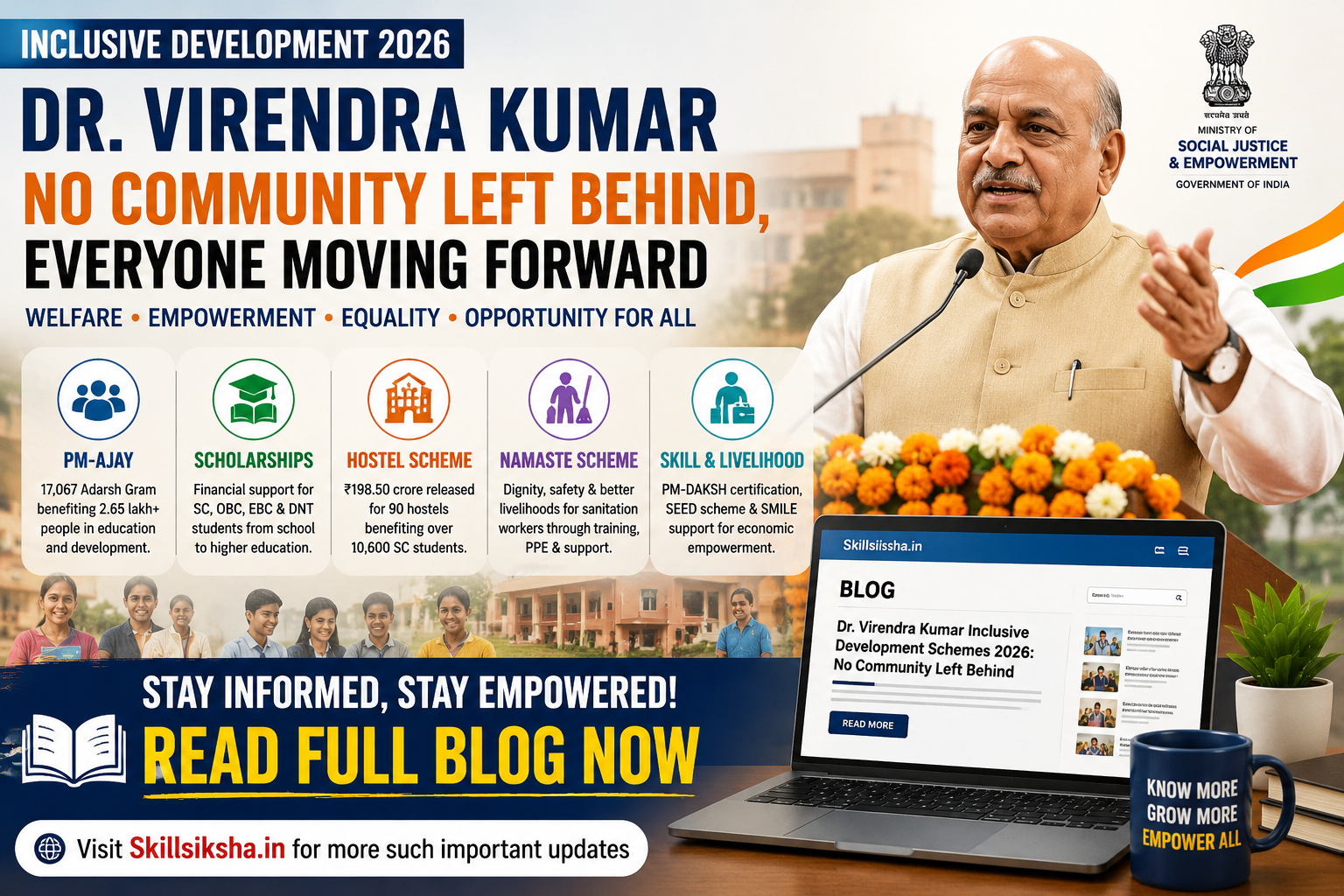
Dr Virendra Kumar Inclusive Development Schemes 2026
Dr. Virendra Kumar Inclusive Development Schemes 2026: No Community Left Behind
Dr Virendra Kumar Inclusive Development Schemes 2026 have gained attention as the Ministry of Social Justice and Empowerment continues to expand targeted welfare, education, livelihood and social-security interventions for disadvantaged communities. In August 2026, Union Minister Dr. Virendra Kumar reiterated the government’s objective of ensuring that no citizen or community is left behind in India’s development journey. (Press Information Bureau)
The approach combines schemes for Scheduled Castes (SC), Denotified, Nomadic and Semi-Nomadic communities, sanitation workers and other vulnerable groups. Major initiatives highlighted by the Ministry include PM-AJAY, SEED and NAMASTE, alongside scholarship and skill-development programmes.


What Dr. Virendra Kumar Said About Inclusive Development
On 14 August 2026, Dr. Virendra Kumar interacted with beneficiaries of the SEED, NAMASTE and PM-AJAY schemes at the Dr. Ambedkar International Centre in New Delhi.
The Minister said that social justice is not limited to financial assistance. According to the Ministry, the broader objective is to ensure that people at the margins receive equal opportunities, dignity, social security and sustainable avenues for self-reliance. (Press Information Bureau)
He also reiterated the objective of ensuring that no person is left behind in the journey towards Viksit Bharat @2047. (Press Information Bureau)
This approach can be broadly understood through four areas:
-
Education and scholarships
-
Livelihood and skill development
-
Social security and dignity
-
Infrastructure and last-mile delivery
Major Welfare Initiatives Under the Inclusive Development Approach
| Scheme / Initiative | Main Focus |
|---|---|
| PM-AJAY | Socio-economic and educational empowerment of SC communities |
| SEED | Economic empowerment of DNT, NT and SNT communities |
| NAMASTE | Safety, dignity and livelihood support for sanitation workers |
| PM-DAKSH | Skill development and training |
| Scholarship Schemes | Educational support for SC, OBC, EBC and DNT students |
| SMILE | Livelihood and rehabilitation support for marginalized individuals |
The Department's official scheme list includes PM-AJAY, PM-YASASVI, SMILE, NAMASTE, PM-DAKSH and other programmes aimed at social and economic empowerment. (Social Justice)
PM-AJAY: Focus on Education, Villages and Infrastructure
The Pradhan Mantri Anusuchit Jaati Abhyuday Yojana (PM-AJAY) is one of the key schemes discussed by Dr. Virendra Kumar.
The scheme works towards improving the socio-economic and educational conditions of Scheduled Caste communities through components including Adarsh Gram, Grants-in-Aid and hostel construction/repair. (Press Information Bureau)
17,067 Villages Declared Adarsh Gram
According to information given by the Minister in the Lok Sabha, 17,067 villages had been declared Adarsh Gram as of 29 July 2026.
Under the education domain, 2,65,509 beneficiaries had been covered in these villages. The Adarsh Gram component works across 10 domains containing 50 socio-economic indicators, including education. (Press Information Bureau)


PM-AJAY Hostel Infrastructure
Education is not only about scholarships. For students who need residential facilities, PM-AJAY also provides central assistance for construction of SC hostels.
During FY 2021-22 to FY 2025-26:
-
90 hostels were sanctioned.
-
10,649 SC students are expected to benefit from these hostels.
-
₹198.50 crore was released to States and Union Territories for hostel construction. (Press Information Bureau)
The hostel guidelines also provide for facilities such as:
-
Lady wardens in girls' hostels
-
Security personnel
-
In-house coaching
-
Medical care
-
Health camps
-
IT education
-
Sports coaching
-
Barrier-free access for students with disabilities (Press Information Bureau)
Scholarship Support for Disadvantaged Students
Education remains a major component of the government's social-justice architecture.
The Department implements several scholarship programmes covering different stages of education. These include Pre-Matric Scholarship for SC students, Post-Matric Scholarship for SC students, Top Class Education for SC students and SHRESHTA, among others. (Press Information Bureau)
In FY 2025-26, the Department reported that ₹7,981.47 crore had been disbursed to more than 75 lakh SC beneficiaries.
The Ministry also reported increases in expenditure compared with FY 2024-25:
-
Pre-Matric Scholarship for SCs & Others: 21% increase
-
Post-Matric Scholarship for SCs: 11.23% increase
-
Central Sector Scholarship for Top Class Education for SC Students: 13.5% increase
-
SHRESHTA: 16% increase (Press Information Bureau)
The Department has also published 2026-27 guidelines for the Central Sector Scholarship of Top Class Education for SC Students. (Social Justice)
NAMASTE Scheme: Safety and Dignity for Sanitation Workers
Another important pillar of the Dr Virendra Kumar Inclusive Development Schemes 2026 framework is NAMASTE — National Action for Mechanised Sanitation Ecosystem.
The objective is to make sanitation work safer and more dignified while promoting mechanised sanitation practices.
According to the Ministry, measures under NAMASTE include:
-
Profiling of sewer and septic-tank workers
-
Personal Protective Equipment (PPE) kits
-
Health insurance
-
Safety training
-
Emergency Sanitation Response Units
-
Support for safer livelihoods
-
Integration of waste pickers into the formal solid-waste-management system (Press Information Bureau)
The government has also reiterated its commitment to the rehabilitation of people engaged in manual scavenging and eliminating hazardous manual cleaning. (Press Information Bureau)


SEED Scheme for DNT, NT and SNT Communities
The Scheme for Economic Empowerment of DNTs (SEED) focuses on Denotified, Nomadic and Semi-Nomadic communities.
Dr. Virendra Kumar highlighted SEED as an important initiative for creating opportunities beyond direct financial assistance.
Its broader objectives include:
-
Sustainable livelihood opportunities
-
Skill development
-
Self-reliance
-
Economic empowerment
-
Dignified living
-
Greater empowerment of women from DNT communities (Press Information Bureau)
The Minister particularly highlighted the importance of empowering women because stronger economic participation can contribute to stronger families and communities. (Press Information Bureau)


Digital Monitoring and PM-AJAY Mobile Application
An important change in welfare delivery is the increasing use of digital technology.
Dr. Virendra Kumar highlighted the launch of the PM-AJAY mobile application and portal in May 2026.
The system is intended to move scheme implementation away from paper-based processes toward real-time digital workflows, with the objective of improving:
-
Monitoring
-
Transparency
-
Accountability
-
Implementation tracking (Press Information Bureau)
This digital layer is important because welfare programmes operate across large geographical areas and involve multiple implementing agencies.
PM-DAKSH and Skill Development
Financial assistance alone may not permanently improve economic conditions. Skill development can help beneficiaries access employment and livelihood opportunities.
The Ministry's welfare architecture therefore also includes Pradhan Mantri Dakshta Aur Kushalta Sampann Hitgrahi (PM-DAKSH) Yojana.
The Department's official scheme portal lists PM-DAKSH among its major programmes for social and economic empowerment. (Social Justice)
The broader strategy is to connect vulnerable communities with training, employability and opportunities for greater economic independence.
Support for OBC, EBC and DNT Students
Inclusive development is not restricted to one scheme or one beneficiary category.
The Department's official scheme listings include PM-YASASVI, covering educational support for OBCs, EBCs and DNTs. The Department also lists Pre-Matric, Post-Matric and Top-Class education support for these groups. (Social Justice)
This creates a wider educational support structure covering students at different stages of their academic journey.
What “No One Left Behind” Means in Practice
The government's stated inclusive-development approach can be viewed as a combination of several interventions rather than a single welfare programme.
1. Better Access to Education
Scholarships, residential hostels and educational infrastructure can help reduce barriers faced by disadvantaged students.
2. Village-Level Development
PM-AJAY's Adarsh Gram component focuses on development across multiple socio-economic domains rather than education alone.
3. Safer Livelihoods
NAMASTE addresses workplace safety and dignity for sanitation workers while promoting mechanisation.
4. Economic Empowerment
SEED and skill-development programmes aim to create opportunities for sustainable livelihoods and self-reliance.
5. Digital Governance
The PM-AJAY portal and mobile application are designed to strengthen monitoring and transparency through digital workflows.
6. Social Dignity
The Ministry's approach increasingly links welfare with dignity, equal opportunity and participation rather than viewing beneficiaries only as recipients of assistance.
Wider Social Justice Coverage
The Department of Social Justice and Empowerment oversees programmes covering a broad range of communities and social issues.
These include:
-
Scheduled Castes
-
Other Backward Classes
-
Denotified and Nomadic Tribes
-
Senior citizens
-
Transgender persons
-
Sanitation workers
-
Waste pickers
-
Persons engaged in begging
-
Persons affected by substance abuse
-
Economically weaker sections and other vulnerable groups (Press Information Bureau)
The Department's official website also lists dedicated programmes covering senior citizens, scholarships, PM-DAKSH, NAMASTE, PM-SURAJ, Top Class Education and other welfare areas. (Social Justice)
Key Numbers at a Glance
| Indicator | Latest figure |
|---|---|
| PM-AJAY Adarsh Gram villages | 17,067 |
| Education-domain beneficiaries | 2,65,509 |
| SC hostels sanctioned, FY 2021-22 to FY 2025-26 | 90 |
| Students benefiting from these hostels | 10,649 |
| Funds released for SC hostels | ₹198.50 crore |
| SC beneficiaries receiving disbursements in FY 2025-26 | 75 lakh+ |
| SC welfare disbursement in FY 2025-26 | ₹7,981.47 crore |
The PM-AJAY figures are based on information provided by the Ministry in August 2026, while the scholarship-disbursement figures were reported by PIB in April 2026. (Press Information Bureau)
Why These Schemes Matter
The importance of these initiatives lies in their attempt to address different stages of socio-economic disadvantage.
A student may need a scholarship to remain in education. Another may require a hostel closer to an educational institution. A sanitation worker may need safety equipment and health protection. A DNT family may require skill development and livelihood opportunities.
Therefore, inclusive development requires multiple forms of support working together.
The government's current approach, as articulated by Dr. Virendra Kumar, is to combine welfare assistance with opportunities for education, skills, livelihoods, social security and dignity. (Press Information Bureau)
Conclusion
The Dr Virendra Kumar Inclusive Development Schemes 2026 agenda reflects the Ministry of Social Justice and Empowerment's emphasis on targeted interventions for disadvantaged and vulnerable communities.
The latest figures show significant activity under PM-AJAY, including 17,067 Adarsh Gram villages and more than 2.65 lakh education-domain beneficiaries. The sanctioning of 90 SC hostels and release of ₹198.50 crore during FY 2021-22 to FY 2025-26 further highlights the focus on educational infrastructure. (Press Information Bureau)
At the same time, NAMASTE focuses on safer and more dignified sanitation work, while SEED seeks to expand economic opportunities for DNT, NT and SNT communities. Digital platforms such as the PM-AJAY mobile application and portal are intended to strengthen transparency and monitoring. (Press Information Bureau)
The larger objective, according to the Minister, is to ensure that every citizen gets the opportunity to participate in India's development journey with dignity, equal opportunity and greater self-reliance.
Related Articles
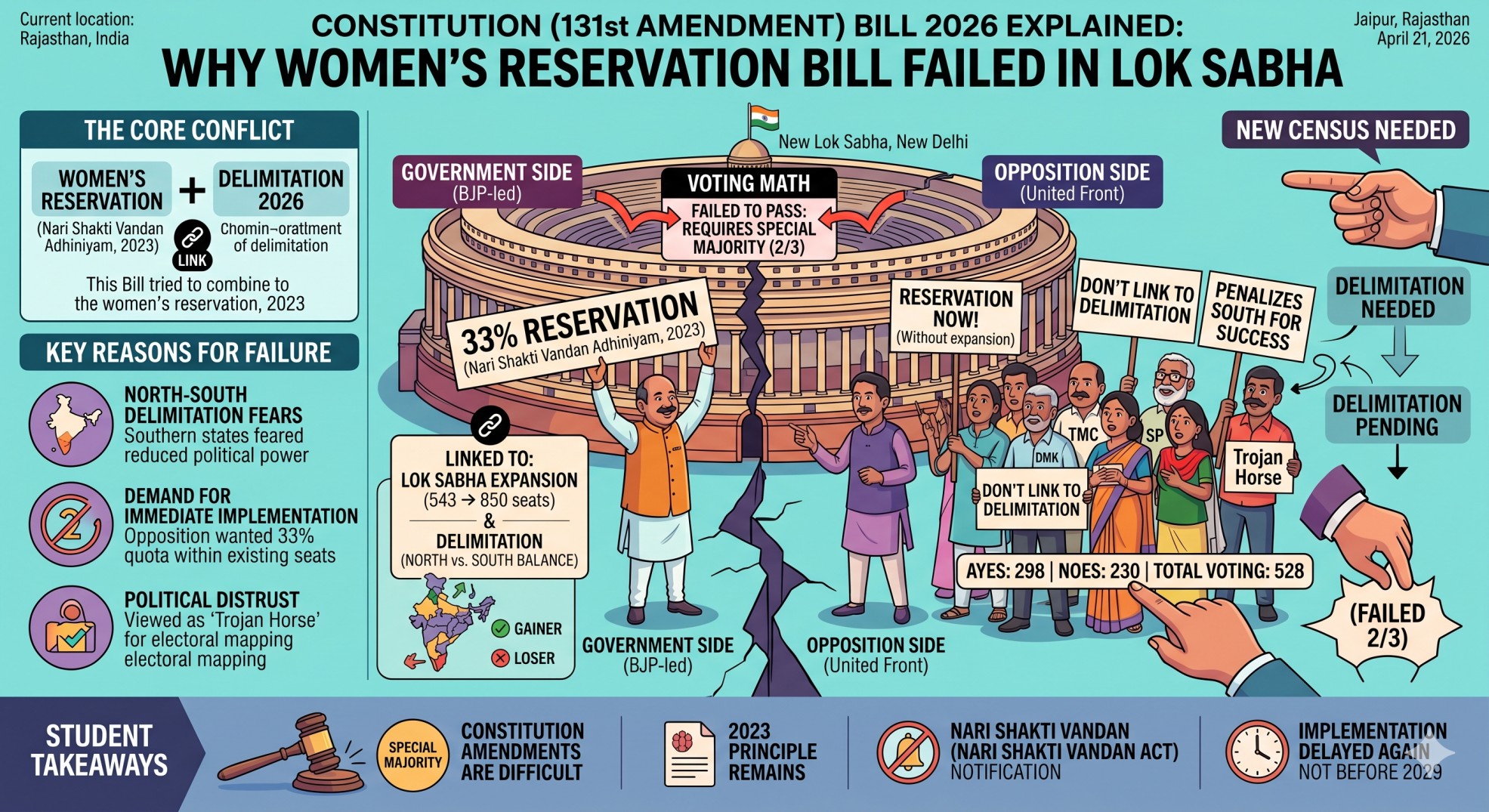
Constitution (131st Amendment) Bill 2026 Explained: Why Women’s Reservation Bill Failed in Lok Sabha
READ MORE →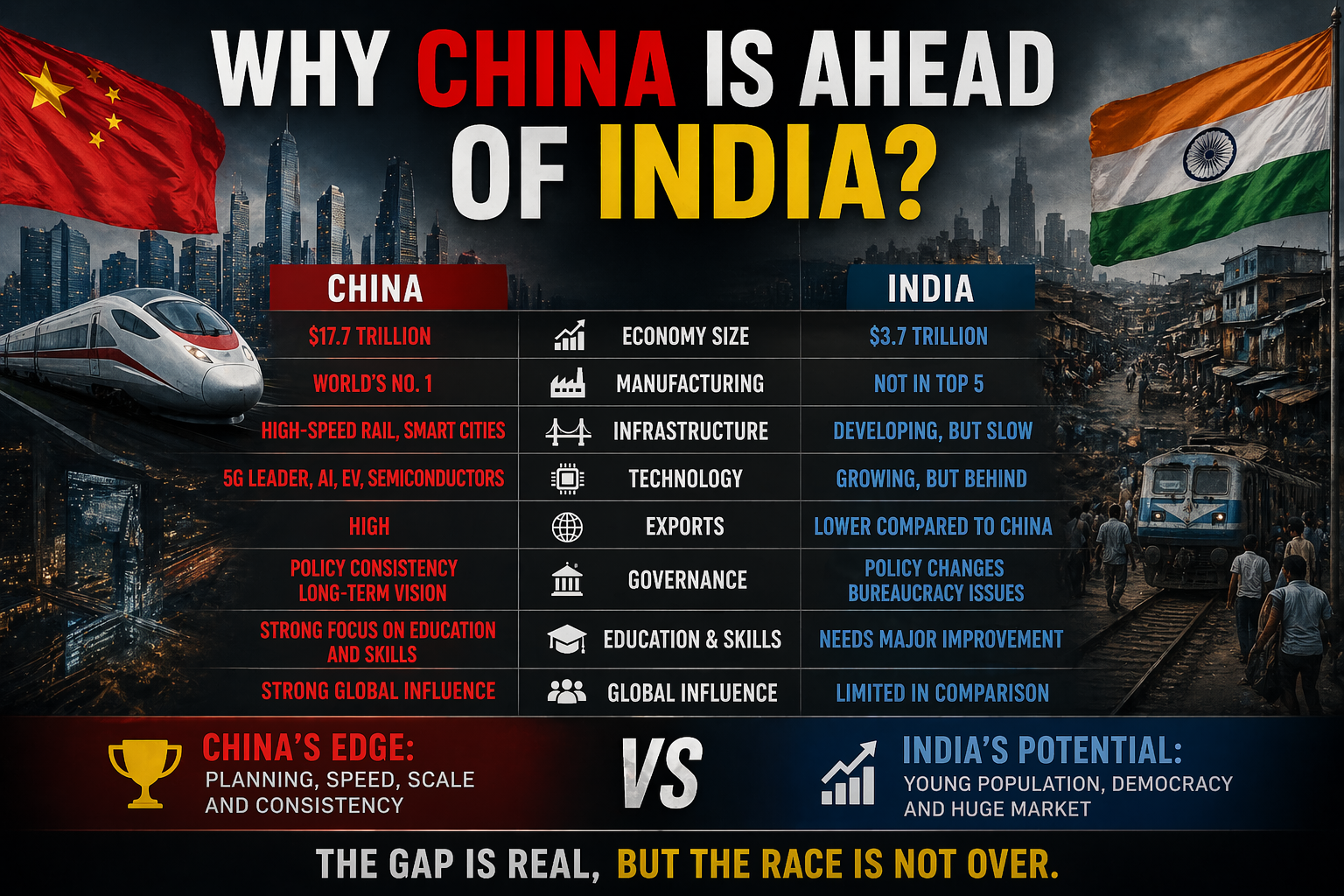
India vs China: Why China Is Ahead of India (From 1947 to 2026 Explained)
READ MORE →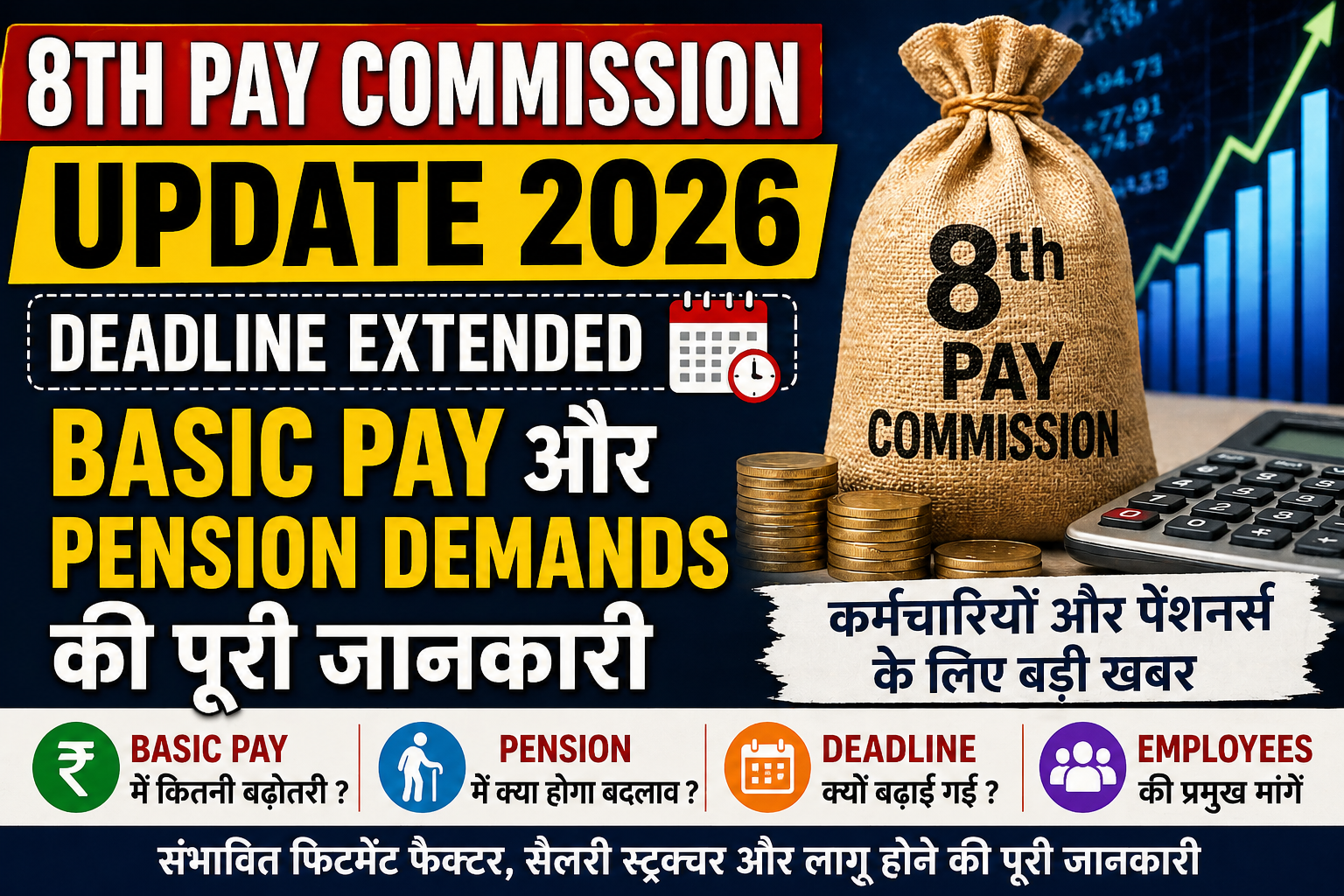
8th Pay Commission Update: Deadline बढ़ी, Basic Pay और Pension Demand की पूरी जानकारी
READ MORE →
CBSE Digital Answer Sheet Checking: On-Screen Marking System for Class 12 Exams 2026
READ MORE →
India Core Sector Growth 5.4%: Cement, Coal & Iron Ore
READ MORE →
Elgi Equipments VAYU Air Compressors: Made in India
READ MORE →
Bhakra Dam Safety: IIT Roorkee Study, Deflection &
READ MORE →