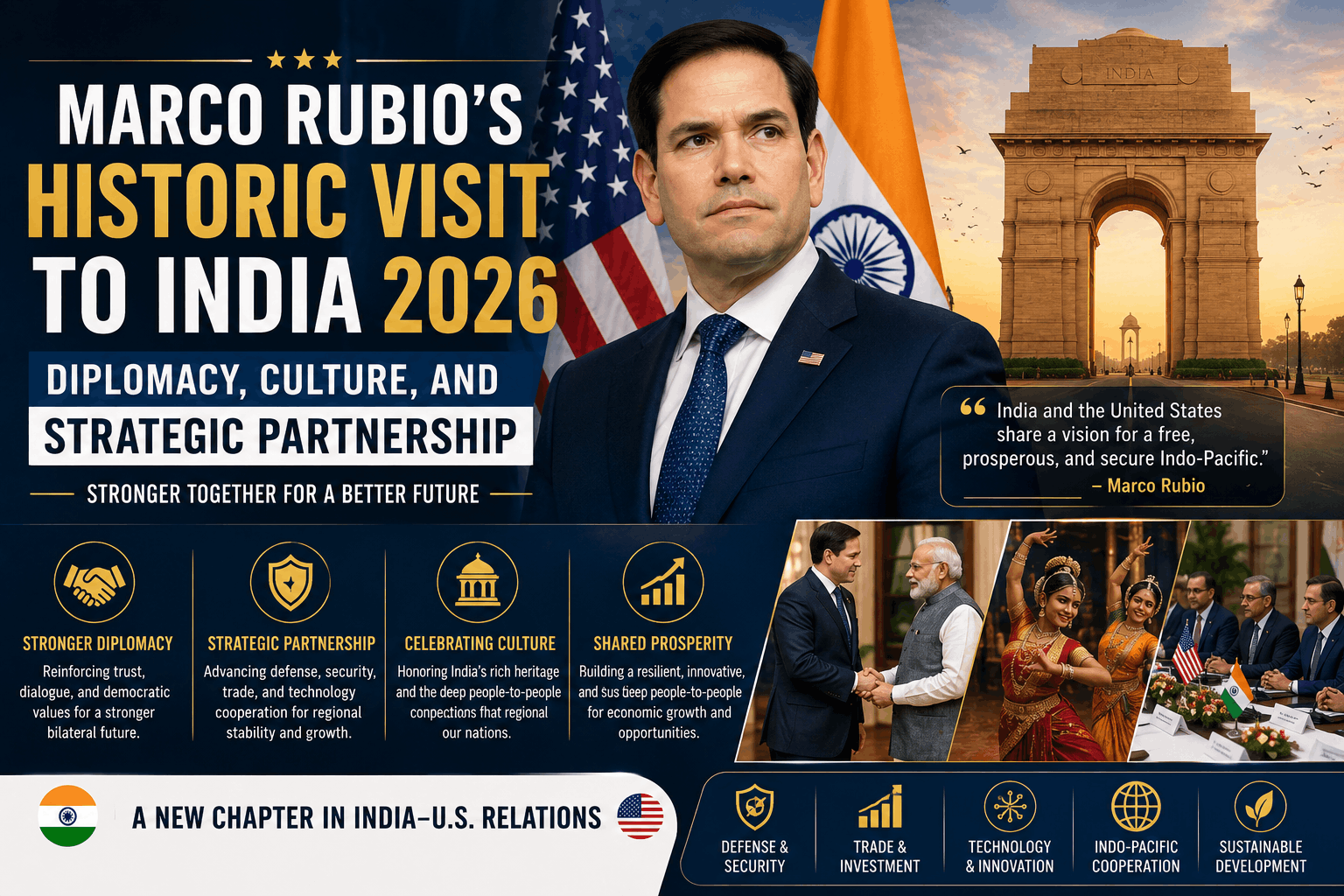
Marco Rubio’s Historic Visit to India 2026: Diplomacy, Culture, and Strategic Partnership
Marco Rubio’s Visit to India 2026: Strengthening Ties, Culture, and Strategic Partnership
In a significant diplomatic engagement, United States Secretary of State Marco Rubio undertook a four-day official visit to India from May 23 to 26, 2026. This visit came at a crucial time when both nations are navigating complex global challenges, including trade tensions, supply chain resilience, technology cooperation, and the evolving strategic dynamics in the Indo-Pacific region.
Rubio’s visit was marked by high-level diplomatic meetings, cultural immersion, and symbolic gestures aimed at deepening the multifaceted India-US relationship under the second Trump administration.
Itinerary: A Blend of Diplomacy and Cultural Diplomacy
May 23: Kolkata – A Human Touch
Secretary Rubio, accompanied by his wife Jeanette Rubio, began his India journey in Kolkata. The couple visited the historic Mother House, headquarters of the Missionaries of Charity founded by Saint Mother Teresa. They spent time in prayer and paid respects at Mother Teresa’s tomb. This gesture was widely appreciated in India as it highlighted shared values of compassion and humanitarian service.
May 24: Agra – The Symbol of Eternal Love
The delegation then traveled to Agra, where Rubio and his wife visited the iconic Taj Mahal. Despite the scorching summer heat exceeding 40°C, Rubio took time to appreciate the architectural marvel and its historical significance. The visit was not only a tourist highlight but also a strong message of cultural appreciation between the two democracies.
May 25: Jaipur – Celebrating Rajasthan’s Heritage
In Jaipur, the “Pink City,” Rubio witnessed Rajasthan’s rich cultural heritage. He attended a colorful cultural program featuring traditional folk performances, puppet shows, and an elephant procession. The vibrant display of Indian culture left a lasting impression on the American delegation.
May 25-26: New Delhi – Core Diplomatic Engagements
The most substantive part of the visit took place in the national capital. Rubio held extensive bilateral meetings with:
- External Affairs Minister S. Jaishankar
- Defence Minister Rajnath Singh
- National Security Advisor Ajit Doval
- Prime Minister Narendra Modi
Key Outcomes and Discussions
1. Strategic Partnership & Quad Both sides reaffirmed their commitment to the Quad (Quadrilateral Security Dialogue). Discussions focused on enhancing maritime security, countering regional challenges, and promoting a free and open Indo-Pacific. Rubio emphasized the importance of India as a key partner in America’s Indo-Pacific strategy.
2. Trade and Economic Cooperation Trade imbalances and tariffs remained a sensitive topic. Rubio pushed for greater market access for American companies while acknowledging India’s concerns. Both nations agreed to accelerate negotiations under the India-US Trade Policy Forum and explore new areas of collaboration in semiconductors, critical minerals, defense manufacturing, and green energy.
3. Technology and Defense Significant progress was made on technology transfer, joint defense production, and cooperation in artificial intelligence and space. The iCET (Initiative on Critical and Emerging Technology) framework received fresh impetus during the visit.
4. People-to-People Ties Rubio highlighted the strong Indian-American diaspora in the US and stressed the need to further strengthen educational and cultural exchanges between the two countries.
Significance of the Visit
Marco Rubio’s visit carries multiple layers of importance:
- Bridge-Building: It helped ease some of the tensions that had emerged during the early days of the second Trump administration regarding tariffs and immigration.
- Personal Diplomacy: Rubio, known for his strong views on China and deep interest in Indo-Pacific affairs, is seen as a friendly and knowledgeable interlocutor by Indian policymakers.
- Cultural Connect: The deliberate inclusion of Kolkata, Agra, and Jaipur in the itinerary showcased America’s respect for India’s civilizational heritage, going beyond pure transactional diplomacy.
Challenges and Expectations
While the visit was largely positive, several challenges remain:
- Trade deficit concerns from the American side
- India’s balancing act between Russia and the West
- Differences on certain global issues like climate change timelines
- Visa and immigration policies affecting Indian students and professionals
Indian officials expressed hope that Rubio’s visit would pave the way for more balanced and mutually beneficial outcomes in the coming months.
Conclusion: A New Chapter in India-US Relations
Marco Rubio’s India visit in May 2026 will be remembered as a well-balanced diplomatic mission that combined strategic discussions with cultural appreciation. By visiting Mother Teresa’s home, the Taj Mahal, and experiencing Rajasthan’s heritage, Rubio and his delegation sent a clear message — the India-US relationship is not just about governments, but about people, values, and shared aspirations.
As both nations look toward the future, this visit has laid a stronger foundation for deeper cooperation in the 21st century. The “natural allies” are moving closer, and the coming years could witness even more robust collaboration across defense, technology, economy, and global governance.
India and the United States are not just partners — they are becoming indispensable to each other’s success in an increasingly complex world.
Related Articles

Affiliate Marketing कैसे कराती है कमाई? पूरी जानकारी और स्टेप-बाय-स्टेप गाइड 2026
READ MORE →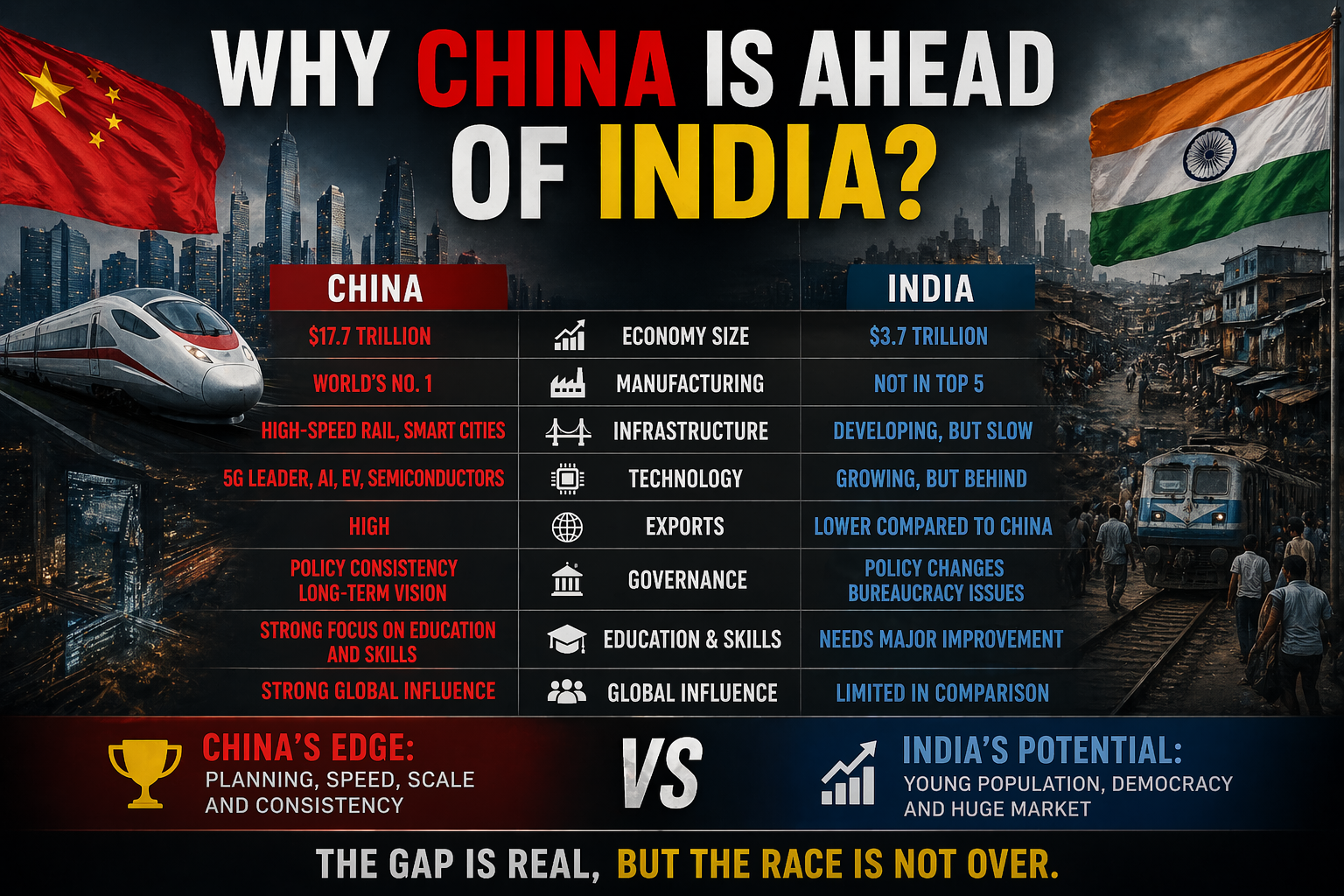
India vs China: Why China Is Ahead of India (From 1947 to 2026 Explained)
READ MORE →
BRICS Meeting 2026 Ends Without Joint Statement Over Iran War | Deep Divisions Between Iran & UAE Exposed
READ MORE →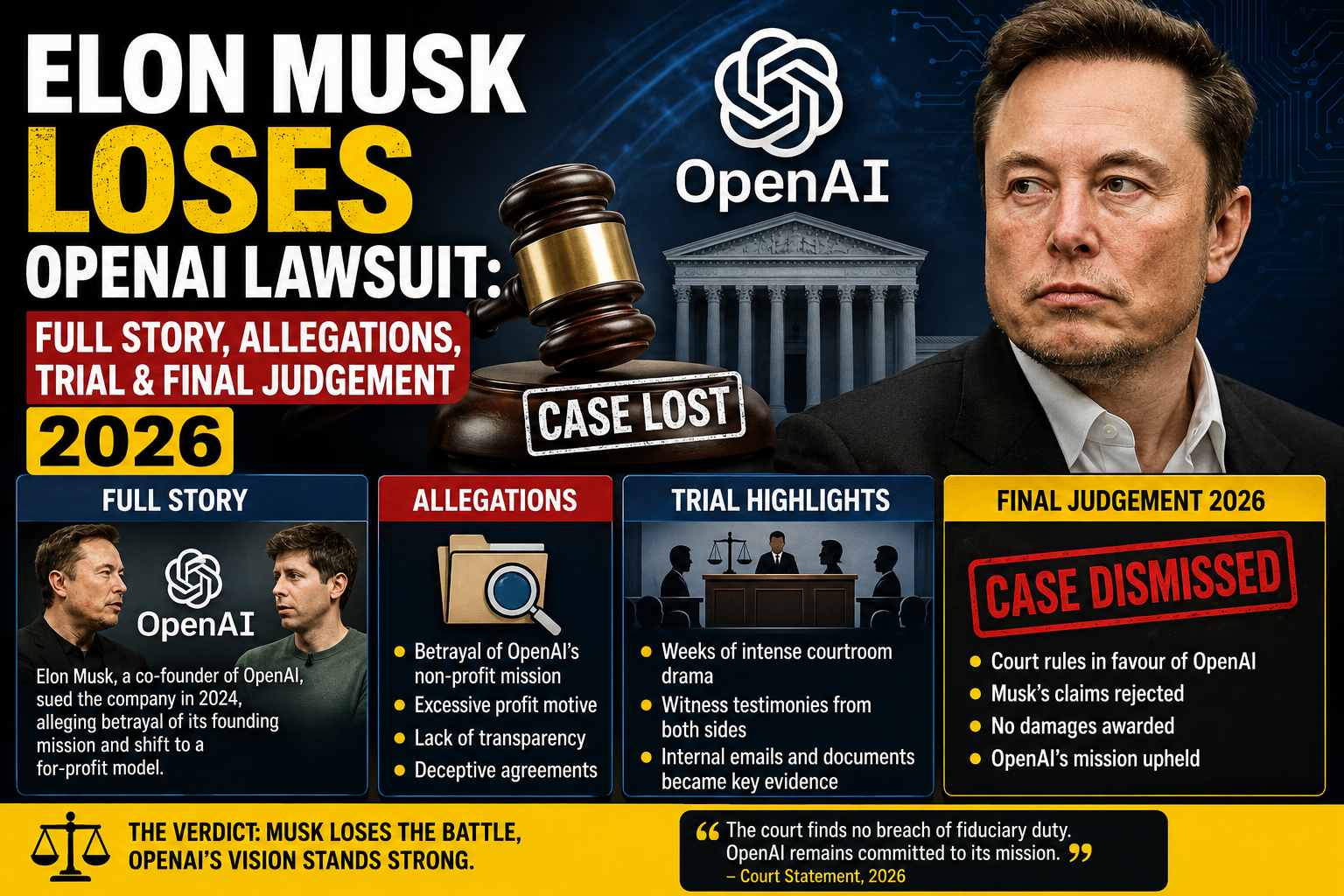
Elon Musk Loses OpenAI Lawsuit: Full Story, Allegations, Trial & Final Judgement 2026
READ MORE →