West Bengal Elections 2026: Politics, Parties, Issues & Future Analysis
1. Introduction: Why West Bengal Elections Matter?
West Bengal is one of the most politically significant states in India, and its elections attract national attention every time they are held. Unlike many other state elections, West Bengal elections are not just about choosing a state government — they often reflect broader political trends in the country.
The state has a large population, high voter turnout, and a deeply rooted political culture. Elections here are known for their intensity, strong party rivalries, and active public participation. Political campaigns are highly visible and closely followed by national media.
These elections also impact national politics. A strong performance by any party in West Bengal can influence its position at the national level, shaping future strategies and alliances.
In simple terms, West Bengal elections act as a political battleground where regional and national forces compete for influence.
2. Historical Background of West Bengal Politics
Congress Era (1947–1977)
After independence, the Indian National Congress dominated West Bengal politics. The focus was on governance and nation-building, but economic challenges and social unrest gradually increased over time.
Left Front Era (1977–2011)
In 1977, the Left Front, led by the Communist Party of India (Marxist), came to power and ruled the state for more than three decades.
- Land reforms and support for farmers
- Strong focus on workers’ rights
- Political stability
However, over time, the government faced criticism for industrial decline and slow economic growth.
TMC Era (2011–Present)
In 2011, the All India Trinamool Congress came to power and ended the long Left rule. The government focused on welfare schemes, infrastructure, and regional identity.
West Bengal politics shifted from ideology-based politics to leadership-driven politics.
3. Key Political Leaders
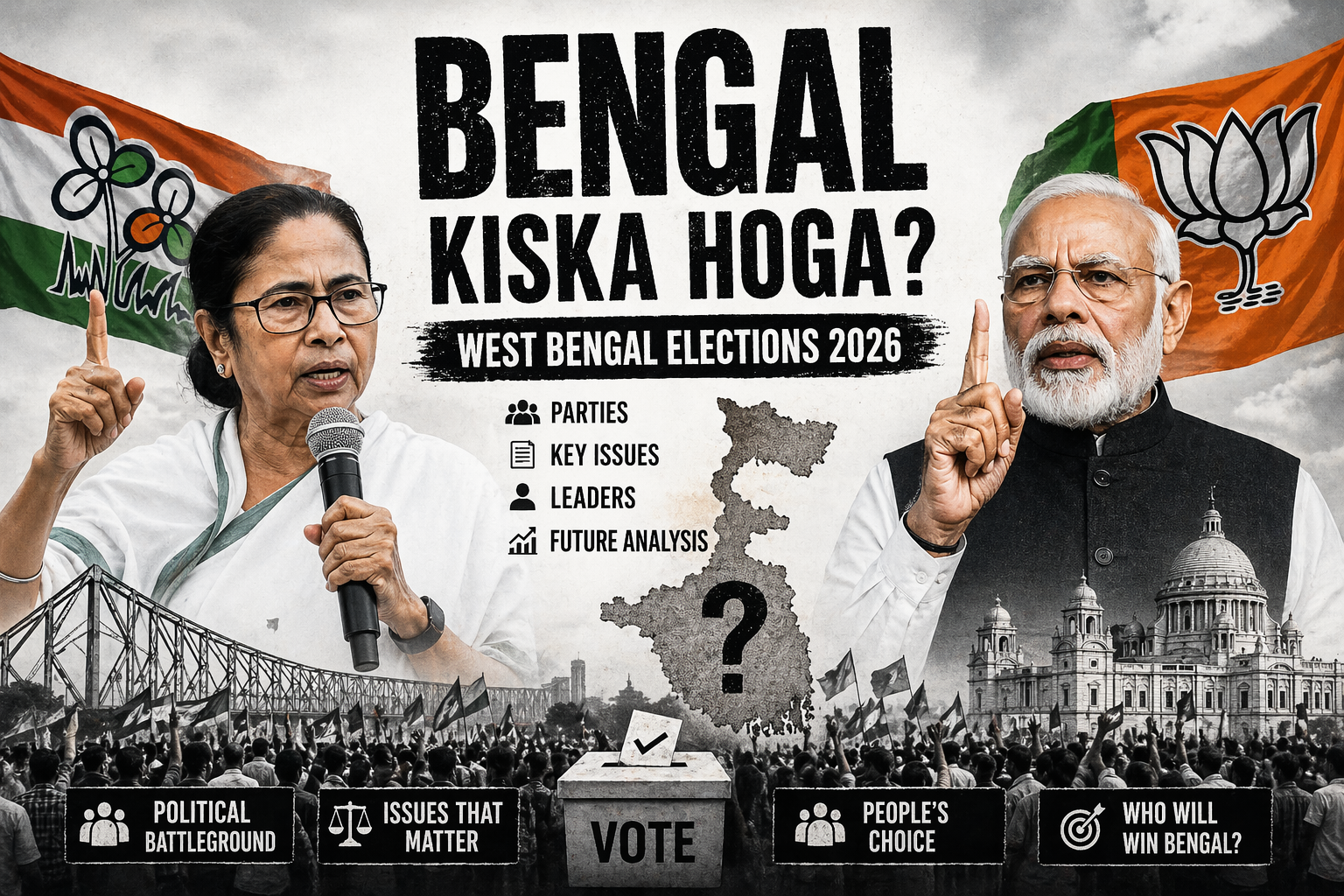
Mamata Banerjee
- Leader of All India Trinamool Congress
- Strong grassroots connection
- Popular among rural voters
Narendra Modi
- Leader of Bharatiya Janata Party
- Represents national leadership
- Major role in election campaigns
Amit Shah
- Key political strategist
- Focus on expanding party base in West Bengal
Leadership plays a major role in influencing voter decisions and shaping election outcomes.
4. Election Process in West Bengal
Role of Election Commission
The Election Commission of India conducts and supervises elections, ensuring a free and fair voting process.
Multi-Phase Voting
Elections are conducted in multiple phases due to the large population and security requirements.
Voting System
- Use of Electronic Voting Machines (EVMs)
- Transparent counting process
Voter Participation
West Bengal consistently records high voter turnout, reflecting strong political awareness among citizens.
Challenges
- Election-related violence in some areas
- Political tensions
- Law and order management
Conclusion (Part 1)
West Bengal elections are significant due to their historical importance, strong leadership influence, and active democratic participation. They play a key role in shaping both state and national politics.
5. Major Political Parties & Their Ideologies
West Bengal politics is shaped by both regional and national parties, each with its own ideology and voter base.
All India Trinamool Congress (TMC)
- Regional political party
- Focus on welfare schemes and rural development
- Strong support among rural and minority communities
- Emphasis on regional identity and cultural pride
Bharatiya Janata Party (BJP)
- National political party
- Focus on development and strong governance
- Rapidly expanding voter base in West Bengal
Left Front and Congress
- Previously dominant political forces
- Based on ideological politics such as socialism and secularism
- Declining influence but still present in some regions
Currently, the main political competition is between TMC and BJP.
6. Key Issues in West Bengal Elections
Elections in West Bengal are influenced by issues that directly affect the daily lives of voters.
Major Issues
- Unemployment and job opportunities
- Infrastructure development
- Law and order situation
- Corruption allegations
- Welfare schemes and government benefits
These issues play a major role in shaping voter decisions during elections.
7. Role of Caste, Religion & Identity
Identity factors influence voter behavior in West Bengal, though in a more subtle way compared to some other states.
Key Factors
- Religious communities and voting patterns
- Strong regional and cultural identity
- Caste influence in certain areas
Political parties often consider these factors while planning their election strategies.
8. Role of Media & Social Media
Media plays an important role in shaping public opinion during elections.
Traditional Media
- News channels and newspapers influence public perception
- Political debates and coverage shape narratives
Social Media
- Platforms like Facebook, WhatsApp, and YouTube are widely used
- Direct communication between leaders and voters
- Rapid spread of information and campaign messages
Challenges
- Fake news and misinformation
- Political propaganda
- Online polarization
Media significantly impacts how voters perceive political parties and issues.
Conclusion (Part 2)
Political parties, key issues, identity factors, and media influence together shape the dynamics of West Bengal elections, making them complex and highly competitive.
9. Election Violence & Controversies
West Bengal elections are often associated with political violence and controversies, making them distinct from many other state elections.
Nature of Violence
- Clashes between party workers
- Voter intimidation in some areas
- Damage to property during campaigns
Reasons
- Intense political rivalry
- Strong grassroots party loyalty
- High political stakes
Security Measures
- Deployment of central security forces
- Strict monitoring of elections
10. Recent Election Trends
West Bengal politics has become more competitive in recent years with shifting voter patterns.
- Expansion of Bharatiya Janata Party
- Continued dominance of All India Trinamool Congress
- Decline of Left parties
Voter behavior is changing with increasing political awareness and competition.
11. Impact on National Politics
West Bengal elections influence national political strategies and party strength.
- Affects performance of national parties
- Shapes future election strategies
- Influences political alliances
A strong performance in the state boosts national political standing.
12. Future of West Bengal Politics
The future of West Bengal politics remains uncertain and dynamic.
Key Questions
- Will Trinamool Congress continue its dominance?
- Can Bharatiya Janata Party expand further?
- Will Left parties regain influence?
Possible Trends
- Increasing political competition
- Greater youth participation
- Growth of digital campaigning
Conclusion (Part 3)
West Bengal elections continue to evolve with changing political dynamics, strong competition, and increasing national importance.
13. Overall Analysis – What Decides Elections in West Bengal?
West Bengal elections are influenced by multiple factors working together rather than a single issue.
Key Deciding Factors
- Strong leadership influence
- Effective grassroots organization
- Balance between welfare schemes and development
- Impact of identity and social factors
- Strategic campaign planning
These factors together determine the success of political parties in elections.
14. Future Challenges & Opportunities
West Bengal politics faces both challenges and opportunities in the coming years.
Challenges
- Unemployment and economic growth
- Infrastructure development
- Law and order management
- Reduction of political violence
Opportunities
- Young voter population
- Digital campaign expansion
- Increasing voter awareness
15. Conclusion – The Bigger Picture
West Bengal elections represent more than just political competition. They reflect public expectations and democratic processes.
- People’s expectations shape election outcomes
- Political competition drives change
- Leadership and governance define the future
The dynamic nature of West Bengal politics makes it an important part of India’s democratic system.
Related Articles

अरावली की कटाई पर सुप्रीम कोर्ट का बड़ा फैसला: 100 मीटर नियम नहीं माना तो दिल्ली रेगिस्तान बनेगी
READ MORE →
शिवकर बापूजी तलपड़े: राइट ब्रदर्स से 8 साल पहले भारत का पहला विमान | मरुत्सखा की प्रेरणादायक कहानी
READ MORE →
Sijimali Hills Protest Explained: Why Tribals Oppose Vedanta Mining Project
READ MORE →
Why Students Are Taking Extreme Steps in India’s Top Colleges (Full Analysis)
READ MORE →
West Asia Crisis & Its Economic Impact on India
READ MORE →