Why Are Thousands of Indians Protesting Across the Country?
Why Are So Many Protests Happening Across India in 2026? Understanding the Growing Public Anger
Published: 22 July 2026
Introduction
India is witnessing a wave of protests across multiple states, with thousands of people taking to the streets over issues ranging from education and employment to environmental protection, agriculture, land acquisition, and regional security.
Unlike a single nationwide movement, these demonstrations are driven by different local concerns. However, together they reflect a broader pattern: many citizens, students, farmers, environmental activists, and regional groups believe their concerns have not been adequately addressed and are demanding greater transparency, accountability, and dialogue.
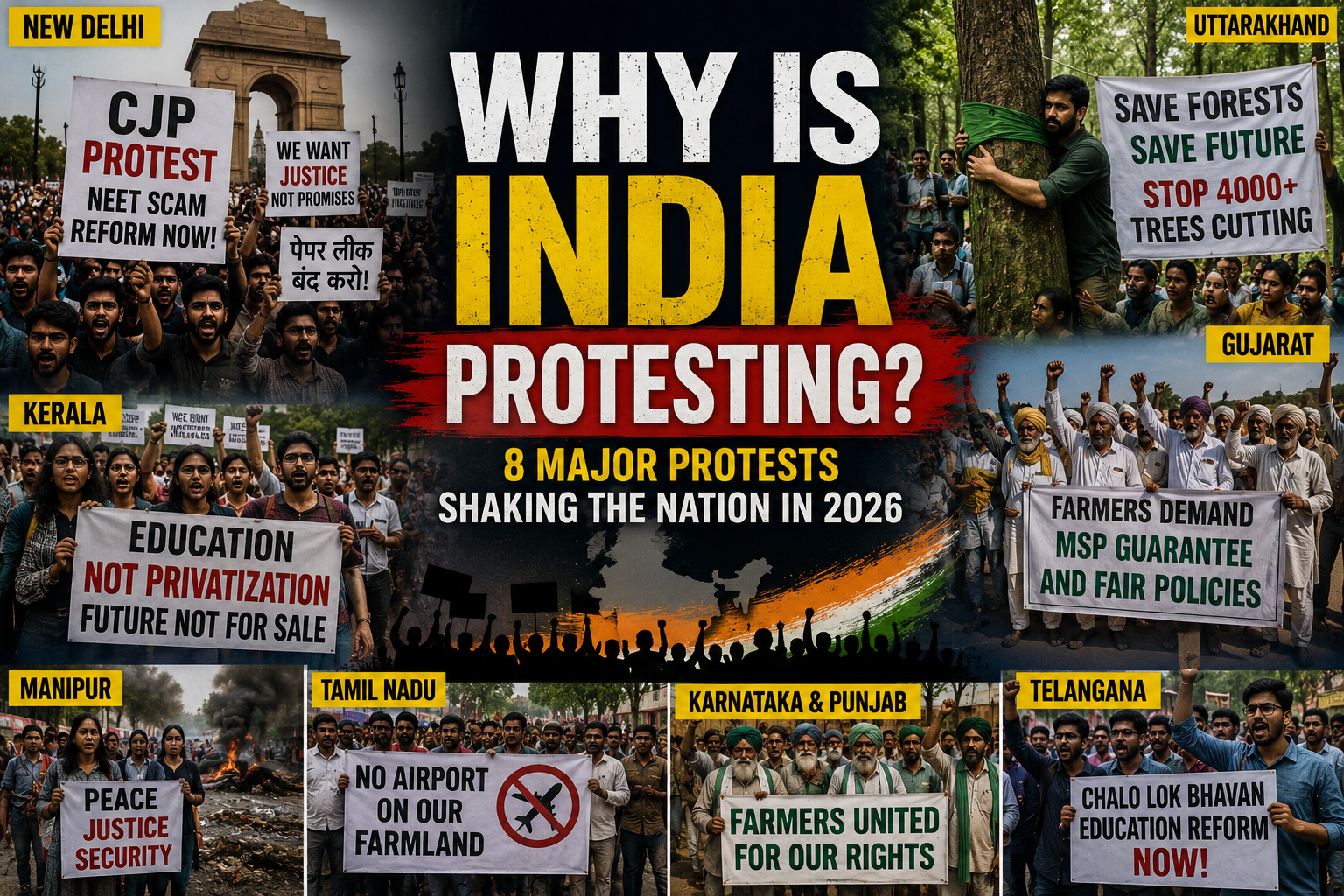
From New Delhi to Uttarakhand, Gujarat, Tamil Nadu, Telangana, Punjab, Kerala, and Manipur, protests have become a major part of the national conversation.
This article explains the major protests taking place across India, why they started, what protesters are demanding, and what these developments may indicate about the country's current social and political climate.
A Nation Witnessing Multiple Movements
India has a long democratic tradition where public demonstrations are an accepted way for citizens to express disagreement with government policies or demand action.
In 2026, however, the number of high-profile protests occurring simultaneously has drawn significant public attention.
Students are demanding examination reforms.
Farmers are seeking better protection for agriculture and land rights.
Environmental activists are opposing large infrastructure projects.
Communities affected by conflict continue to demand peace and security.
Although each movement has its own objectives, they all share one common message: people want their voices to be heard.
1. New Delhi: The CJP Student Protest
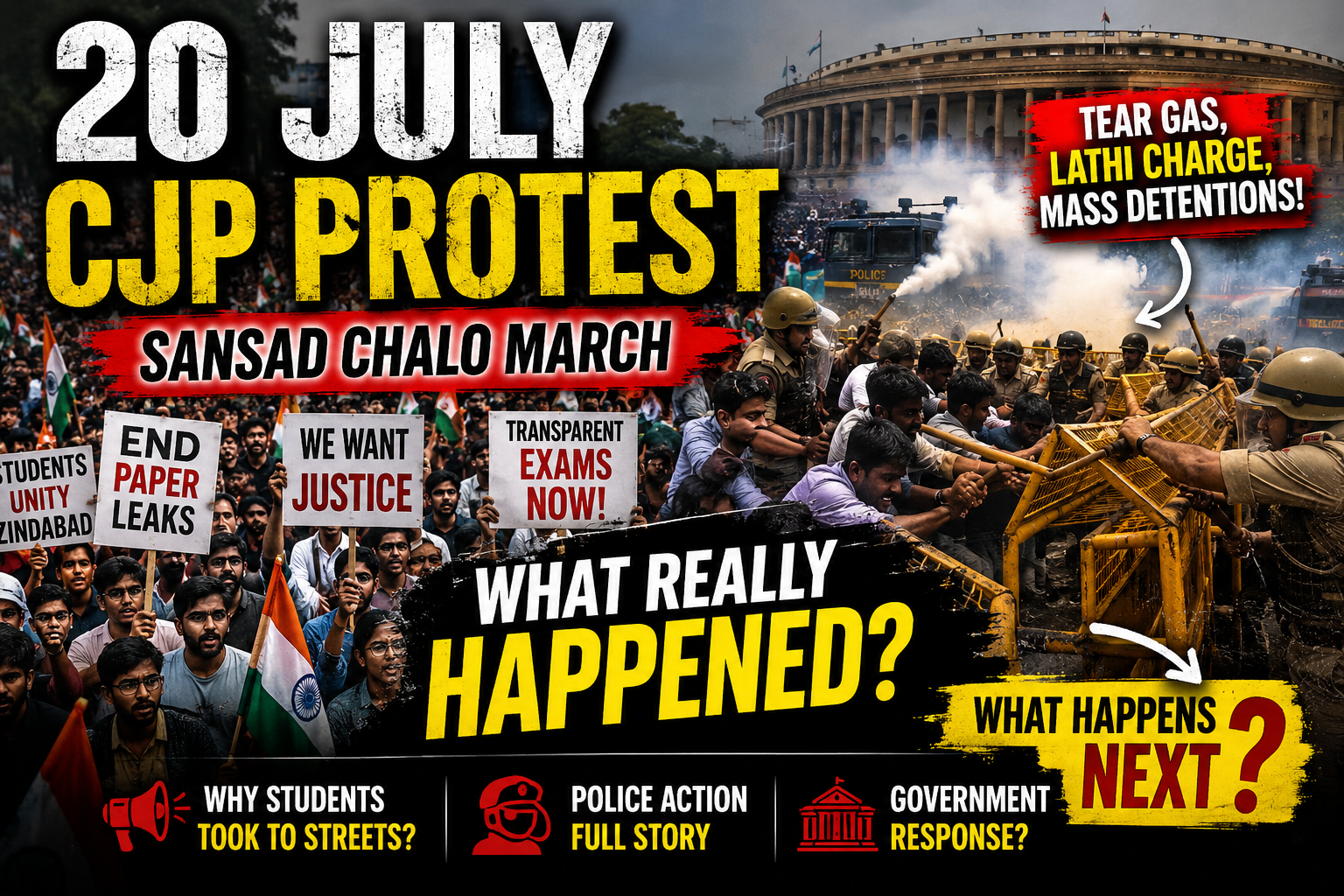
The largest protest currently attracting national attention is the Cockroach Janata Party (CJP) movement in New Delhi.
Thousands of students gathered at Jantar Mantar after allegations of irregularities in national entrance examinations, particularly NEET-UG.
The protesters are demanding:
-
Transparent examination systems.
-
Strict action against alleged paper leaks.
-
Accountability from educational authorities.
-
Resignation of Union Education Minister Dharmendra Pradhan.
-
Long-term reforms in India's competitive examination system.
The situation intensified after the 20 July "Sansad Chalo" march, when police stopped protesters from approaching Parliament.
Videos showing clashes, tear gas, and detentions spread rapidly on social media, turning the protest into one of India's biggest youth movements of the year.
Opposition parties later expressed support for the protesting students, while the government defended police action, stating that security measures were necessary around Parliament.
2. Manipur: The Continuing Demand for Peace
While many recent protests focus on education and employment, Manipur continues to witness demonstrations connected to peace, security, and ethnic conflict.
Communities affected by prolonged violence have continued demanding:
-
Restoration of peace.
-
Improved security.
-
Justice for victims.
-
Rehabilitation of displaced families.
-
Long-term political solutions.
For many residents, these protests are not only about immediate security concerns but also about rebuilding trust and restoring normal life after months of instability.
3. Student Protests Spread Across India
The Delhi student movement has inspired solidarity protests in several states.
Student organizations in Tamil Nadu, Karnataka, Telangana, Bihar, and other regions have organized rallies supporting examination reforms.
Many protesters argue that competitive examinations determine the future of millions of young Indians.
When confidence in these systems is questioned, students believe the impact extends far beyond one examination or one state.
Universities, coaching centers, and youth organizations have also participated in awareness campaigns demanding greater transparency.
4. Uttarakhand: Protest Against Cutting More Than 4,000 Trees
Environmental concerns have become another major reason for public protests.
In Uttarakhand, environmental activists and local residents launched demonstrations opposing the proposed cutting of more than 4,000 trees for a national highway expansion project near Rishikesh.
Many protesters compared the movement to the historic Chipko Movement, emphasizing forest conservation and ecological protection.
Their primary concerns include:
-
Loss of forest cover.
-
Increased risk of landslides.
-
Impact on wildlife.
-
Damage to local biodiversity.
-
Long-term environmental consequences.
Public pressure reportedly led authorities to review aspects of the project, highlighting the growing influence of environmental activism.
5. Gujarat: Farmers Continue Their Protest
Farmers in Gujarat have also organized demonstrations over issues affecting agriculture.
Several farmer organizations have raised concerns regarding:
-
Agricultural policies.
-
Land acquisition.
-
Fair compensation.
-
Market access.
-
Protection of farming communities.
Farmer leaders argue that agriculture remains the backbone of rural India and that policy decisions should involve greater consultation with farming communities.
Although negotiations have taken place in some cases, many organizations believe additional reforms are still required.
6. Tamil Nadu: Parandur Airport Project Opposition
Another major protest is taking place in Parandur, near Chennai.
Local farmers and villagers have opposed the proposed Greenfield Airport project, arguing that it could significantly affect agricultural land and nearby water bodies.
Residents say the project may impact:
-
Farming livelihoods.
-
Water resources.
-
Local villages.
-
Ecological balance.
Supporters of the project argue that it would improve regional infrastructure and economic development.
The debate reflects a broader national challenge—balancing development with environmental protection and community interests.
7. Karnataka and Punjab: Farmers Demand Policy Changes
Farmers in Karnataka and Punjab continue organizing demonstrations over various agricultural issues.
Their demands include:
-
Better compensation for acquired land.
-
Legal guarantee for Minimum Support Price (MSP).
-
Protection of agricultural income.
-
Fair implementation of government policies.
Farmer unions maintain that stable agricultural policies are essential for long-term rural development.
8. Telangana: "Chalo Lok Bhavan" March
Student organizations in Hyderabad organized the "Chalo Lok Bhavan" march demanding national examination reforms.
Participants called for:
-
Greater examination transparency.
-
Accountability from educational authorities.
-
Education policy reforms.
Police stopped the march before it reached its destination, leading to detentions and renewed debate over the handling of peaceful demonstrations.
9. Kerala: Student Activism Continues
Kerala has also witnessed student-led demonstrations on education-related issues, with various organizations raising concerns about academic policies, examination systems, and broader youth issues.
Student unions continue to play an active role in mobilizing public discussion around education and employment.
Is There a Common Pattern?
Although every protest has different objectives, several common themes appear repeatedly.
Education
Students want transparent examinations, fair recruitment, and accountability.
Employment
Young people continue expressing concerns regarding recruitment delays and career uncertainty.
Agriculture
Farmers seek stronger legal protections, better compensation, and improved agricultural policies.
Environment
Local communities increasingly oppose development projects they believe threaten forests, wildlife, rivers, or agricultural land.
Public Consultation
Many protest groups argue they were not adequately consulted before important decisions affecting their communities were taken.
The Government's Position
The government has stated in different cases that many projects are being implemented for national development and public interest.
Officials have also emphasized that law and order must be maintained during demonstrations.
In some situations, governments have agreed to hold discussions with protest groups, while in others authorities have defended their existing policies or announced reviews.
Because these protests concern different states and departments, official responses vary depending on the issue involved.
Opposition's Response
Opposition parties have criticized the handling of several protests, arguing that governments should engage in greater dialogue with affected communities.
They have also raised concerns regarding police action during certain demonstrations and have called for faster responses to public grievances.
Why Public Anger Appears to Be Growing
Political analysts suggest that the increase in protests is linked to multiple factors rather than one single issue.
Among the most commonly discussed reasons are:
-
Rising expectations among young people.
-
Greater awareness through social media.
-
Faster sharing of protest videos.
-
Increased public participation.
-
Demands for transparency.
-
Concerns over employment opportunities.
-
Environmental awareness.
-
Regional development disputes.
Each movement reflects local concerns, but together they indicate that many citizens want quicker responses, stronger accountability, and more effective communication from authorities.
What Happens Next?
The coming months may prove important.
Some movements could end after negotiations.
Others may continue until policy changes are announced.
Several organizations have already indicated that additional demonstrations may be organized if their demands remain unresolved.
Whether these protests lead to major reforms will depend on continued dialogue between governments, affected communities, and civil society groups.
Conclusion
India's current wave of protests demonstrates the diversity of public concerns across the country.
Students are asking for examination reforms.
Farmers want better agricultural protections.
Environmental activists are working to preserve forests.
Communities affected by conflict continue demanding peace.
Each movement has its own unique background, but all of them reflect citizens using democratic means to voice their concerns and seek change.
The ultimate impact of these protests will depend on how governments, institutions, and communities respond through dialogue, policy decisions, and continued public engagement.
As India continues to develop, addressing these concerns through transparent communication and peaceful democratic processes will remain essential for building public trust.
Frequently Asked Questions (FAQs)
Why are so many protests happening in India in 2026?
Different groups are protesting for different reasons, including examination reforms, agricultural issues, environmental protection, land acquisition, and regional peace.
Which is the biggest ongoing protest?
The CJP student protest in New Delhi has received significant national attention, but several other state-level movements are also active.
Are all these protests connected?
No. Each movement has different local causes, although many reflect broader concerns about transparency, accountability, and public consultation.
What are protesters demanding?
Demands vary by movement and include education reforms, better agricultural policies, environmental protection, peace, fair compensation, and greater government accountability.
How has the government responded?
Responses differ depending on the issue. In some cases, authorities have opened discussions or reviewed decisions, while in others they have defended existing policies or security measures.
Related Articles
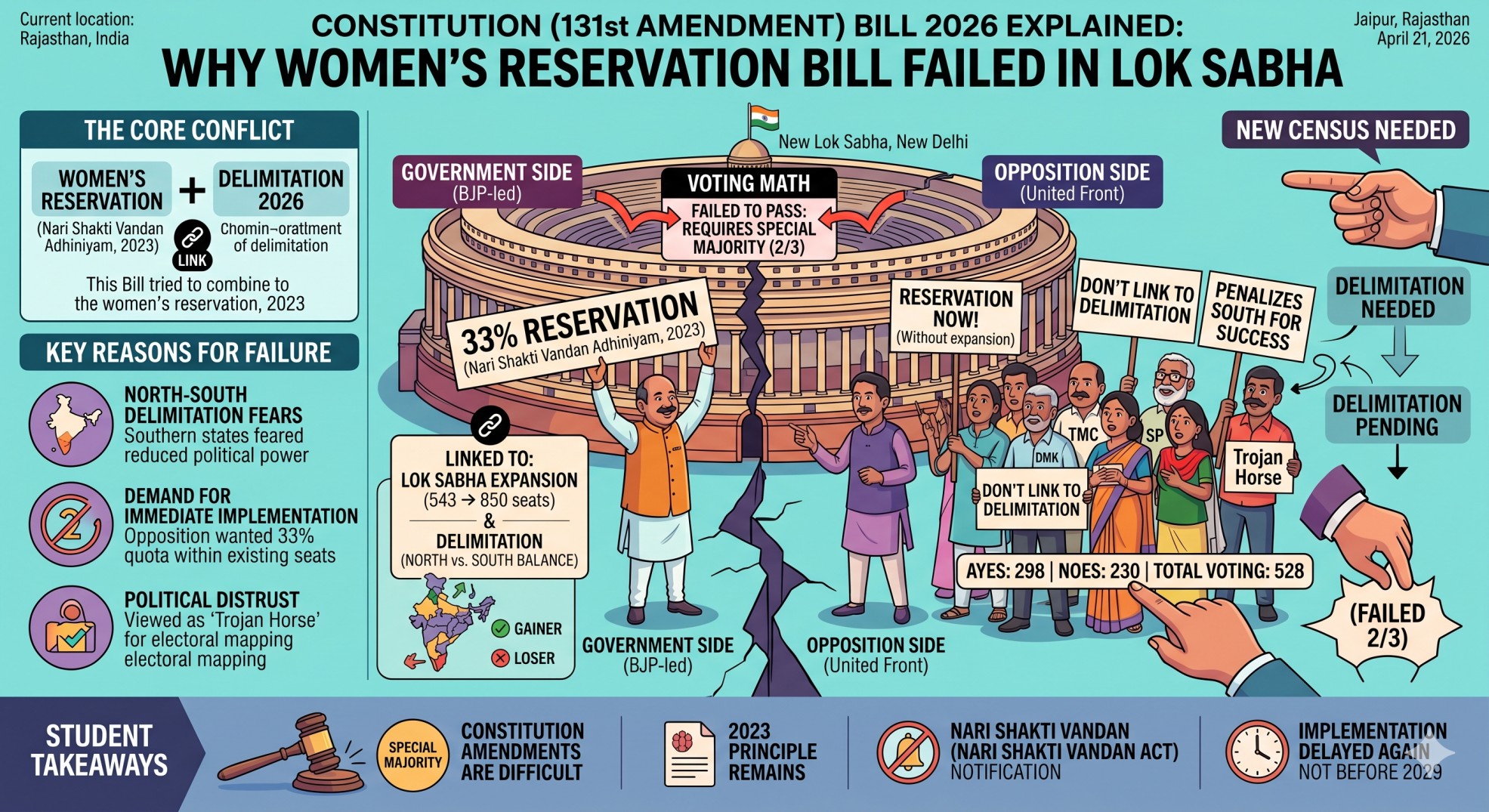
Constitution (131st Amendment) Bill 2026 Explained: Why Women’s Reservation Bill Failed in Lok Sabha
READ MORE →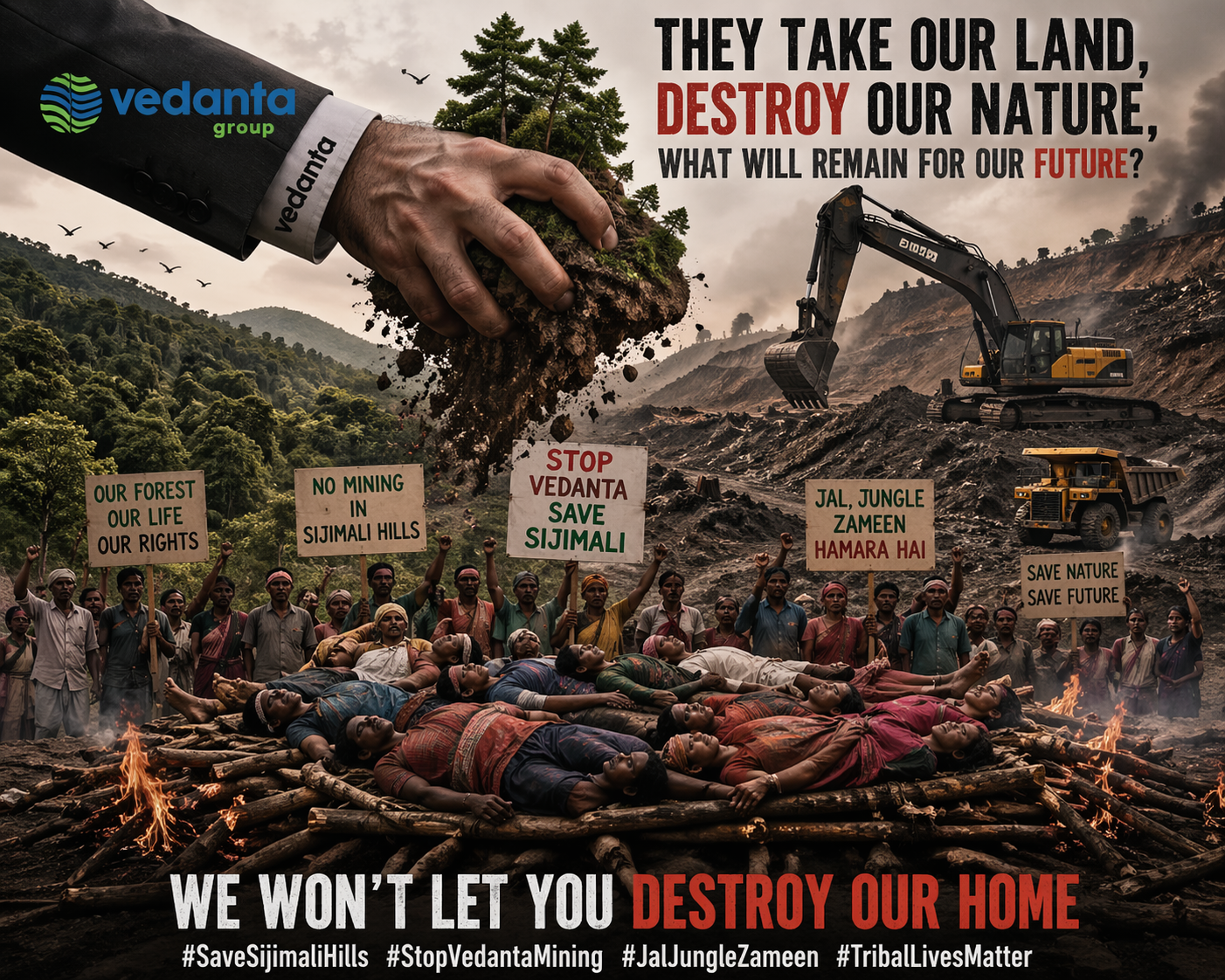
Sijimali Hills Protest Explained: Why Tribals Oppose Vedanta Mining Project
READ MORE →
India vs China: Why China Is Ahead of India (From 1947 to 2026 Explained)
READ MORE →
Sonam Wangchuk Detained: What Happens to the CJP Protest Now?
READ MORE →